

India's Counter-Terrorism Policy Evolves: 10 Years After Surgical Strikes
Key Highlights
- 322 militant incidents recorded in 2016.
- Over 60% of violent militant activity in J&K in 2025 occurred in the Jammu division.
- The Army's operations have shifted to intelligence-specific, involving fewer troops and greater use of technology.
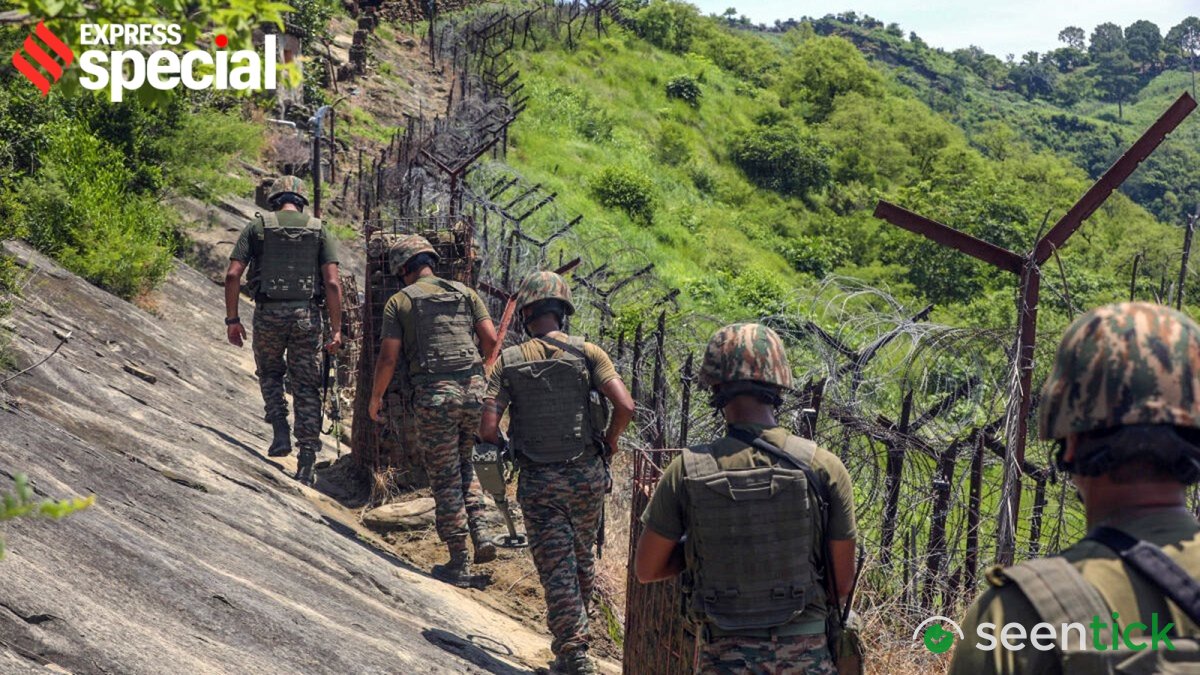
The Indian ArmyIt's counter-terrorism operations in Jammu and Kashmir have undergone significant changes over the past decade. Driven by advancements in technology, intelligence gathering, and troop deployment.
Ten years after the first coordinated cross-border surgical strikes across the Line of Control, defence, officials told. The Indian Express that the security situation in the region has become more dispersed and harder to detect. With a shift from urban/semi-urban militancy to small groups operating in forests and mountains.
According to Lieutenant General D S Hooda. Former Northern Army Commander, the biggest improvement in the Army's operations has been in the surveillance and intelligence-gathering architecture. He attributed this to the large-scale induction of UAVs and enhanced inter-agency coordination and information-sharing.
Former Northern Army Commander Lieutenant General D S Hooda explained the change from ground-based 2016 surgical strikes to the 2019 Balakot air strikes and Op Sindoor in May 2025 — an integrated operation. He cautioned that with these improvements, the risk of escalation has gone.

Key to the recent shift in the region's dynamics was the 2019 repeal of Article 370 in Jammu and Kashmir. Accompanied by a significant troop deployment. Officials attribute the change to this move.
As well as a concerted effort to restrict local ties with terrorists through intensified patrols and surveillance, effectively isolating them to remote hideouts or elevated areas.
Also Read: India Engages US Congress on Russia Sanctions Act, Energy Ties Gain Momentum
Government data recorded 322 militant incidents in 2016, with 150 terrorists and 82 security personnel killed. In comparison, there were 12 terror-related incidents in 2025, with deaths of 16 security personnel.
Independent, non-profit conflict-monitoring and crisis-mapping organisation ACLED notes that over 60% of violent militant activity in J&K in 2025 occurred in the Jammu division, against 5% in 2018. It attributes this partly to the difficult forested and mountainous terrain of Jammu areas. And changes in troop deployment after the 2020-21 India-China border crisis.
What's Your Reaction?
 Like
Like
 Dislike
 Love
1
Love
1
 Funny
Funny
 Wow
1
Wow
1
 Sad
Sad
 Angry
2
Angry
2

Tech journalist and AI enthusiast who enjoys keeping up with the latest in hardware, processors, emerging AI tools, and software. I like digging into new technology, understanding how things actually work, and following the developments that could shape the way we use technology in the future.











Comments (0)