

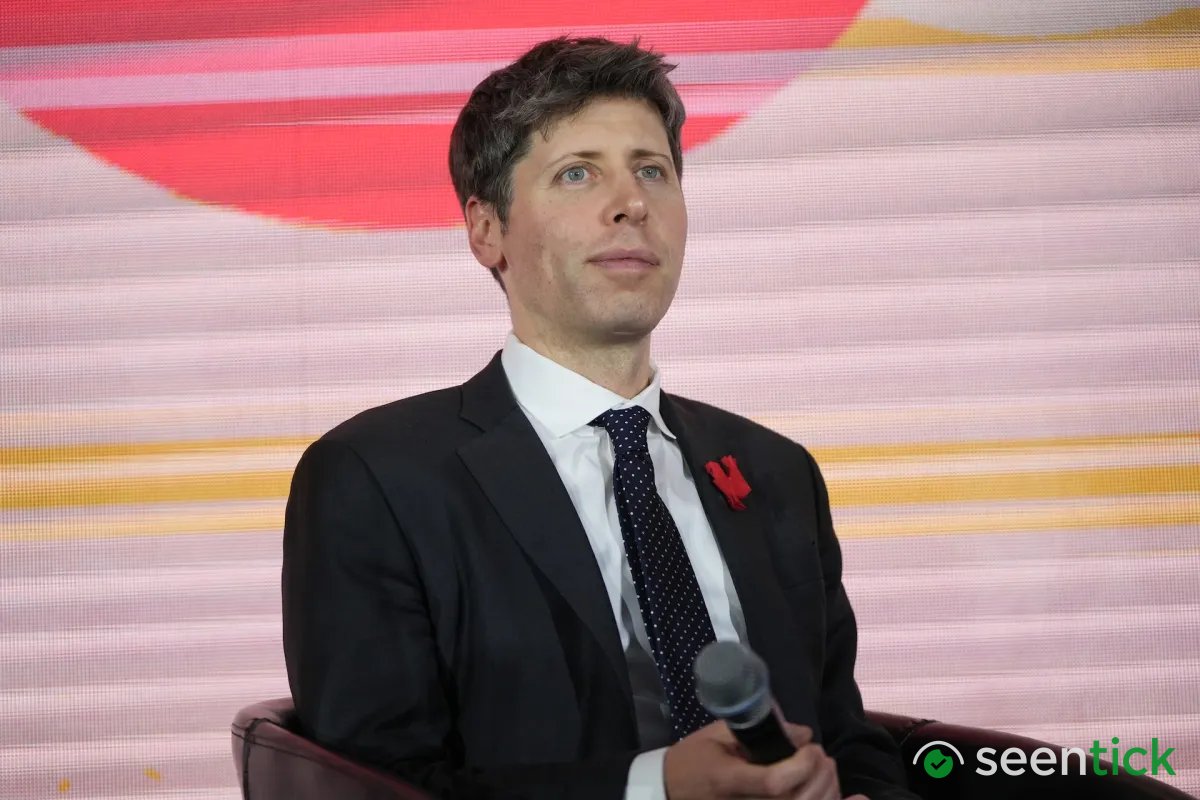
OpenAI CEO Sam Altman Says Company Won't Go Public in 2026
Key Highlights
- OpenAI CEO Sam Altman says the company won't go public until it feels ready.
- Safety concerns and financial challenges cited as reasons for delay.
- IPO timeline shifted from 2026 to 2027 due to market volatility.
The Strategic Pivot: OpenAI Delays Public Offering
In a move that underscores the cautious temperament of the artificial intelligence sector, OpenAI CEO Sam Altman has officially signaled that the company will not pursue an initial public offering (IPO) in 2026. While the AI giant had previously engaged legal and financial counsel to explore a market entry during the latter half of that year, Altman’s recent commentary suggests a deliberate pivot toward internal consolidation over public expansion.
Speaking on the broader landscape of generative AI, Altman characterized a near-term public offering as “ill-advised,” citing a complex intersection of safety scrutiny, regulatory uncertainty, and the need for operational maturity. This decision reflects a broader trend among major tech firms that are increasingly wary of the intense quarterly earnings pressures that public markets impose, particularly when the underlying technology remains in a state of rapid, high-stakes development.
Contextualizing the Timeline and Financial Hurdles
The timeline for an OpenAI IPO has been a subject of intense speculation since the company’s pivot from a non-profit structure to a "capped-profit" entity, which allowed for the injection of significant venture capital. Reports from earlier this year, most notably from The New York Times, suggested that OpenAI had begun the foundational work-hiring investment bankers and legal experts-to target a late 2026 debut.
However, this roadmap was always contingent upon the company’s ability to balance massive capital expenditures, particularly in the realm of computing power and talent acquisition, with a sustainable revenue model. Altman’s admission that 2026 is effectively off the table for an IPO serves as an acknowledgment of these financial realities, combined with the extreme volatility currently characterizing tech stocks.
The company must navigate not only its own scaling challenges but also the unpredictable nature of global AI regulation, which could fundamentally alter its business model in the coming years.
Societal Responsibility and Safety Considerations
Central to Altman’s hesitation is the intersection of artificial intelligence safety and corporate transparency. Public companies are beholden to shareholders, a dynamic that can occasionally clash with the long-term, high-risk safety research required Altman noted that the company plans to wait until they feel both the business is "ready" and society has achieved a sufficient level of comfort with the current trajectory of AI technology.
This framing suggests that OpenAI is prioritizing its public image and safety reputation over the short-term capital gains often associated with an IPO.
Also Read: Anthropic CEO Dario Amodei Calls for Slowing AI Development to Ensure Safety and Alignment
Industry Implications and Market Outlook
The decision to hold off on an IPO sends a clear message to investors and competitors alike: OpenAI intends to operate on its own terms, insulated from the external market pressures that might force compromised decision-making. This stance is likely to influence the venture capital landscape, as early investors may have to reconcile with a longer exit timeline.
For the broader industry, this cooling of expectations signals that the "AI gold rush" is transitioning into a phase of disciplined, albeit slower, maturation. OpenAI’s commitment to transparency-or lack thereof-regarding its financial health will remain a primary focus for analysts, but for now, the company has chosen the safety of private capital over the volatility of the public exchange.
As the organization focuses on "a lot of stuff to do," industry observers will be watching to see if 2027 becomes a more realistic target or if OpenAI opts to remain a private entity for the foreseeable future, maintaining its unique, non-traditional corporate structure.
Frequently Asked Questions
What's Your Reaction?
 Like
Like
 Dislike
1
Dislike
1
 Love
Love
 Funny
Funny
 Wow
3
Wow
3
 Sad
Sad
 Angry
Angry

Tech journalist and AI enthusiast who enjoys keeping up with the latest in hardware, processors, emerging AI tools, and software. I like digging into new technology, understanding how things actually work, and following the developments that could shape the way we use technology in the future.










Comments (0)