

The Attorney General Of California Vs. Paramount (Part 1)
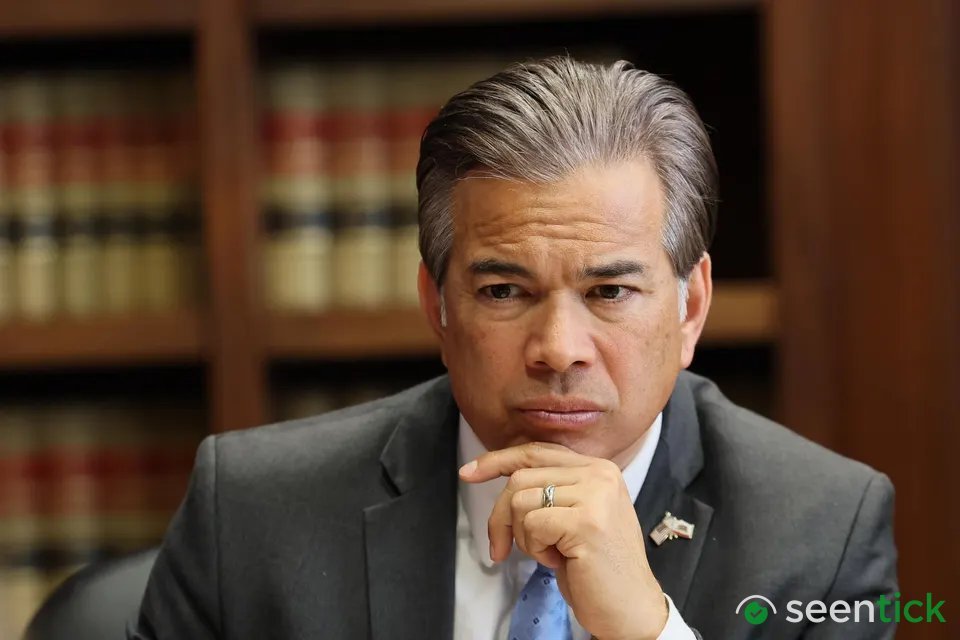
The Attorney General Of California Vs. Paramount (Part 1)
Key Highlights
- David Ellison's $110 billion Paramount-Warner Bros.
- Discovery merger faces a high-stakes legal battle despite securing all global regulatory clearances.
- A coalition of 12 Democratic-led states, spearheaded This contrasts with the U.S.
A High-Stakes Showdown: David Ellison's $110 Billion Paramount-Warner Bros. Discovery Merger Faces Uncertain Future
The highly anticipated $110 billion merger between Paramount and Warner Bros. Discovery has won every regulatory clearance required to close, but a coalition of 12 Democratic-led states has thrown a wrench into the deal, sparking a high-stakes legal battle that could cost Paramount around $7 million per day.
At its core, this "Blue States" lawsuit is a fight over who gets to police consolidation in American media. The dispute began when David Ellison and Paramount Skydance convinced Warner Bros. Discovery (WBD) to abandon a deal with Netflix, won over WBD shareholders, and survived an eight-month investigation
Read More: Dolly Parton: The Iconic Singer Who Changed the Rules for Women in Music
However, the obstacle now lies not in Washington, Brussels, or London but in Sacramento. On July 13, 2026, a coalition of 12 state attorneys general from Democratic-leaning states led the charge against Discovery, arguing that joining two of Hollywood's five major film distributors and two major cable-programming groups would substantially lessen competition.
Paramount and WBD subsequently agreed not to close until five days after a decision on the merits of the States' case or June 1, 2027, whichever comes first. A trial is scheduled to begin March 2, 2027, with the timetable colliding with another date that has become increasingly important: September 30, 2026.
Under the merger agreement between Paramount and Warner Bros. Discovery, every day after September 30th that the transaction has not closed increases the cash consideration payable to WBD shareholders. This "Ticking Consideration" mechanism costs Paramount approximately $7 million a day, or around $650 million for every 90 days of delay.
The pressure has already spilled far outside the courtroom, with settlement discussions between Ellison and Bonta breaking down amid accusations of leaks and bad faith. Paramount has asked the court to require the States and the Writers Guild of America, which brought a parallel challenge, to post a $1.88 billion bond.
Ellison has privately told senior executives that he is prepared to consider moving Paramount out of California if the dispute cannot be resolved, according to multiple press reports. The confrontation took an even stranger turn on August 25, 2026, when Iowa and Montana asked the U.S.
Also Read: The 10 Best IMDB Scored New Shows To Watch Right Now
Supreme Court for permission to sue California and the other 11 states directly, arguing that their antitrust action is an improperly politicized attempt.
What began as a battle for Warner Bros. Discovery has become something larger: a fight over how much power individual states should wield over nationally cleared mergers, and whether California can simultaneously defend Hollywood from consolidation while preventing Hollywood from leaving its home state.
The economics of the deal are enormous, with Paramount paying $31 a share for 100% of WBD, representing roughly $81 billion of equity value and $110 billion of enterprise value. The financing includes approximately $47 billion of new equity backed
What's Your Reaction?
 Like
Like
 Dislike
 Love
Love
 Funny
Funny
 Wow
1
Wow
1
 Sad
Sad
 Angry
1
Angry
1

I write about the forces shaping business and the global economy, from startup growth and changing markets to international trade and policy. My work focuses on breaking down complex developments into clear, practical insights and understanding what they could mean for businesses, investors, and the wider economy.












Comments (0)