

Waymo Takes Aim at Tesla's Cybercab with Autonomous Vehicle
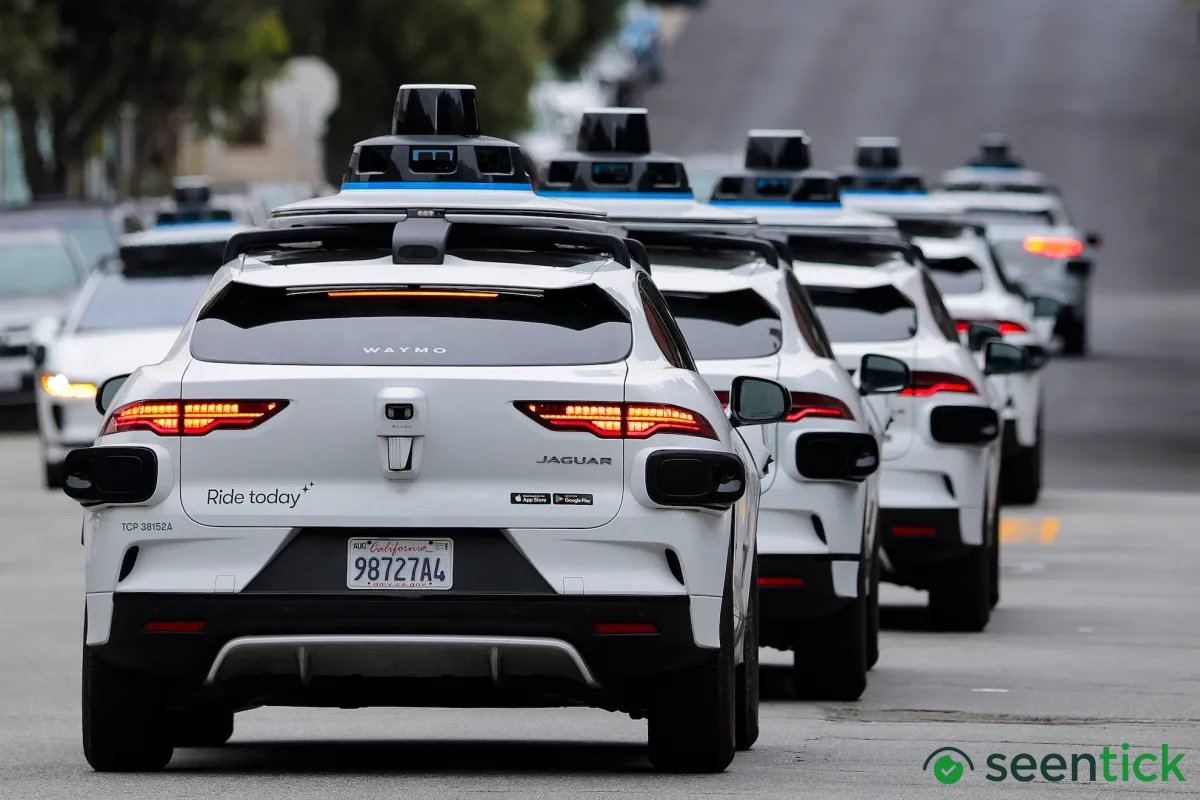
Waymo Takes Aim at Tesla's Cybercab with Autonomous Vehicle
Key Highlights
- Waymo argued last week that fully autonomous vehicles are not possible without using a mix of sensors, and that “pure end-to-end” AI systems are not safe enough — shots at Tesla, despite the Alphabet-owned company not naming names.
- The company took these swings in a blog post and an interview with Axios just one week ahead of a September 3 event where Tesla is expected to formally introduce its two-seater Cybercab into its own small-but-growing robotaxi fleet.
- Waymo also announced three new markets on Tuesday morning, further extending its robotaxi network, which is serving customers in more than a dozen U.S.
Waymo's recent claims that fully autonomous vehicles are not possible without using a mix of sensors sparked a heated debate in the industry, with shots fired at Tesla despite the Alphabet-owned company not naming names. The controversy began just one week ahead of a September 3 event where Tesla is expected to formally introduce its two-seater Cybercab into its own small-but-growing robotaxi fleet.
Waymo also announced three new markets on Tuesday morning, further extending its robotaxi network, which is serving customers in more than a dozen U.S. cities.
The debate centers around the approach each company takes to developing autonomous vehicles. Waymo has long taken a conservative approach, integrating a mix of cameras, radar, and lidar sensors into vehicles built for its fleet. This approach has allowed the company to scale to a fleet of around 4,000 robotaxis across 14 U.S.
cities, providing 500,000 paid trips per week. In contrast, Tesla has focused on developing fully autonomous cars using just cameras and AI, with Elon Musk having once derided the use of lidar as a "crutch." The company's efforts have been centered around its Cybercab, a purpose-built two-seater gold sedan designed to be autonomous from the get-go.
Read More: Neocloud Lambda secures $1B in debt to buy more chips
Waymo's claims made blog post
Waymo's claims were made in a blog post and an interview with Axios, where Srikanth Thirumalai, a VP who oversees Waymo's driving software, stated that "cameras are incredible, but they aren't enough" for safe, fully autonomous operations at scale. Thirumalai also warned that a pure end-to-end neural architecture, which is Tesla's approach to autonomy, will "run the risk of black box failures." He noted that even the best AI models with trillions of parameters can still hallucinate and that there is no click reboot or reload or refresh in physical AI.
According to Thirumalai, "there is no click reboot or reload or refresh [in] physical AI. You have to deal with the consequences of it."
The debate has sparked a social media fight, with analysts and experts weighing in on the issue. Pierre Ferragu, an analyst and managing partner at New Street Research who covers Tesla, wrote on X that Waymo's arguments are "poor" and that the company is falling into incumbent rhetoric.
He noted that Waymo built a driving gas plant that AI at scale makes irrelevant, and now falls into the trap of innovator dilemma 101. Ferragu suggested that Tesla's approach to autonomy, while technical and wonky, may ultimately prove to be more effective in the long run.
The stakes are high in this debate, with hundreds of billions of dollars at risk. The winner will likely be the company that can demonstrate its self-driving software is capable of full autonomy on a large scale. Tesla still needs to show that its Cybercab is capable of performing at scale, and the company has spent years developing the vehicle.
However, Elon Musk's promise of 1 million robotaxis on the road in 2020 has yet to materialize, and the company's trials have stayed small so far. The upcoming event will provide a crucial test of Tesla's capabilities, and it remains to be seen whether Waymo's approach will prove to be the more effective solution.
Also Read: Sweden's Hottest Tech Hub: Why Startups Are Thriving
Despite the controversy, both companies seem committed to their respective approaches. Waymo continues to expand its robotaxi network, while Tesla is pushing forward with its Cybercab project. As the industry continues to evolve, it will be interesting to see how these two companies navigate the complexities of autonomous vehicle development and deployment.
For years, this debate has been more academic or philosophical than anything. But last week Waymo flexed its real-world experience, providing a tangible example of the challenges facing fully autonomous vehicles. The company's claims have kicked off a social media fight that will likely continue for some time, with both sides presenting their arguments and counterarguments.
As the debate rages on, one thing is clear: the future of transportation hangs in the balance. Autonomous vehicles have the potential to revolutionize the way we travel, but they also pose significant challenges and risks.
It remains to be seen which approach will ultimately prove successful, but one thing is certain - the industry will not rest until it finds a solution.
What's Your Reaction?
 Like
Like
 Dislike
 Love
Love
 Funny
Funny
 Wow
2
Wow
2
 Sad
Sad
 Angry
Angry

Tech journalist and AI enthusiast who enjoys keeping up with the latest in hardware, processors, emerging AI tools, and software. I like digging into new technology, understanding how things actually work, and following the developments that could shape the way we use technology in the future.











Comments (0)