

Nepal and Tibet Flood Relief Enters Critical Recovery Phase
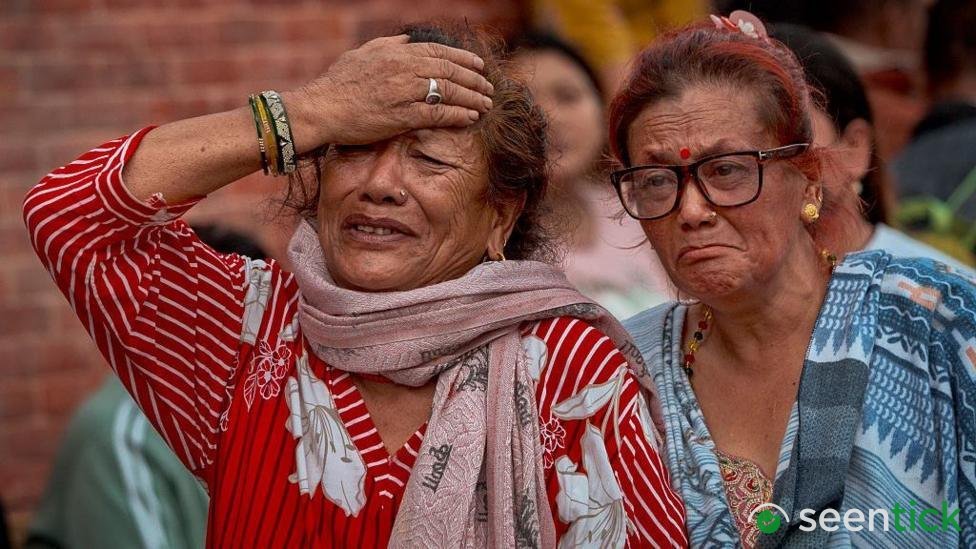
Nepal and Tibet Flood Relief Enters Critical Recovery Phase
Key Highlights
- At least 1,114 people have died in Nepal and nearly 4,000 remain missing after devastating flash floods along the Nepal-Tibet border.
- Prime minister Balendra Shah noted that the sudden disaster exceeded predictable forecasts despite rapid evacuation warnings.
- Over 40 destroyed bridges and severe access issues have left remote villages reliant on army helicopters for vital supplies.
- Experts warn that melting Himalayan permafrost due to climate change underscores the urgent need for global mitigation responsibilities.
The emergency response following catastrophic flash floods along the Nepal-Tibet border has officially transitioned from rescue operations to comprehensive relief and recovery efforts. Emergency teams are now scrambling to reach any remaining survivors while focusing heavily on delivering vital aid, recovering the dead, tracing missing relatives, and reunifying separated children, according to the UN's humanitarian agency.
At least 1,114 people have tragically died in Nepal, while nearly 4,000 more remain unaccounted for, based on figures released Across the border on the Tibetan side, state media reports confirm a death toll of 16 people with more than 500 individuals still missing. Rescue personnel are also continuing arduous efforts to locate hundreds of workers believed to be trapped inside Nepalese hydropower tunnels following the disaster.
Massive Displacement and International Missing Persons
Nearly 12,000 people have been rescued so far However, thousands of individuals, including hundreds of foreign nationals hailing from countries such as the UK, US, India, Australia, and Malaysia, are still missing. A week after the catastrophe, fears are mounting within the international community that the final death toll will continue to rise significantly.
In Tibet, Chinese rescue teams are persisting with searches for the hundreds of missing people near the border. Despite their efforts, they have yet to locate any survivors at the Gyirong Port crossing situated between Nepal and Tibet.
Because Beijing tightly controls the region, information remains limited to state media reports, and foreign journalists are barred from traveling to the area without official permission.
Read More: Norway's King Haakon Takes Sacred Oath as Mourners Across Oslo Pay Respects to Late Monarch
Clearing Debris and Rebuilding Damaged Infrastructure
Working around the clock with heavy machinery, Chinese rescue workers have successfully cleared road debris and re-opened the crucial route leading to the Gyirong border crossing. This milestone is expected to greatly accelerate ongoing search operations for the missing.
Meanwhile, rescue operations continue under extremely difficult conditions with assistance from Chinese and India-backed experts who are building temporary bridges to access cut-off regions.
Drones are actively scanning hard-to-reach terrain to detect signs of life. The UN humanitarian agency noted that severe access restrictions remain the primary obstacle, with more than 40 bridges completely destroyed. Remote communities are entirely dependent on army helicopter drops for supplies, while local villages continue to suffer from severe shortages of fuel and electricity.
While China has shared limited footage of the destruction through state media, details regarding local victims and the full impact on Tibetan villagers remain scarce. Meanwhile, nearly 3,500 people have been left homeless in Nepal. Displaced residents are currently sheltering across 27 overcrowded sites, mostly schools, in the Nuwakot and Rasuwa districts, which has severely disrupted local education.
Public Health Risks and Government Response
The UN agency warned that packed shelters, contaminated drinking water, and damaged health facilities are drastically increasing disease risks for the local population during the peak of the monsoon season. Prime minister Balendra Shah emphasized that the government's immediate priority is protecting survivor lives, providing necessary medical treatment, and offering psychological counselling.
Addressing parliament, Shah stated that the disaster "snatched away mothers, fathers, sisters, and brothers from us in an instant". He added, "we do not have the luxury of taking a rest simply because our bodies are exhausted.
Nor is there time to wail together when our hearts break." Shah outlined the timeline of the disaster, noting that news of the initial flood reached officials at 08:45 local time on 26 August. District offices instructed residents near riverbanks to evacuate just 15 minutes later, and precautionary mobile alerts were dispatched
Also Read: Ex-Gang Boss Found Guilty of Orchestrating 1996 Murder of Rapper Tupac Shakur
Climate Change and International Responsibility
Responding to public questions concerning "why there was no timely flood warning", Shah explained that the disaster "was beyond predictable forecasts". A newly released expert report revealed evidence of mounting geological instability around the glacier days before its collapse.
Specialists from the Asian Mountain Academic Alliance, the Stimson Centre, and China's Institute of Mountain Hazards and Environment concluded that proper early-warning systems could have saved many lives.
For years, scientists have issued warnings about rapid ice melting and permafrost degradation in the Himalayas driven Shah asserted that this unprecedented event highlights the escalating dangers confronting the entire Himalayan region. He stressed that the time has arrived to "present a strong case before the international community regarding the disasters we are suffering" as a result of global warming.
"Climate change is a global contribution. Mitigating and managing its impacts is a shared responsibility of the global community," Shah declared. In response to the crisis, Nepal has declared a three-month disaster period across 15 affected zones to facilitate financial aid for grieving families, relocate displaced residents, and deploy the national army.
Furthermore, the Nepalese government and the United Nations have formally agreed to launch a four-month humanitarian flash appeal.
Frequently Asked Questions
What's Your Reaction?
 Like
Like
 Dislike
 Love
Love
 Funny
Funny
 Wow
Wow
 Sad
2
Sad
2
 Angry
Angry

I write about the forces shaping business and the global economy, from startup growth and changing markets to international trade and policy. My work focuses on breaking down complex developments into clear, practical insights and understanding what they could mean for businesses, investors, and the wider economy.








Comments (0)