

BBC travels inside occupied Lebanon as officials say Israel
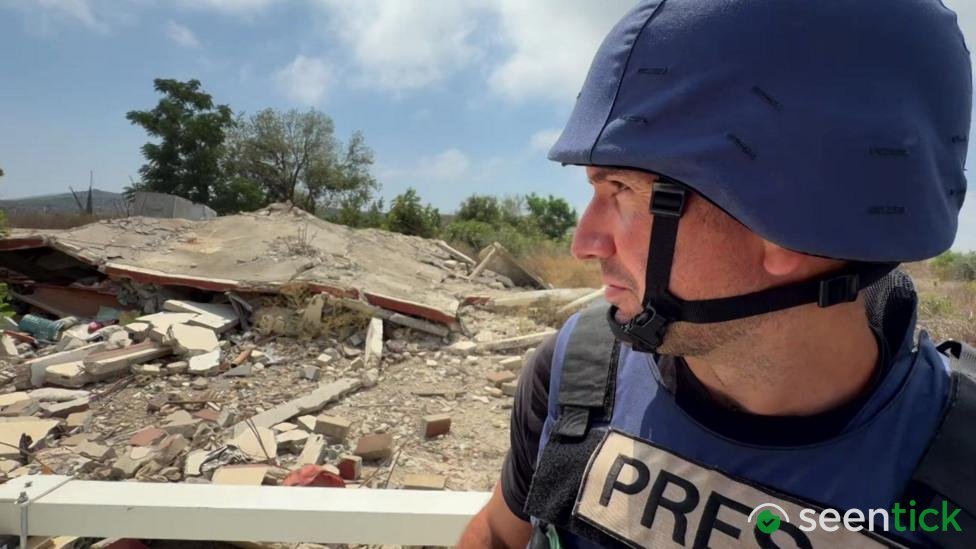
BBC travels inside occupied Lebanon as officials say Israel
Key Highlights
- The drive on the highway Crops lie abandoned and buildings destroyed Near the town of Naqoura, a Lebanese military checkpoint, painted in the white-and-red colours of the national flag, is the last visible sign of the state's presence.
- Soldiers are positioned behind concrete walls, but the road is empty.
- A few minutes further south, around a dozen Israeli flags indicate the start of occupied territory.
The desolate landscape of southern Lebanon stretches out like a barren canvas, the only signs of life being the occasional Israeli flag fluttering in the wind. The once-thriving town of Naqoura now lies abandoned, its buildings reduced to rubble and its streets eerily quiet.
A Lebanese military checkpoint, painted in the country's national colors, stands as a poignant reminder of the state's dwindling presence in this region.
A mere few kilometers south, however, the atmosphere is decidedly more tense. Dozen Israeli flags dot the landscape, marking the beginning of occupied territory and serving as a stark contrast to the Lebanese flag that once flew here. The area is the heartland of Lebanon's Shia Muslim community, from which the Iranian-backed militia Hezbollah draws its support.
Lebanon has been ravaged last
Lebanon has been ravaged Last month, a BBC team joined a humanitarian mission with the UN peacekeeping force in Lebanon, known as Unifil, one of the few ways to witness this occupied territory firsthand.
Read More: Flock's AI Surveillance Network Sparks Growing Backlash Across the United States
The UN team observed that entire villages had been flattened, and air strikes and demolitions continued even after a ceasefire was announced in June. The communities that were spared from Israel's attacks during the war are now cut off from the rest of the country, their residents facing an uncertain future.
Driving along the wall that separates Lebanon from Israel, we saw service roads built to facilitate military operations. Some were covered in netting to protect them from Hezbollah's explosive drones, while Israeli surveillance drones patrolled the skies above. Explosions echoed in the distance, possibly from demolitions being carried out.
"In the past months, we've seen the consolidation and fortification of Israeli positions," said Kandice Ardiel, a Unifil spokeswoman. "We have observed what appear to be Israeli civilian personnel carrying out demolition and engineering activities in support of military activities in south Lebanon." Human rights groups argue that some of Israel's actions amount to the deliberate destruction of civilian infrastructure, potentially constituting war crimes.
Hundreds of thousands of Lebanese remain displaced, their homes destroyed or uninhabitable. The US and Iran announced a preliminary deal aimed at ending their conflict, which included a cessation of violence in Lebanon. However, since then, Lebanon's military has recorded over 5,000 violations of the agreement.
"[The Israelis] are expanding their presence [in Lebanon]," said a Lebanese intelligence official. "They've been setting areas ablaze, demolishing houses while the bombing continues, despite the ceasefire." The official emphasized that Israel's true goal is to prevent people from returning to these villages, and that this is not solely about Hezbollah.
Also Read: Shein Shares Slide in Long-Awaited Stock Market Debut
Israeli officials condition a withdrawal from Lebanon on Hezbollah's disarmament, a demand that the Lebanese government cannot meet without the group's consent. Hezbollah opposes the efforts, calling them "surrender with humiliation." The plan has seen no progress, and there is little expectation of significant change before Israel's election at the end of October.
"The idea of the 'pilot zones' seems to be dead until the context changes," said a European diplomat familiar with the situation. "It seems we're heading to a Gaza-like situation. The Israelis are entrenching themselves...
and are here to stay, for now."
What's Your Reaction?
 Like
1
Like
1
 Dislike
 Love
Love
 Funny
Funny
 Wow
Wow
 Sad
Sad
 Angry
2
Angry
2
I write about the forces shaping business and the global economy, from startup growth and changing markets to international trade and policy. My work focuses on breaking down complex developments into clear, practical insights and understanding what they could mean for businesses, investors, and the wider economy.









Comments (0)