

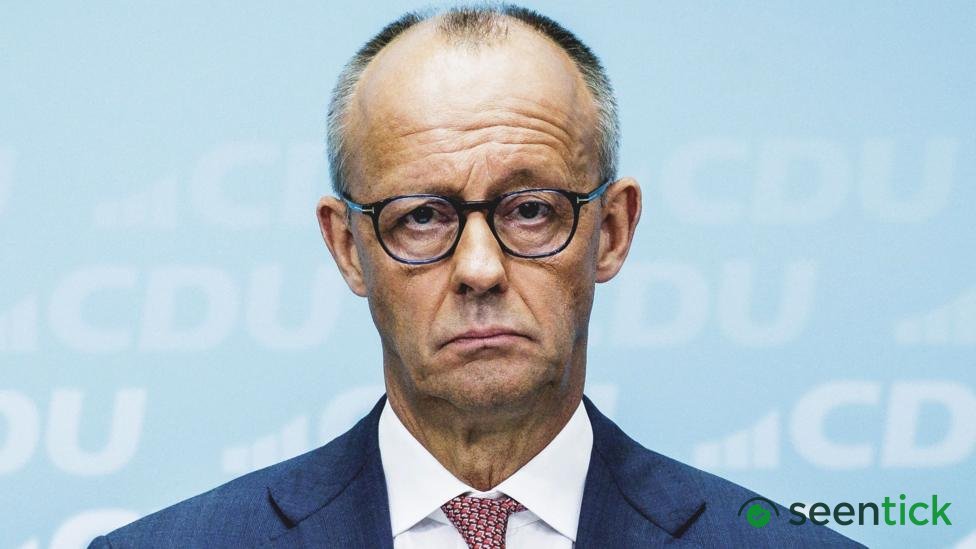
Chancellor Friedrich Merz's Coalition Government in Crisis as Regional Elections Spark Uncertainty
Key Highlights
- Chancellor Friedrich Merz's coalition government is facing a crisis of confidence after a set of bumper local elections.
- Merz's party fared far better in other regional elections earlier this year.
- The Alternative für Deutschland (AfD) party has made strong gains in the recent local elections.
- Economic forecasts remain positive, with leading economic institutes raising the country's growth forecasts for 2026 and 2027 above 1%.
Chancellor Friedrich Merz's government is facing a crisis of confidence following a series of local elections that have thrown Germany's politics into turmoil. The elections, which took place in the last fortnight, saw Merz's party perform poorly in key regions. This includes Berlin, Saxony-Anhalt, and Mecklenburg-Western Pomerania.
Merz's coalition government is on shaky ground. With record-low approval ratings among voters who have criticized him for being out of touch and arrogant. Despite persistent rumors of a potential Kanzlertausch (chancellor swap), no one within the CDU party is willing to challenge Merz openly.
Merz's party has struggled to connect with voters. Particularly in recent local elections, which have raised concerns about its ability to adapt to changing public sentiment.

Merz's party performed better in other regional elections earlier this year. However, the recent local elections have raised questions about its ability to build momentum.
Read More: Trump Signs Deal to Build Two US Military Bases in Greenland
Merz's approval ratings have been declining, with many voters expressing frustration with his leadership style.
The Alternative für Deutschland (AfD) party has made significant gains in the recent local elections. With its co-leader, Alice Weidel, claiming that Merz's days are numbered.

The AfD'It's rise has raised concerns about its potential impact on German politics. With some critics accusing the party of spreading misinformation and being linked to right-wing extremist groups.
Despite the uncertainty surrounding Merz's government, economic forecasts remain positive, with leading economic institutes predicting growth above 1% for 2026 and 2027.
Households and businesses continue to face high energy costs, while concerns about public safety and welfare costs remain a pressing issue.
Also Read: Xbox Cuts Hundreds of Jobs, Activision to Take on Halo Game Development
The recent local elections have highlighted the need for Merz's government to address these concerns and build trust with voters.
The future of German politics remains uncertain, with Merz's government facing significant challenges in the coming months.
The ousting of Olaf Scholz, the former leader of the centre-left SPD coalition, in 2025 has added to the pressure on Merz's government. This has struggled to connect with voters.
What's Your Reaction?
 Like
1
Like
1
 Dislike
 Love
1
Love
1
 Funny
Funny
 Wow
1
Wow
1
 Sad
1
Sad
1
 Angry
Angry

I write about the forces shaping business and the global economy, from startup growth and changing markets to international trade and policy. My work focuses on breaking down complex developments into clear, practical insights and understanding what they could mean for businesses, investors, and the wider economy.













Comments (0)