

Magna increases bet on battery swapping in India with $35M
Magna increases bet on battery swapping in India with $35M
Key Highlights
- While battery swapping has struggled to take off in much of the world, Canadian auto parts giant Magna International believes the model could work at scale in India, where millions of two- and three-wheelers and a fast-growing delivery economy create a different set of economics.
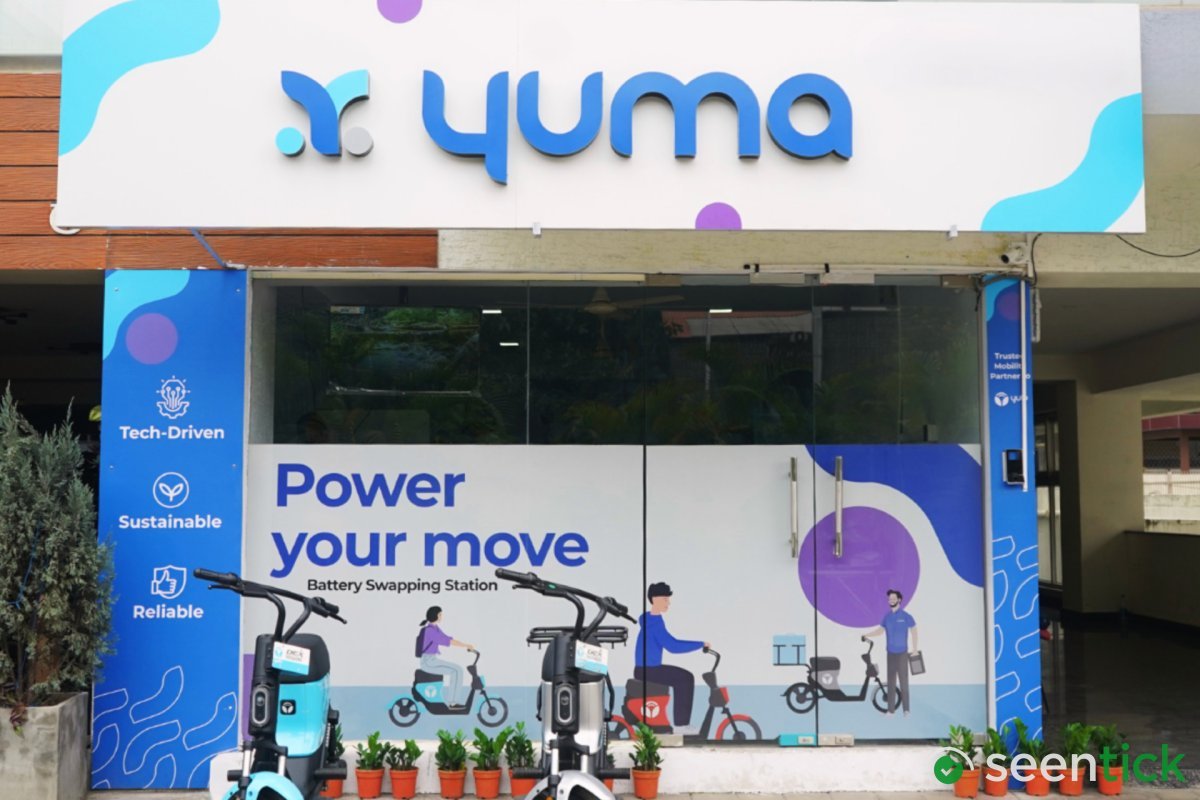
- And it’s placing that bet on Yuma Energy, a Bengaluru-based firm that operates a battery-swapping network for electric two- and three-wheelers.
- Yuma, which spun out of Indian mobility startup Yulu in early 2023, has completed more than 60 million swaps to date and now has about 100,000 batteries deployed across its network.
Magna International, the Canadian auto parts giant, is betting big on battery swapping in India, where millions of two- and three-wheelers and a growing delivery economy create a unique set of economics.
The company has invested $35 million in Yuma Energy, a Bengaluru-based firm that operates a battery-swapping network for electric two- and three-wheelers. This latest investment increases Magna's stake to 51% from its initial 25%, diluting the remaining 49% held
Yuma has completed over 60 million swaps to date, with approximately 100,000 batteries deployed across its network. The firm is targeting high-mileage riders in India's gig economy, where delivery workers often face time and revenue losses while charging their EVs.
Read More: Clipto uses AI to search terabytes of video and is now valued at $250M
"With Indian gig workers' high runtime on a daily basis, an EV makes absolute sense in terms of cost of ownership," said Muthu Subramanian, Yuma managing director. "Uptime is important."
Yuma's battery-swapping model offers a faster and more practical alternative to fast charging, with batteries exchanged in under two minutes compared to 20- or 30-minute fast charges.
"It's a capital-intensive business, and the unit economics will play out at scale," Subramanian noted. Yuma is not yet profitable but has achieved EBITDA positivity at some of its older swapping stations.
The firm operates over 400 stations with more than 2,500 charging units and aims to double its fleet of approximately 100,000 batteries within the next 12-18 months.
Also Read: AI-Powered Cybersecurity Threats: Can Governments Keep Up
Yuma plans to use Magna's investment to expand its swapping infrastructure and build ahead of demand. The company expects non-Yulu customers to account for about 25% of its swaps within the next two years.
India will remain Yuma's focus for at least the next 12-18 months, with plans to expand into Southeast Asian markets and parts of Africa in the longer term.
Yuma designs and manufactures its own battery packs and charging units, giving it control over both the hardware and network management. The firm has raised $93 million from Yulu to grow its electric two-wheeler fleet earlier this month.
What's Your Reaction?
 Like
Like
 Dislike
1
Dislike
1
 Love
Love
 Funny
Funny
 Wow
1
Wow
1
 Sad
Sad
 Angry
1
Angry
1

Tech journalist and AI enthusiast who enjoys keeping up with the latest in hardware, processors, emerging AI tools, and software. I like digging into new technology, understanding how things actually work, and following the developments that could shape the way we use technology in the future.














Comments (0)