

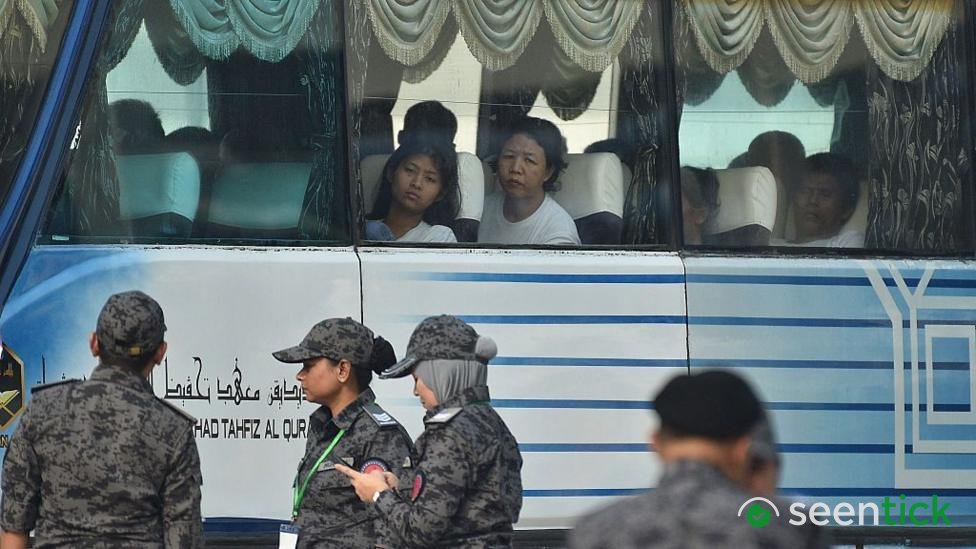
Malaysia Repatriates 1,476 Rohingya Asylum Seekers Under Controversial Deal with Myanmar's Military Ruler
Key Highlights
- 1,476 Rohingya asylum seekers repatriated to Myanmar under deal with military ruler Min Aung Hlaing.
- Malaysia bars UN refugee agency from screening returnees, sparking human rights concerns.
- Prime Minister Anwar Ibrahim defends decision, citing security and economic burdens.
- Human rights groups condemn repatriation, citing violence and persecution against Rohingya.
Malaysia has begun repatriating around 1,476 Rohingya asylum seekers to Myanmar under a controversial deal agreed with the country's military ruler, Min Aung Hlaing. The repatriation marks a striking shift in the country's stance on the Rohingya crisis. With Prime Minister Anwar Ibrahim's government facing criticism from human rights groups.
According to Anwar, the returnees will include Rohingya Muslims who have been living in Malaysia in large numbers after being driven out of Myanmar. However, the move has been met with skepticism from human rights groups, who say the returnees face violence, persecution, and forced conscription into the Myanmar army.
Malaysia has a long history of tolerating Rohingya migrants, with an estimated 200,000 living in the country. However, sentiment among Malaysians has shifted in recent years, with accusations against Rohingya migrants spreading on social media and demands for their deportation.

The Arakan Army, an insurgent group in Myanmar, has also been accused of targeting Rohingya civilians.
"A security burden, an economic burden and a source of hostility among the people." Anwar said in a recent podcast interview. However, human rights groups have accused Malaysian officials of beating and intimidating Rohingya migrants in detention centers.
Prime Minister Anwar Ibrahim's decision to repatriate the Rohingya has been criticized by some of his former supporters. Who say he is betraying his principles. Anwar has been under great political pressure, with his party losing seats in recent local elections and facing corruption scandals.
"He is in a corner, at his weakest point" says Tricia Yeoh, Director of the Asian Institute for Policy and Engagement at the University of Nottingham Malaysia. He has been forced to make concessions to his UMNO partners. There have been several corruption scandals, and his own party is divided.
"It's the same narrative you hear in the rest of the world, about immigrants taking jobs, that we should not be spending our public funds on facilities for them." Yeoh says. However, it is not clear how any Rohingya can be repatriated to Myanmar, where they are not recognized as citizens.
Two bombs exploded in Kyauktaw market on Sunday, claiming the lives of 49 individuals. The Rohingya, the ethnic minority group slated for repatriation, face a daunting reality: their intended destination, Sittwe, is a besieged state capital cut off from the rest of the world.
Also Read: Bangkok Floods: 48 Hours of Heavy Rain Submerge Roads, 50 Districts Declared Emergency Zones
Those who will be resettled are confined to overcrowded camps, where shortages of food and medicine have taken a devastating toll.
According to Malaysian Anti Corruption Commission, Latheefa Koya, the decision is "disgraceful, amoral, and shames the nation in the eyes of the international community".
"We can arrest them, but do not beat, intimidate or humiliate them," Anwar said in the same interview.
Malaysia's repatriation efforts have sparked controversy, with the government claiming the process is voluntary, yet restricting the UN High Commissioner for Refugees from monitoring the returnees' conditions. Detained individuals are being held in facilities without access to screening or assessment.
What's Your Reaction?
 Like
1
Like
1
 Dislike
1
Dislike
1
 Love
Love
 Funny
Funny
 Wow
1
Wow
1
 Sad
Sad
 Angry
1
Angry
1

I write about the forces shaping business and the global economy, from startup growth and changing markets to international trade and policy. My work focuses on breaking down complex developments into clear, practical insights and understanding what they could mean for businesses, investors, and the wider economy.










Comments (0)