

Namo Bharat: India’s fastest train corridor to soon meet 60%
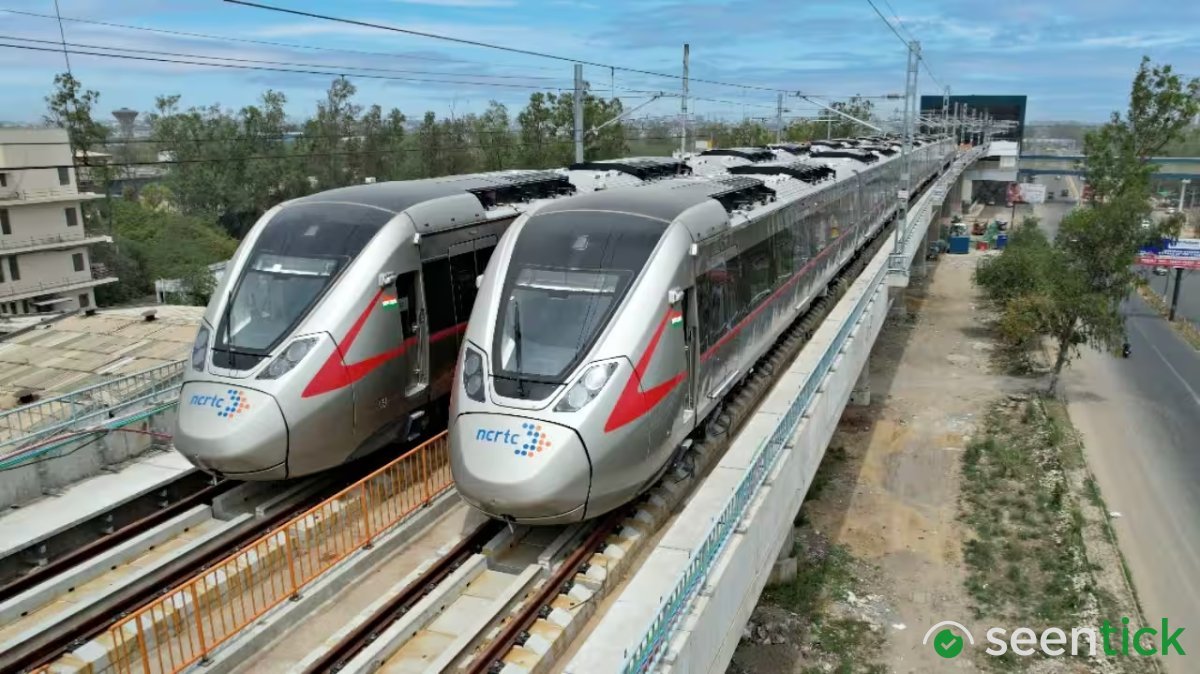
Namo Bharat: India’s fastest train corridor to soon meet 60%
Key Highlights
- In 2023, India saw the launch of its fastest commuter train service - the Regional Rapid Transit System (RRTS) train service, also called the Namo Bharat.
- Within years the entire corridor between Delhi and Meerut was thrown open.The Delhi-Meerut RRTS spans more than 80 kilometres and connects with key transport hubs, including the Meerut Metro, Sarai Kale Khan ISBT and Indian Railways stations.Namo Bharat trains have brought the Delhi-Meerut journey down to less than an hour, with trains operating at speeds of up to 160 kmph.And now, the Delhi-Meerut RRTS corridor is taking another important leap - this time on the renewable energy front.Delhi-Meerut Namo Bharat Solar DreamsThe Delhi-Meerut Namo Bharat corridor is set to receive power from a 110 MW captive solar plant, which is expected to fulfil nearly 60% of the corridorâs electricity needs.The National Capital Region Transport Corporation (NCRTC) has signed a power purchase agreement with NIRL NCRTC Renewables Limited (NNRL) for the project.The solar plant is estimated to require an investment of around Rs 450 crore and will be developed âThe captive solar project is expected to reduce annual electricity expenditure Under the agreement, NCRTC will purchase electricity generated The electricity produced at the plant will be transmitted through the Uttar Pradesh state grid to NCRTCâs receiving substations in Uttar Pradesh and Delhi.
- It will then be distributed along the corridor.âThe project leverages the Uttar Pradesh Solar Energy Policy to promote the use of renewable energy.
In 2023, India witnessed the launch of its fastest commuter train service, the Regional Rapid Transit System (RRTS) train service, also known as Namo Bharat. Over time, the entire corridor between Delhi and Meerut was opened up.
The Delhi-Meerut RRTS spans over 80 kilometres and connects key transport hubs like the Meerut Metro, Sarai Kale Khan ISBT, and Indian Railways stations. Namo Bharat trains have significantly reduced the travel time from Delhi to Meerut to under an hour, with speeds reaching up to 160 kmph.
Now, the Delhi-Meerut RRTS corridor is taking another significant leap – this time on the renewable energy front. The Delhi-Meerut Namo Bharat Solar Dreams project aims to power the corridor with a 110 MW captive solar plant, which will meet nearly 60% of its electricity needs.
Read More: Gold pledged for loan stolen in bank robbery: How borrower won case for full value
The National Capital Region Transport Corporation (NCRTC) has signed a power purchase agreement with NIRL NCRTC Renewables Limited (NNRL) for the project. The solar plant is estimated to require an investment of around Rs 450 crore and is expected to be commissioned within the next 24 months.
Under the agreement, NCRTC will purchase electricity generated at the plant, which will be transmitted through the Uttar Pradesh state grid to NCRTC’s receiving substations in Uttar Pradesh and Delhi. The electricity will then be distributed along the corridor.
The project leverages the Uttar Pradesh Solar Energy Policy to promote the use of renewable energy. It is expected to reduce annual electricity expenditure and provide environmental benefits
Also Read: Trump's Unconventional Leadership Style Sparks Debate
Replacing a significant portion of conventionally generated electricity with solar power will also reduce emissions of harmful pollutants like nitrogen oxides and sulphur dioxide (SO2), contributing to cleaner air and supporting sustainable urban mobility in the region.
The project is the first of its kind for India's RRTS and Metro transit systems. It is expected to establish a new benchmark for incorporating renewable energy into mass urban transportation.
Currently, NCRTC generates more than 11 MW of solar power across the Delhi-Ghaziabad-Meerut RRTS corridor. Solar panels have been installed at Namo Bharat stations, depots, RSS, and other buildings.
What's Your Reaction?
 Like
Like
 Dislike
 Love
Love
 Funny
Funny
 Wow
3
Wow
3
 Sad
Sad
 Angry
Angry

I write about the forces shaping business and the global economy, from startup growth and changing markets to international trade and policy. My work focuses on breaking down complex developments into clear, practical insights and understanding what they could mean for businesses, investors, and the wider economy.














Comments (0)