

Caterpillar is bringing to AI deployment what it learned from automating mining
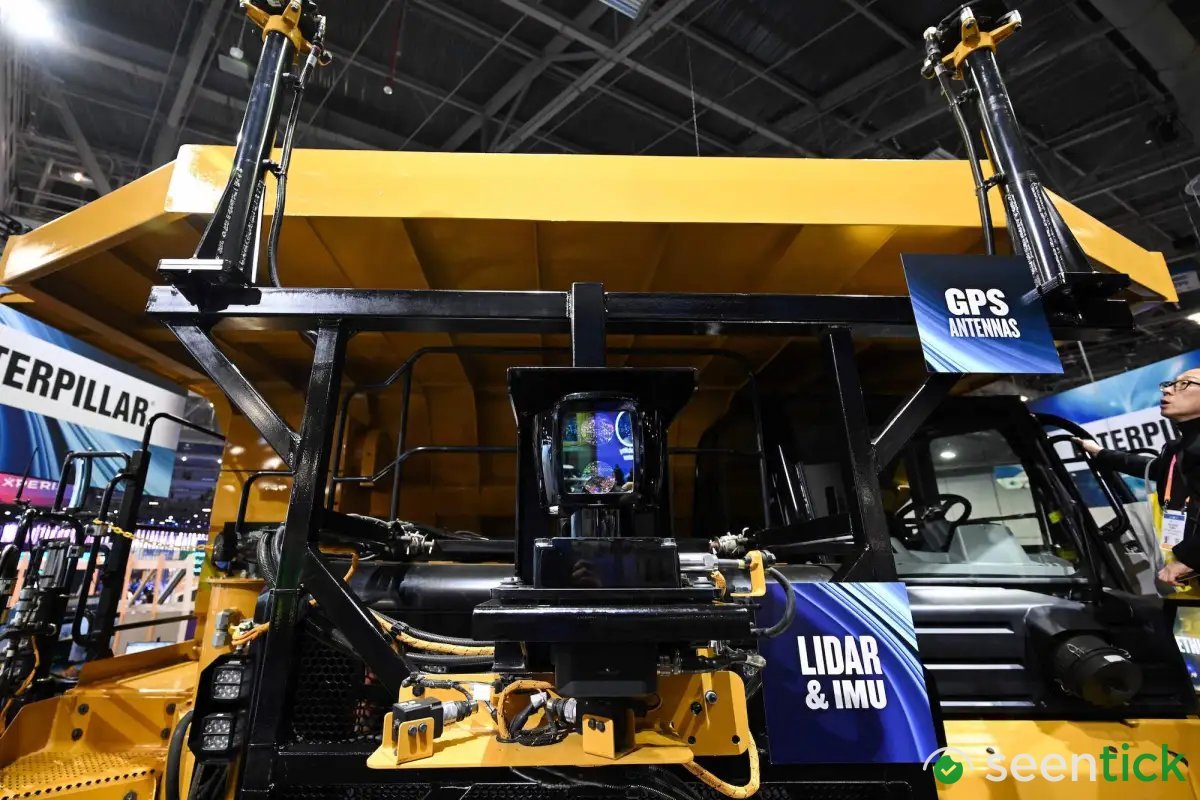
Caterpillar is bringing to AI deployment what it learned from automating mining
- Nearly every company that’s trying to deploy artificial intelligence runs into the same problem: it’s hard to integrate the tech into everyday operations.
- Today, it sells automated haul trucks, drilling, underground loaders, dozers, remote-controlled construction equipment, and more.
- The industrial giant is now applying AI more broadly, including in tools used One example is the Cat AI Assistant, which lets field technicians standing next to a machine use voice commands to pull up repair procedures, troubleshoot potential problems, and identify parts that may be needed before beginning a repair.
Nearly every company that’s trying to deploy artificial intelligence runs into the same problem: it’s hard to integrate the tech into everyday operations. Industrial heavyweight Caterpillar has spent decades dealing with a version of that problem in the physical world, and now it’s using its experience to deploy AI.
Caterpillar’s push into the autonomous space started with mining, where labor shortages and hazardous conditions can make automation particularly useful.


Today, it sells automated haul trucks, drilling, underground loaders, dozers, remote-controlled construction equipment, and more. It also offers a software command center, fleet management, and even remote terrain intelligence as part of its autonomous toolkit.
“Now we’re in this super exciting time where we can take all of that learning from mining and bring it into much more dynamic environments, jobsites, quarries, and construction sites,” the company’s CTO, Jaime Mineart, told TechCrunch on the sidelines of the Ai4 conference in Las Vegas earlier this month.
Core Findings and Detailed Timeline
The industrial giant is now applying AI more broadly, including in tools used One example is the Cat AI Assistant, which lets field technicians standing next to a machine use voice commands to pull up repair procedures, troubleshoot potential problems, and identify parts that may be needed before beginning a repair. Mineart shared the tool is now being used The assistant draws on Caterpillar’s proprietary data, which spans information generated Mineart shared Caterpillar has about 1.6 million connected assets globally and more than 16 peta The company is also using AI to power software for scanning sites and generating digital twins in manufacturing to analyze operations, she shared.
And like nearly every other company, Caterpillar is using AI across its enterprise operations, as well as for software development. “We use AI agents to modernize legacy code, generate and test new software, and identify defects earlier,” Mineart said.
But Mineart is quick to point out that building the technology is only part of the challenge, as deploying an autonomous machine is not the same as transforming a site to use AI.
Companies also have to rethink how people work alongside the technology and how existing processes need to change. “The hard part about autonomy and about physical AI is incorporating that technology into the customer jobsite and into the workflows,” she said.
Mineart said the company leans on experienced operators to help train AI systems, leveraging institutional knowledge built over decades.
Read More: Sprains, pain, and whiplash: Waymo and Zoox test drivers are getting hurt
Broader Implications and Future Outlook
And as machines become more autonomous, some operators may shift from controlling a single machine to overseeing multiple machines from a remote command center. That transition, however, is creating a new challenge for Caterpillar: training its 118,000 employees.
Mineart shared the company plans to spend $100 million over the next five years to train its workforce in AI, autonomy and robotics.
That investment is likely being put towards helping the company make the most of the broader boom in AI infrastructure, which is already helping its top-line. Caterpillar’s quarterly revenue reached an all-time high of $20.5 billion in the second quarter, helped Its power-generation division saw sales spike 72% to $3.10 billion, and CEO Joe Creed said that “no one is slowing down” when it comes to demand for cloud computing and generative AI infrastructure.
When you purchase through links in our articles, we may earn a small commission. This doesn’t affect our editorial independence. Kate Park is a reporter at TechCrunch, with a focus on technology, startups and venture capital in Asia.
She previously was a financial journalist at Mergermarket covering M&A, private equity and venture capital. Don’t miss out. The startup community will gather to answer a pivotal question: How do you build sustainably in the AI era?
OpenAI, Anthropic, Google, and 100 other companies call for action to defend against rogue AI Hugging Face is selling a cute $399 open source duck robot, Microduck Nvidia closes in on Hugging Face acquisition Viral AI startup Instinct has raised $350M at a $2.5B valuation Fitbit founders launch Luffu Link, an LTE health and safety band India’s Airbound bags $37M to take on trucks with rocket-like drones Hugging Face reportedly in talks to be acquired for $13B Nearly every company that’s trying to deploy artificial intelligence runs into the same problem: it’s hard to integrate the tech into everyday operations.
Industrial heavyweight Caterpillar has spent decades dealing with a version of that problem in the physical world, and now it’s using its experience to deploy AI. Caterpillar’s push into the autonomous space started with mining, where labor shortages and hazardous conditions can make automation particularly useful.
Today, it sells automated haul trucks, drilling, underground loaders, dozers, remote-controlled building work equipment, and more.
It also offers a software command center, fleet management, and even remote terrain intelligence as part of its autonomous toolkit.
What's Your Reaction?
 Like
1
Like
1
 Dislike
 Love
Love
 Funny
Funny
 Wow
2
Wow
2
 Sad
Sad
 Angry
Angry

Tech journalist and AI enthusiast who enjoys keeping up with the latest in hardware, processors, emerging AI tools, and software. I like digging into new technology, understanding how things actually work, and following the developments that could shape the way we use technology in the future.












Comments (0)