


Sensex's 2-Year Drought: What's Behind India's Slowing Stock Market
Key Highlights
- India's stock market has been stuck in a two-year rut.
- Sensex closed at 73,895.74 on September 25, 2026.
- Market's performance characterized by a difference between price correction and time correction.
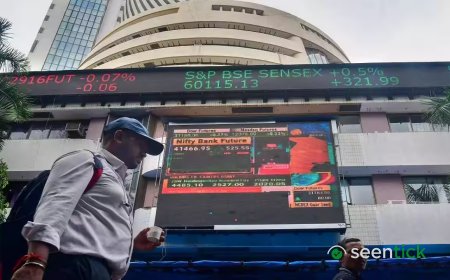
India's stock market, once a symbol of growth and optimism, has been stuck in a two-year rut, with the Sensex closing at 73,895.74 on September 25, 2026, down 13.91% from its lifetime high of 85,836.12 on September 26, 2024. The market's performance has been marked by a prolonged period of muted returns.
With investors struggling to generate strong gains despite the underlying market's continued evolution.
Read More: Rupee Rises 5 Paise to 95.82 Against Dollar as Oil Prices and Foreign Fund Flows Watched
Under the guidance of Nandish Shah, AVP– PCG Research &. Advisory at Motilal Oswal Financial Services, market trends have revealed a nuanced dynamic. Historically, investors had come to expect swift, V-shaped recoveries following 2020's market downturn.
However, Shah observes that markets now correct through time rather than price, leading to a more measured approach. As a result, the Sensex's price-to-earnings ratio has declined to approximately 19.8x, a more balanced valuation.
The initial selloff was driven by a disconnect between valuations and earnings growth. Which moderated as earnings growth slowed amid persistent global inflation and weakness in pending demand. This shift has led to a reevaluation of India's premium valuations.
As global uncertainty intensified, foreign investors increasingly sought refuge in more stable markets, driving a significant reallocation of capital towards developed and emerging economies. The resulting trend has been marked by a growing emphasis on AI-driven investment strategies.
Also Read: India's LPG Customer Base Sees 6.2 Million Decline Amid Iran War Disruptions
The sustained FII outflows have resulted in a narrower market, making stock selection increasingly important. As a result, market leadership is shifting towards domestically driven themes supported by strong domestic inflows.
Key takeaways from the market's performance include a disconnect between valuations and earnings growth. A shift towards AI-driven investment themes, and a narrowing market with a focus on domestic themes.
What's Your Reaction?
 Like
2
Like
2
 Dislike
 Love
Love
 Funny
Funny
 Wow
2
Wow
2
 Sad
Sad
 Angry
Angry

I write about the forces shaping business and the global economy, from startup growth and changing markets to international trade and policy. My work focuses on breaking down complex developments into clear, practical insights and understanding what they could mean for businesses, investors, and the wider economy.











Comments (0)