

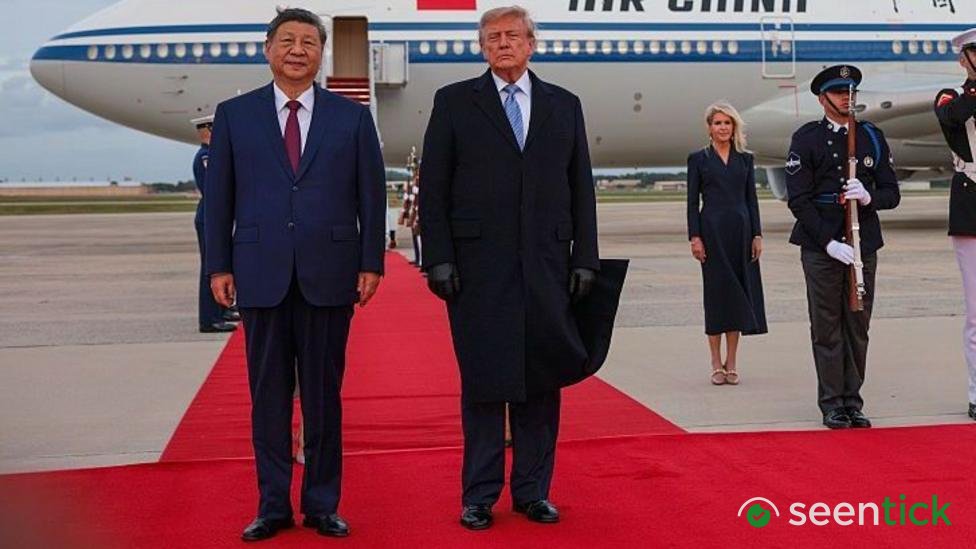
US Extends Trade Truce with China for 2 Months
Key Highlights
- Trade truce extended by 2 months.
- US wants China to do more to fulfill its side of the bargain.
- Discussions on artificial intelligence did not yield concrete decisions.
President Xi JinpingIt's highly anticipated visit to the United States has concluded with a trade truce extended by a few months. However, key disputes on tariffs, rare earth supplies, and access to advanced US chips have been kicked forward into another round of negotiations.
According to sources, the US is seeking China to do more to fulfill its side of the bargain before offering longer-term concessions.
The two leaders did engage in discussions on artificial intelligence, but no concrete decisions were made on the issue. Xi's domestic economy is facing challenges, with youth unemployment remaining high and property prices having slumped in a country where a significant majority of people own their own homes.
Trade is helping to prop up growth, making access to overseas markets more vital than ever.
The trade truce, which was extended from November to January, leaves several key issues unresolved. The US and China have agreed to continue negotiations on these topics. With the US seeking greater concessions from China in the future.
Read More: BBC Veteran Correspondent Mark Doyle Dies After Short Illness
The lack of concrete decisions on artificial intelligence has been attributed to the complexity of the issue. With Xi emphasizing the importance of ensuring that AI is developed and used in a way that is aligned with human values.

Chinese President Xi Jinping's US trip was anticipated as a key role to fortify bilateral relations and tackle pressing global concerns. Instead, Beijing's expectations for a more substantial trade agreement were largely unmet, leaving the visit to feel somewhat underwhelming. Xi's reception in the US was, however, marked by a lavish display of hospitality.
This includes a private airport greeting and a state dinner that showcased sesame-crusted sea bass and braised baby bok choy.
The visit was also notable for the optics of the meeting. With Xi's image at home as Trump's equal being cemented by the visit. The two leaders also discussed Taiwan, with Xi reiterating his hope that the US would adhere to the "correct position" of opposing Taiwan independence.
However, Trump has yet to make any public response to the Chinese leader's comments.
Despite the pomp and circumstance of the visit, the competition between the world's two most powerful countries remains fierce. The visit has left many wondering what the future holds for US-China relations. And whether the current trade truce will be enough to sustain a lasting partnership.

As the US and China move forward, they will need to navigate the complex web of issues that separate them. From trade and technology to security and human rights, the stakes are high and the challenges are numerous.
Also Read: El Niño becomes strongest on record weeks before expected peak
One thing is clear, however: the future of US-China relations will be shaped by the decisions made in the coming months and years.
The visit has also raised questions about the role of the US in the Asia-Pacific region. With China's growing economic and military influence, the US is facing increasing pressure to adapt to a rapidly changing landscape. The visit has provided a glimpse into the challenges that lie ahead.
And the need for the US to develop a more nuanced and effective approach to engaging with China.
As the US and China look to the future, they will need to find a way to balance their competing interests and priorities. This will require a deep understanding of each other's needs and concerns. As well as a willingness to compromise and find common ground.
The visit has provided a glimpse into the complexities of US-China relations, and the need for a more collaborative and cooperative approach.
What's Your Reaction?
 Like
2
Like
2
 Dislike
 Love
Love
 Funny
Funny
 Wow
2
Wow
2
 Sad
Sad
 Angry
Angry

I write about the forces shaping business and the global economy, from startup growth and changing markets to international trade and policy. My work focuses on breaking down complex developments into clear, practical insights and understanding what they could mean for businesses, investors, and the wider economy.










Comments (0)