

NIA Court Denies Bail to J&K Terror Associate in Kishtwar Case
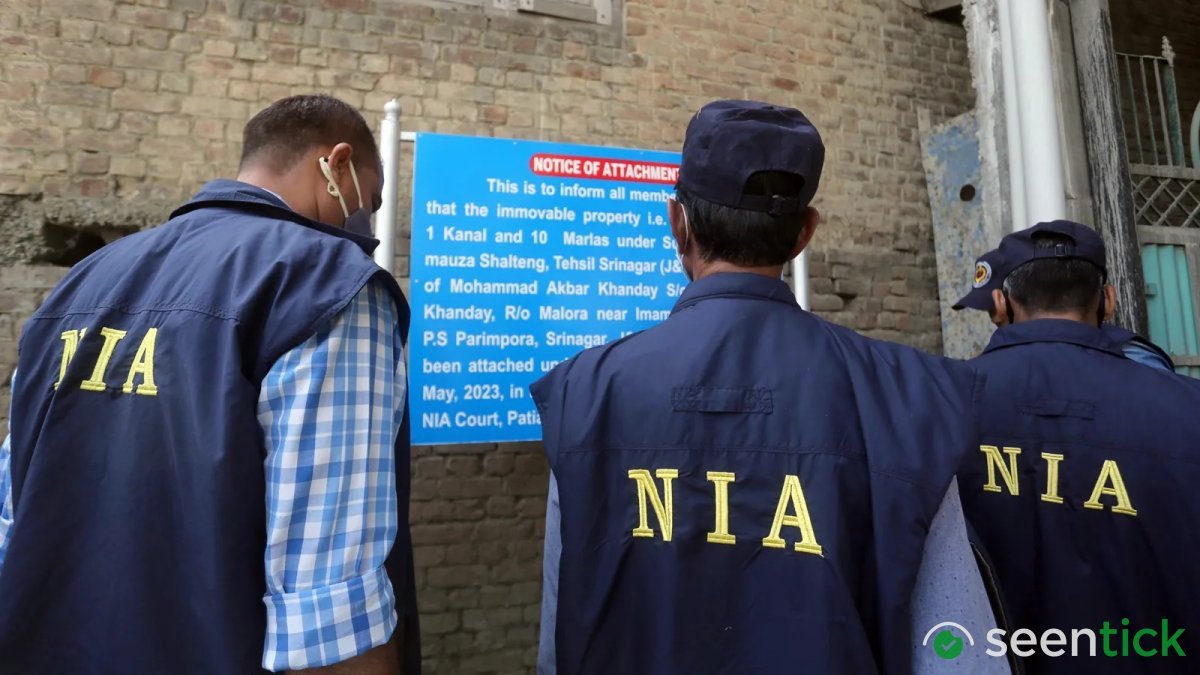
NIA Court Denies Bail to J&K Terror Associate in Kishtwar Case
Key Highlights
- Special Judge Prem Sagar denied bail to Tanvir Ahmed Malik, who has been jailed for five years on charges of aiding Hizbul Mujahideen terrorists.
- The NIA court noted that the trial is actively progressing with 30 out of 101 witnesses already examined since charges were framed on March 3, 2022.
- Investigators revealed that Malik provided shelter to terrorists Haroon Abbas Wani and Tahir Ahmed Bhat at his home and a near
A special National Investigation Agency (NIA) court in Jammu and Kashmir has formally denied the bail application of a local man accused of providing food, shelter, and various logistics support to active terrorists operating within the Kishtwar district. The ruling came down on Tuesday as the presiding judge addressed arguments centered around prolonged judicial custody and the fundamental right to a speedy trial under the law.
The applicant had approached the judicial authorities seeking relief after spending five years behind bars since his initial arrest. Lawyers representing the petitioner argued that this extended incarceration period violated his basic right to an expedited judicial process. However, Special Judge of the NIA Court, Prem Sagar, firmly rejected these contentions during the court session.
Progress of the Ongoing NIA Trial
Providing details on the current judicial status, Special Judge Prem Sagar noted that the trial is already actively underway. Court records show that formal charges in the matter were framed on March 3, 2022. Furthermore, the prosecution has already examined 30 witnesses out of a total of 101 witnesses cited in the official chargesheet.
The judge pointed out that witnesses are being systematically examined on scheduled dates barring only a few rare occasions. Addressing the defense's reliance on the duration of the trial, the judge stated that arguments regarding delay are not tenable for offenses of this grave nature and cannot serve as a valid ground to grant bail given existing judicial precedents.
Roots in the 2019 Kishtwar Weapon-Snatching Incident
The legal proceedings against the accused stem from a deep-rooted investigation into a high-profile attack that shook the region years ago. On March 8, 2019, operatives Haroon Abbas Wani and another terrorist, Osama Bin Javed, allegedly participated in snatching an AK-47 rifle along with three magazines and 90 rounds of ammunition.
The weapon was taken directly from police head constable Daleep Singh, who served as the escort in-charge for the Kishtwar Deputy Commissioner.
According to findings from the comprehensive NIA probe, that exact service weapon was later recovered from the site of an encounter where Haroon Wani was killed in January 2020. Investigators established that the current applicant, Tanvir Ahmed Malik, had direct operational and personal links to these insurgents, which surfaced during the deeper examination of the weapon-snatching conspiracy.
Read More: The Daily Catch-Up: Key National and Global Developments You Need to Know
Connections to Banned Groups and Local Academies
The central agency's investigation uncovered multiple layers of local facilitation networks that aided the underground activities of the banned outfits. Investigators found that one Rustam Qazi, an active member of the outlawed organization Jamaat-e-Islami, was a frequent visitor to the house of Tanvir Ahmed Malik.
The probe revealed that Qazi maintained close ties with Malik’s father, who was also a documented member of Jamaat-e-Islami.
Building upon these local ideological and personal networks, the NIA stated that Malik secured a job at the Al Huda Academy in Tanta in April 2019, working as an Urdu and Arabic teacher. The agency's evidence indicates that he utilized this cover and his residential premises to provide safe houses and logistical backing to Haroon Abbas Wani and Tahir Ahmed Bhat, hiding them both at his home and inside an abandoned cave hideout located near his property.
Risk of Witness Tampering and Threat to State Security
In his detailed order, Special Judge Prem Sagar underscored the specific dangers of releasing the accused back into society while judicial proceedings remain active. The judge observed that the material currently available on record points directly to the active involvement of the applicant in furthering a criminal conspiracy for unlawful activities.
This evidence still requires corroboration from other key witnesses who have yet to take the stand.
Because critical testimonies remain pending, the court concluded that releasing the applicant on bail presents a clear and present danger. The judge warned that there is every likelihood the petitioner could influence key witnesses, which would severely hamper the administration of justice and compromise the integrity of the ongoing trial.
Broader Implications for the Union Territory
Balancing individual liberties against collective safety, the judicial authority weighed the severe gravity of the charges against the applicant. The court emphasized that the overarching security interests of the State and the Union Territory (UT) must take precedence in matters involving violent extremism and terrorist conspiracies.
Consequently, the NIA court dismissed the bail petition in its entirety. The ruling reinforces the judicial stance that individuals accused of enabling terror logistics in sensitive regions like Jammu and Kashmir will face strict scrutiny and prolonged detention as the state works to bring all co-conspirators to justice under the law.
Also Read: Railway Board Approves New Vande Bharat Express Train Service for High-Demand Inter-City Route
NIA court bail plea
Kishtwar weapon snatching
Hizbul Mujahideen terrorists
Jammu and Kashmir NIA
Tanvir Ahmed Malik case
Frequently Asked Questions
What's Your Reaction?
 Like
Like
 Dislike
1
Dislike
1
 Love
Love
 Funny
Funny
 Wow
Wow
 Sad
Sad
 Angry
2
Angry
2

Tech journalist and AI enthusiast who enjoys keeping up with the latest in hardware, processors, emerging AI tools, and software. I like digging into new technology, understanding how things actually work, and following the developments that could shape the way we use technology in the future.








Comments (0)