

PM Modi Emphasizes Global Security and Cooperation at SCO Summit
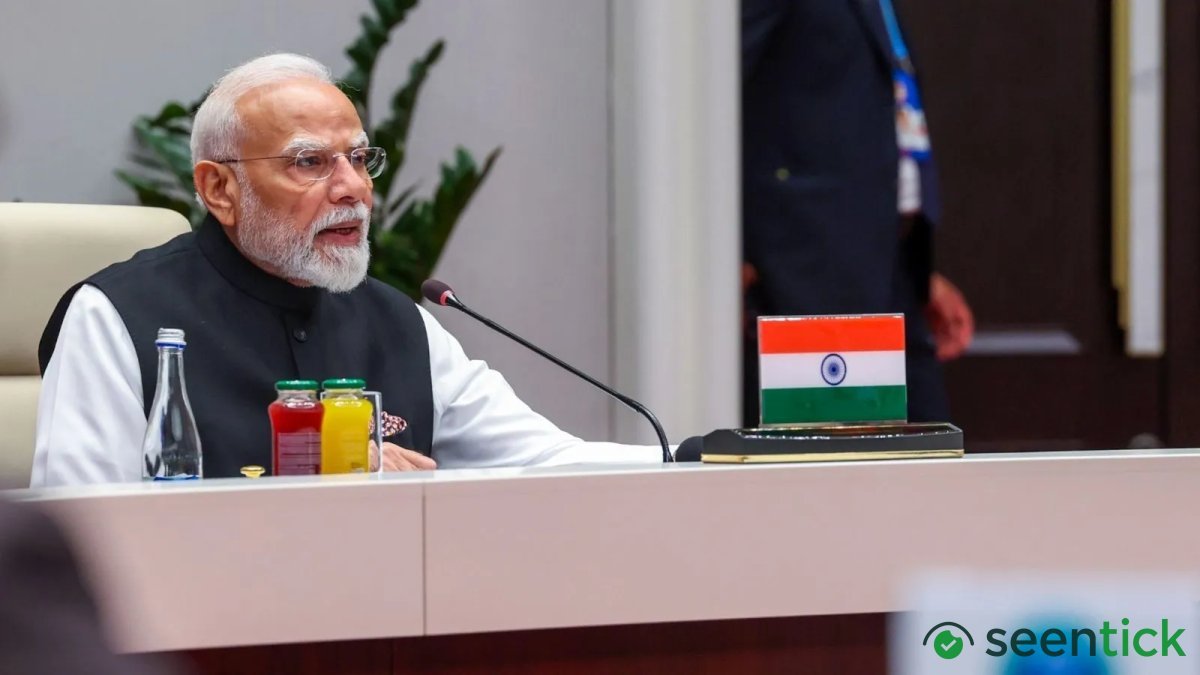
PM Modi Emphasizes Global Security and Cooperation at SCO Summit
Key Highlights
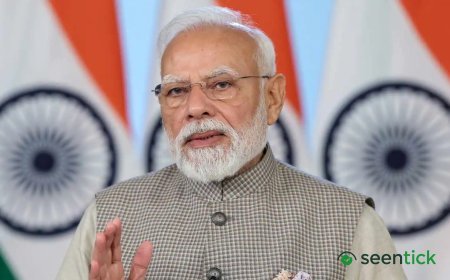
- As the war in West Asia completed six months and a peace deal remained elusive, Prime Minister Narendra Modi told leaders of the Shanghai Cooperation Organisation countries Tuesday that the crisis demonstrated that a “conflict in one region does not remain confined there” and “impacts global energy security, maritime trade and supply chains” with the Global South bearing the brunt of the “consequences”.
- Addressing the SCO summit in the Kyrgyz capital Bishkek, Modi said India’s position is that the “resolution of all tensions and conflicts is possible only through dialogue and diplomacy, not on the battlefield”.
- Among leaders at the summit was Iran’s President Masoud Pezeshkian.
As the war in West Asia entered its seventh month with no end in sight, Prime Minister Narendra Modi addressed leaders of the Shanghai Cooperation Organisation countries at the SCO summit in Bishkek, Kyrgyzstan. The six-month-old conflict had already demonstrated that a conflict in one region could not be contained within its borders, but instead have far-reaching consequences for global energy security, maritime trade, and supply chains.
According to Modi, "the resolution of all tensions and conflicts is possible only through dialogue and diplomacy, not on the battlefield." This stance was reflected in India's consistent approach to resolving regional conflicts, which prioritizes peaceful negotiations over military action.
Modi's address at the SCO summit came as Iran's President Masoud Pezeshkian attended for the first time since the start of the war. The crisis in West Asia has had a significant impact on the global South, with many countries bearing the brunt of its consequences.
In his meeting with Pezeshkian on Monday, Modi highlighted the need for international cooperation to address this growing challenge. "Terrorism remains a grave challenge for all of humanity," he said.
"In the fight against it, we cannot limit ourselves to a mere 'action-reaction' mindset." According to Modi, countries that use terrorism as an instrument of state policy and provide shelter and support to terrorists must be held accountable. "We must dismantle the entire ecosystem of terror financing, recruitment, radicalisation and safe havens," he added.
Read More: The Daily Catch-Up: Key National and Global Developments You Need to Know
Modi's remarks terrorism reference india's
Modi's remarks on terrorism were a reference to India's past experiences with terrorist attacks in Pakistan-occupied Kashmir. In May 2025, days after the Pahalgam terror attack, India launched Operation Sindoor, striking terror targets in Pakistan-occupied Kashmir and Pakistan. This led to four days of hostilities which ended with Pakistan seeking a ceasefire.
At the SCO summit last year, Modi described the Pahalgam terror attack as the "most heinous face of terrorism" which was "not only an assault on the conscience of India, but also an open challenge to every nation." He had underlined that "double standards on terrorism are unacceptable."
Modi's address at the SCO summit was not just a call for international cooperation in addressing regional conflicts and terrorism, but also a reminder of India's commitment to the organization. The SCO has been a cornerstone of India's foreign policy since its inception, with India's vision for the organization being guided In his address, Modi emphasized that the SCO had developed a strong tradition of dialogue and cooperation across Eurasia over the past 25 years, contributing significantly to the well-being of its people and the progress of humanity.
He called on fellow leaders to build on this foundation and translate their cooperation into tangible results in the next 25 years.
Modi's remarks on connectivity were also noteworthy, as he emphasized the need for "robust and reliable connectivity" between nations. India supports all initiatives that connect markets, facilitate trade, and open new avenues for growth, but respect for the sovereignty and territorial integrity of all nations is paramount in these endeavours.
Modi highlighted the importance of simplifying customs procedures, promoting digital documentation, and enhancing the efficiency of logistics networks to expand connectivity further. He also mentioned India's interest in accessing Central Asia through Iran, which Pakistan has denied overland transit access to.
Also Read: Railway Board Approves New Vande Bharat Express Train Service for High-Demand Inter-City Route
Modi's address at the SCO summit was a significant moment in the organization's history, as it marked a turning point in India's approach to regional conflicts and international cooperation. The Prime Minister's emphasis on dialogue, diplomacy, and connectivity reflected India's commitment to peaceful resolution of conflicts and its desire to strengthen ties with fellow nations in Eurasia.
As the world navigates through uncertainty and instability, Modi's address served as a reminder of the importance of international cooperation and collective action in addressing global challenges.
Modi's meeting with leaders at the SCO summit was also notable, as it marked his first informal meeting with Iran's President Masoud Pezeshkian since the start of the war. The two leaders discussed the need for international cooperation to address regional conflicts and terrorism, while Modi also met with other leaders, including Pakistan Prime Minister Shehbaz Sharif, who listened intently to his remarks on terrorism.
The SCO summit in Bishkek was expected to be a significant moment in the organization's history, as it marked a turning point in India's approach to regional conflicts and international cooperation. The meeting of the BRICS leaders in New Delhi on September 12-13 was also expected to be a major event, with Xi Jinping and Vladimir Putin likely to attend.
What's Your Reaction?
 Like
2
Like
2
 Dislike
 Love
Love
 Funny
Funny
 Wow
Wow
 Sad
Sad
 Angry
Angry
Tech journalist and AI enthusiast who enjoys keeping up with the latest in hardware, processors, emerging AI tools, and software. I like digging into new technology, understanding how things actually work, and following the developments that could shape the way we use technology in the future.







Comments (0)