

Lindsay Clancy's Murder Trial Enters Critical Phase as Jurors
Lindsay Clancy's Murder Trial Enters Critical Phase as Jurors
Key Highlights
- This video can not be played Watch: Judge orders deadlocked Clancy jurors to keep deliberating Jurors in the trial of Lindsay Clancy are deadlocked after three days of deliberations, but a judge has asked them to keep trying.
- Clancy, a resident of Massachusetts, is facing murder charges for killing her three children at their family home in 2023.
- Her lawyer does not dispute that the 36-year-old former nurse killed the children, but argues that she was suffering from postpartum psychosis at the time and was unable to distinguish right from wrong.
Jurors in the high-profile and emotionally charged trial of Lindsay Clancy have found themselves at an intense impasse, deadlocked after three full days of rigorous deliberations regarding the fate of the Massachusetts resident. Despite the stalemate, the presiding judge has formally asked them to keep trying to reach a unanimous verdict.
Clancy, a 36-year-old former nurse, is facing severe murder charges for killing her three young children at their family home in 2023. The harrowing case has captured national attention, placing postpartum psychosis squarely in the spotlight and sparking profound discussions about maternal mental health, legal responsibility, and the complexities of the justice system.
Her lawyer does not dispute that Clancy killed the children, but firmly argues that she was suffering from severe postpartum psychosis at the time of the tragic events and was entirely unable to distinguish right from wrong. After discussing the case for several more hours on Tuesday, the jurors were ultimately sent home for the day and instructed to return on Wednesday morning to resume their challenging task.
Before dismissing them, the judge expressed gratitude, stating, "I just want to thank you for all your hard work and commitment so far in this case." The Massachusetts mother is officially charged with three counts of first-degree murder, as the prosecution aggressively argues that she made a calculated, intentional, and premeditated decision to take the lives of her children. The jury, comprised of nine women and three men, formally began deliberating last week after hearing weeks of exhaustive testimony from dozens of expert witnesses, medical professionals, and family members.
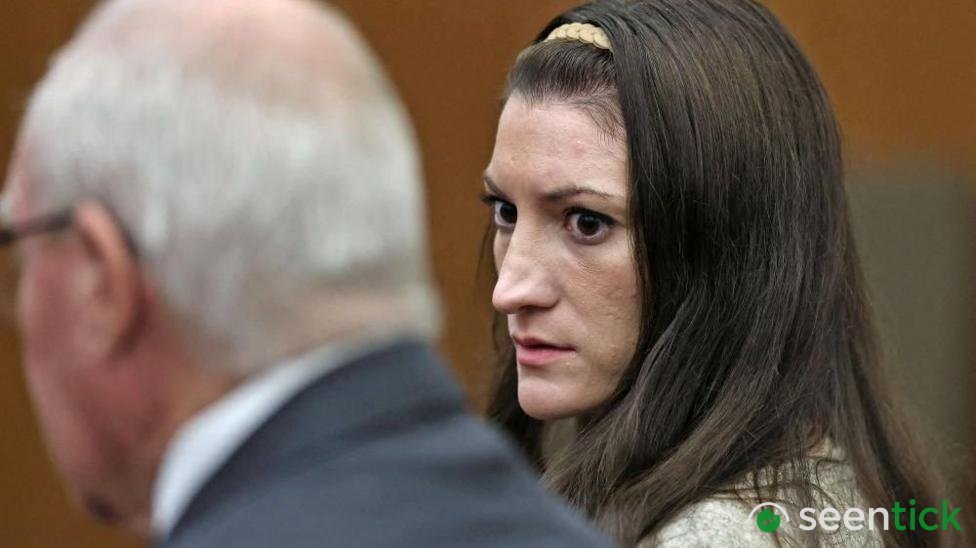
On Tuesday, audible gasps could be heard echoing throughout the courtroom as Judge William Sullivan read out a formal note from the jury indicating that it was deadlocked. Clancy, who was left paralysed after jumping from a second-floor window of their home shortly after the killings, appeared stoic as she sat quietly in a wheelchair beside her defence lawyer.
The situation in the courtroom highlights the immense psychological toll placed on juries in complex cases. It is not uncommon for jurors in high-profile trials to struggle intensely to reach a unified decision, and judicial systems possess established protocols for handling such stalemates.
A deadlock among the jury such as this one frequently happens in "complex and emotionally charged trials", Heather Cucolo, a New York Law School professor and expert in mental health law, told the BBC in an interview discussing the legal mechanisms at play. Elaborating on the procedural steps available to the court, Cucolo explained, "If the deadlock persists, the judge might issue an additional 'dynamite' instruction [known as a Tuey-Rodriguez charge in Massachusetts] to encourage the group to consider alternative perspectives and strive for an agreement while upholding their genuine convictions." However, Cucolo cautioned that delivering such a charge is "typically a last-ditch effort" from a judge seeking to salvage a verdict before resorting to alternative measures.
Read More: Sexual assaults happening almost every day in Ceuta
Echoing these sentiments, criminal defence lawyer Elyse Hershon told the BBC she was not surprised to hear that the jury was deadlocked, pointing out that public and personal opinions on the case run exceptionally deep. "The facts are difficult and a lot of the evidence is graphic so they have a lot weighing on them," Hershon noted, emphasizing the heavy emotional burden carried If the jury remains fundamentally unable to agree on a verdict after exhausting all reasonable avenues, the judge retains the ultimate authority to declare a mistrial, which would necessitate starting the arduous legal process entirely over.
Tragic core case involves deaths
The tragic core of the case involves the deaths of three innocent young children: five-year-old Cora, three-year-old Dawson, and eight-month-old Callan. Clancy is accused of strangling her kids with fitness bands inside their Massachusetts home in January 2023, a horrific act that shattered a family and shocked the surrounding community.
In stark contrast to the prosecution's narrative of premeditated murder, the defence argues that Clancy was experiencing a terrifying episode of postpartum psychosis-a severe mental health condition that can develop rapidly after childbirth-and that she should therefore not be held criminally responsible for the killings. Court hearings notably explored how Clancy was allegedly suffering from a severe "command hallucination" when she killed the children.
The potential legal outcomes facing Clancy span a wide and stark spectrum depending on how the jury ultimately interprets her mental state and the evidence presented. If found guilty of first-degree murder, defined legally as the intentional and premeditated killing of another person, Clancy will face a mandatory life sentence in prison without the possibility of parole.
Alternatively, the jury could find her guilty of a lesser charge, including second-degree murder-which is committed with malice or extreme recklessness, but crucially without prior planning-or manslaughter, involving the unintentional killing of another human being. In either of those lesser instances, she would still face significant time behind bars. Conversely, if she is successfully found not guilty
As the trial continues to unfold, key moments from the proceedings have underscored the tragedy of the situation, featuring exhibits such as a family picture of the Clancy household that was formally displayed in court to humanize the victims and showcase the family before the catastrophe. The trial has fundamentally transformed into a national flashpoint regarding how the legal system handles severe postpartum psychiatric illnesses, putting postpartum psychosis squarely in the spotlight of public and legal debate.
Legal experts, mental health advocates, and the general public remain transfixed as the jury deliberates behind closed doors, weighing the harrowing graphic evidence against the medical testimony concerning Clancy's mind at the time of the tragedy. With the jurors instructed to return to the courthouse to resume their deliberations, the tension in Massachusetts remains palpable.
Whether the jury will heed the judge's request to keep trying, whether a Tuey-Rodriguez charge will be deployed For now, Lindsay Clancy sits quietly in her wheelchair in the courtroom, awaiting a decision that will dictate whether she spends the remainder of her days behind bars for first-degree murder, serves time for a lesser conviction, or is remanded to a secure psychiatric facility for the rest of her life.
Also Read: The final minutes before floodwater crashed
Lindsay Clancy
postpartum psychosis
first-degree murder
second-degree murder
jury deadlock
Judge William Sullivan
What's Your Reaction?
 Like
Like
 Dislike
 Love
Love
 Funny
Funny
 Wow
Wow
 Sad
2
Sad
2
 Angry
Angry

I write about the forces shaping business and the global economy, from startup growth and changing markets to international trade and policy. My work focuses on breaking down complex developments into clear, practical insights and understanding what they could mean for businesses, investors, and the wider economy.











Comments (0)