

Nepal Prime Minister Thanks India and China After Floods
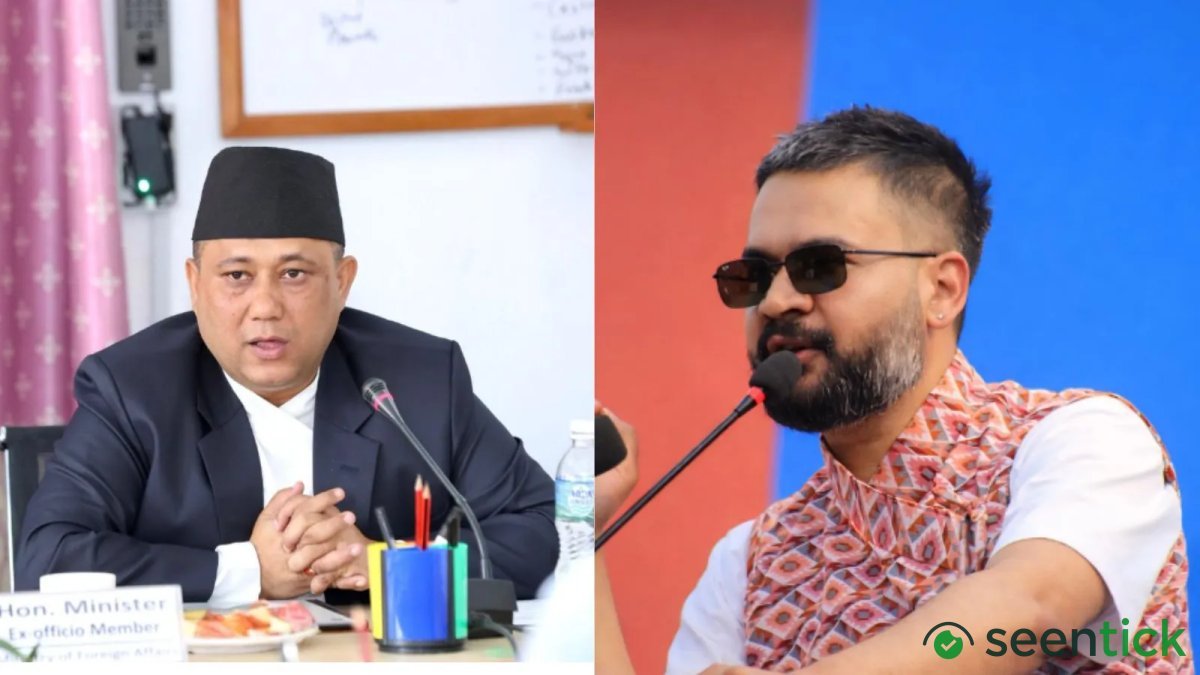
Nepal Prime Minister Thanks India and China After Floods
Key Highlights
- Nepalese Prime Minister Balen Shah thanked India and China in Parliament for swift rescue assistance after flash floods killed over 1,000 people.
- Foreign Minister Shisir Khanal announced a diplomatic shift to demand climate compensation from top emitters like China, the United States, and India.
- India dispatched its fifth aircraft carrying 5.5 tonnes of essential medicines and an 11-member rescue team, bringing total relief material to 68.5 tonnes.
The Nepalese Prime Minister, Balen Shah, has formally expressed his gratitude to neighbouring nations India and China for providing rapid rescue assistance following a devastating series of flash floods.
Addressing the Parliament on Tuesday, Prime Minister Shah detailed the severe ground situation in the aftermath of natural disasters that have unfortunately left over 1,000 people dead and many more missing.
During his parliamentary address, the Nepalese leader highlighted the crucial role played
However, these expressions of diplomatic appreciation came shortly after Nepal's Foreign Minister, Shisir Khanal, announced that the Himalayan nation has decided to fundamentally shift its diplomatic stance to officially claim financial compensation for climate-induced natural disasters.
Foreign Minister Khanal pointed out that Nepal's personal greenhouse gas emissions remain virtually negligible, yet the country is forced to pay the ultimate price for an escalating global crisis it did not create.
According to the foreign ministry, the alarming rapid melting of glaciers and catastrophic mountain tsunamis witnessed recently are the direct and undeniable consequences of global climate change.
Explaining the policy shift in a recent interview with The Kathmandu Post, Khanal stated that the country is actively pivoting its diplomatic framework away from traditional aid towards a model centered on justice and financial compensation.
Read More: PM Modi at SCO: Dialogue, not battlefield, is way to resolve
The foreign minister emphasized that financial assistance in this context is not a matter of charity, but rather a strict legal and moral liability for major industrial emitters around the world.
Khanal specifically identified the world's top industrial emitters, noting that China ranks as number one, the United States stands at number two, and India holds the number three spot.
He asserted that these major economic powers carry a heavy historical responsibility to adequately compensate highly vulnerable nations like Nepal for ongoing environmental damages.
To advance this new stance, Kathmandu plans to raise the critical issue with absolute firmness and unwavering clarity at every upcoming international diplomatic forum in the near future.
Furthermore, government officials have framed this demand as an absolute matter of civilisational survival for the broader South Asian region.
Officials warned that if the Himalayan glaciers completely disappear, the essential water security of more than two billion people across South Asia who depend entirely on rivers like the Ganges and the Trishuli will be permanently compromised.
Nepal maintains that it is currently advocating not just for its own national interests, but for the fundamental survival of the entire South Asian civilization.
India Delivers Fifth Tranche of Emergency Relief Material
Meanwhile, the government of India has continued its active support
Also Read: PM Modi Shares Inspiring GDP Growth Video from Kyrgyzstan Bilateral Summit
External Affairs Minister S. Jaishankar shared updates on the deployment through a public statement on social media platform X on Tuesday morning.
"The fifth Indian aircraft has departed for Nepal. It is carrying an 11-member rescue team with specialised equipment, and 5.5 tonnes of essential medicines," Jaishankar confirmed in his post.
This latest shipment builds on prior deliveries, bringing India's cumulative relief contribution to a substantial 68.5 tonnes of essential materials to aid local populations.
In addition to medicines and technical gear, New Delhi has also deployed a dedicated team of medical doctors, paramedics, and technical contingents to actively assist with arduous local rescue operations.
The initial dispatch of Indian relief supplies was mobilized swiftly, arriving merely hours after Indian Prime Minister Narendra Modi spoke directly with his Nepalese counterpart Shah on August 26, immediately after the flash floods struck the region.
During that initial telephonic exchange, Prime Minister Modi assured the Nepalese leadership of India's unwavering and comprehensive assistance to deal with the unfolding humanitarian emergency.
Frequently Asked Questions
What's Your Reaction?
 Like
2
Like
2
 Dislike
 Love
Love
 Funny
Funny
 Wow
1
Wow
1
 Sad
Sad
 Angry
Angry

Tech journalist and AI enthusiast who enjoys keeping up with the latest in hardware, processors, emerging AI tools, and software. I like digging into new technology, understanding how things actually work, and following the developments that could shape the way we use technology in the future.






Comments (0)