

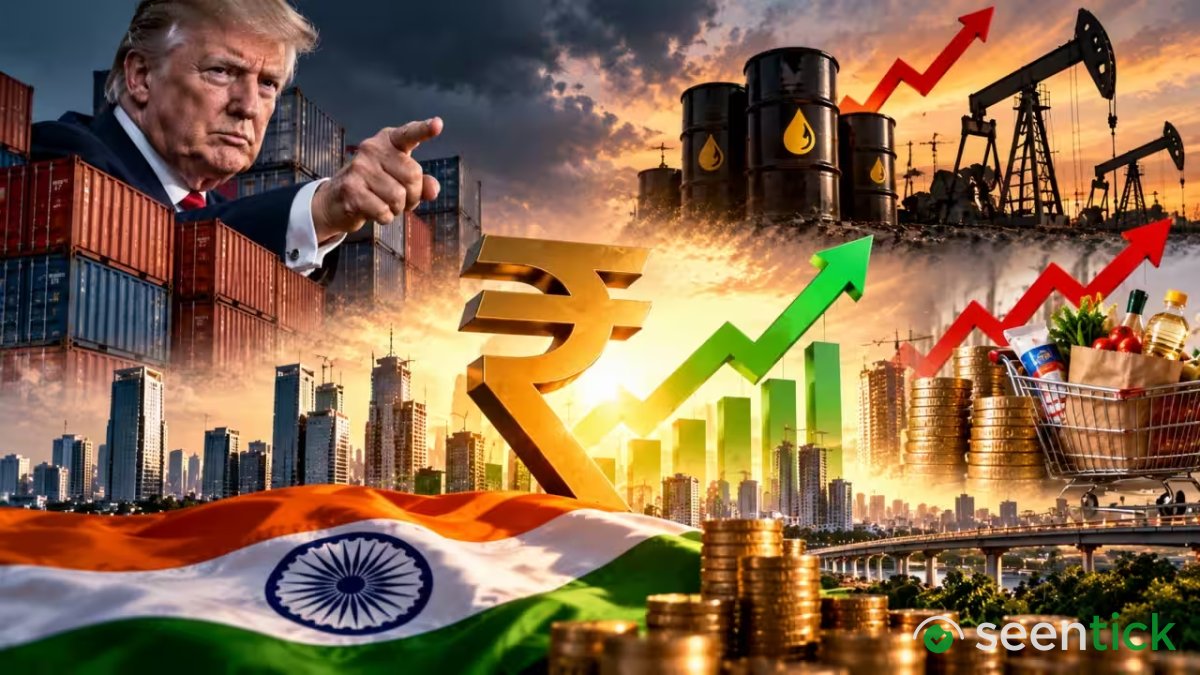
India's Economic Growth Story Remains Resilient Amid External Pressures
Key Highlights
- Foreign exchange reserves at record high.
- GDP growth beats estimates.
- Industrial production remains strong.
- Merchandise exports rose 26.1% year-on-year.
India's economic growth story remains intact despite the ongoing external pressures. With the country's recent sovereign rating upgrade from Japan Credit Rating Agency to A- in September 2026. Providing a boost to its economic fundamentals.
The Finance Ministry has hailed India's economic strength. Officials stated that the country cannot afford to take its growth performance for granted. As geopolitical and geo-economic uncertainty pose major risks to its post-Covid growth laurels.
Read More: Sebi to Quickly Move Ahead with CAS Proposals After Receiving Over 3,500 Comments
According to DK Srivastava, Chief Policy Advisor at EY India, the biggest risks to India's growth story include sustained increase in crude oil prices, escalation of geopolitical tensions, and persistent global inflation. "Sustained growth will therefore require preserving macroeconomic stability and strengthening economic resilience," he says.
Despite the external pressures, India's growth story remains resilient, with several positive indicators. Foreign exchange reserves are at a record high, GDP growth beats estimates, and industrial production remains strong. Automobile sales across rural and urban markets point to broad-based consumption, while services activity has strengthened.
| Financial Metric | Reported Value |
|---|---|
| Percentage Shift | 26.1% |
| Financial Volume / Value | $400 billion |
| Brent Crude Rate | $100 per barrel |
August saw a significant jump in merchandise exports, with sales surging 26.1% compared to the same period last year. The uptick in exports, coupled with a slowdown in imports, contributed to a narrowing of the trade deficit. Services exports played a important step in bridging the gap, accounting for 65% of the merchandise trade deficit.
The government is navigating a complex landscape. With a growing reliance on swap-funded inflows and FCNR deposits posing significant hedging costs and potential implications for future fiscal transfers. India's strong macroeconomic buffers offer a degree of resilience against external shocks.
Also Read: eyes 75-80% of world economy as Goyal pitches India as global trade hub
However, sustaining growth above 7% will increasingly rely on domestic investment and employment generation.
For growth to approach the levels envisaged under Viksit Bharat, raising investment from around 31% to 35% of GDP would require continued progress on reforms that strengthen private investment, streamline approvals, and improve formal credit access for MSMEs.
What's Your Reaction?
 Like
4
Like
4
 Dislike
 Love
Love
 Funny
Funny
 Wow
Wow
 Sad
Sad
 Angry
Angry

I write about the forces shaping business and the global economy, from startup growth and changing markets to international trade and policy. My work focuses on breaking down complex developments into clear, practical insights and understanding what they could mean for businesses, investors, and the wider economy.











Comments (0)