

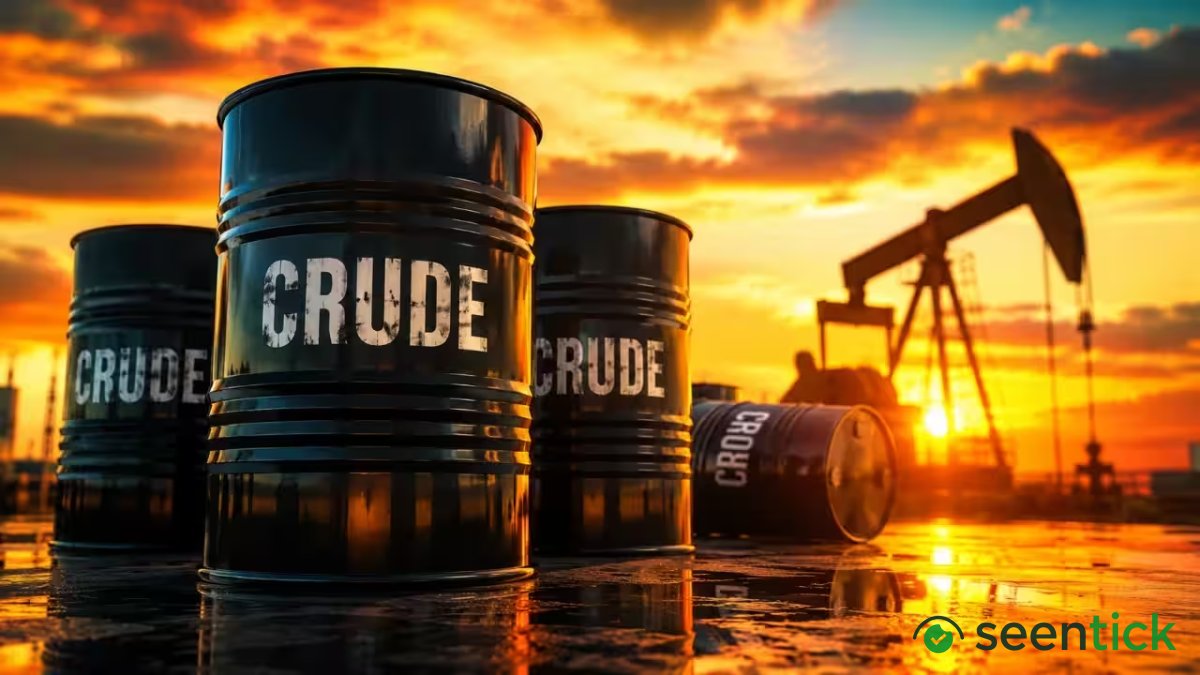
Oil buffers shrink as global supply risks mount, says industry
Key Highlights
- Less than 6 billion barrels of commercial inventories remain globally.
- Only 10% or less is considered practically available.
- IEA plans 100 million-barrel release.
- Inventories reaching stress level.
The global oil market is entering a period of heightened uncertainty, with a significantly reduced safety cushion following the latest supply disruptions. The removal of over 1 billion barrels from commercial stockpiles has left a much smaller pool of barrels available for traders to access when supply suddenly falls.
Oil inventories can be viewed as a buffer against supply disruptions. However, the reality is that a significant portion of these reserves is tied up in pipelines, tank bottoms, or held by governments as emergency reserves. This leaves a much smaller pool of barrels that can be tapped into to meet immediate demand.
Read More: Gold Prices Plummet Amid Global Uncertainty
The global energy landscape has been increasingly reliant on stored oil reserves. Which have been depleted by the latest supply chain disruptions stemming from the ongoing conflicts in the Middle East and Ukraine. The resulting drawdown has pushed the market to the brink of vulnerability, with the buffer stock now severely depleted.
Rebuilding those stocks could take years, as producers would need to add oil to storage while continuing to meet everyday global demand. The prolonged period of supply disruptions has highlighted the need for more sustainable solutions to ensure a stable oil market.
The International Energy Agency (IEA) is preparing to release 100 million barrels of crude and diesel as part of its efforts to ease pressure in the market, particularly on diesel prices. This move is seen as a necessary step to alleviate some of the immediate pressure on the market.
Also Read: Haier, LG, Sony Eye Double-Digit Sales Growth Amid Price Hikes
Industry experts caution that replenishing depleted inventories will remain a significant challenge, and the IEA's intervention is only a temporary measure. The long-term implications of the current supply disruptions and the need for more sustainable solutions will require careful consideration and planning.
As the global oil market navigates this critical juncture, it is clear that the situation will require sustained attention and cooperation from governments, energy companies, and industry experts to ensure a stable and secure supply of oil.
What's Your Reaction?
 Like
4
Like
4
 Dislike
 Love
Love
 Funny
Funny
 Wow
1
Wow
1
 Sad
Sad
 Angry
1
Angry
1

I write about the forces shaping business and the global economy, from startup growth and changing markets to international trade and policy. My work focuses on breaking down complex developments into clear, practical insights and understanding what they could mean for businesses, investors, and the wider economy.












Comments (0)