

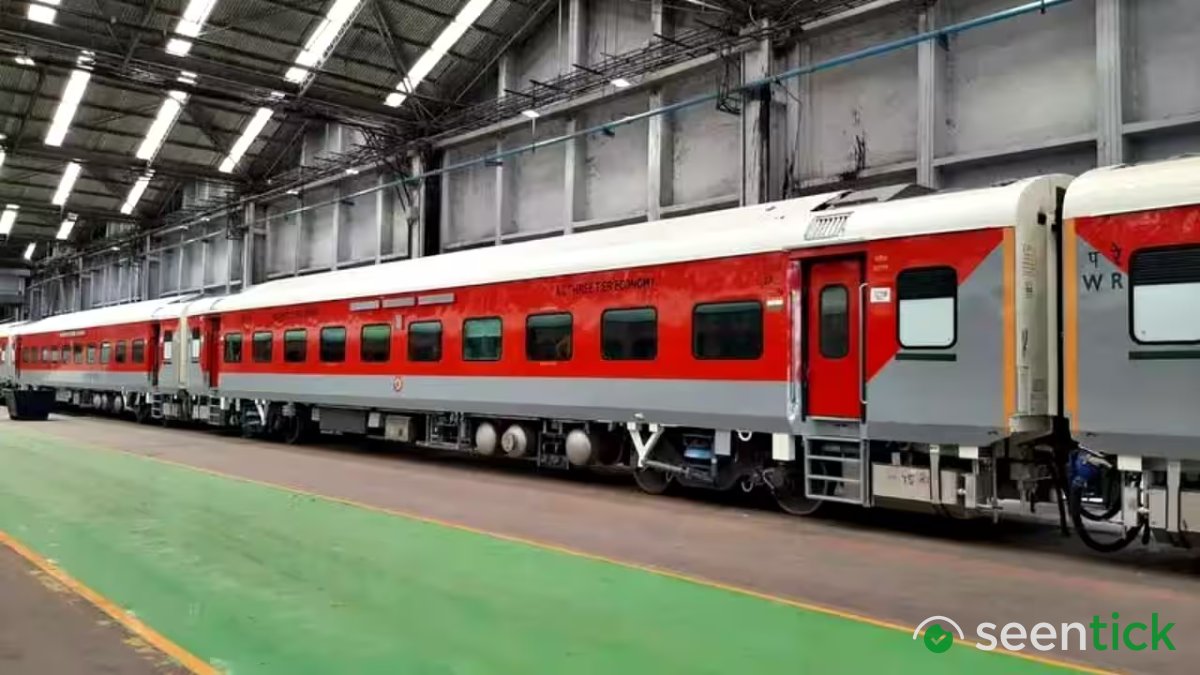
LHB Bogies Corrode: Indian Railways Faces Safety Concerns
Key Highlights
- LHB bogies corrode, Indian Railways faces safety concerns.
- Corrosion identified in underframe and lavatory areas.
- Experts recommend measures to address issue.
India's Indian Railways is grappling with a growing concern over heavy corrosion in the bogies of its Linke Hofmann Busch (LHB) passenger coaches. Despite efforts to strengthen cleaning and maintenance practices. The use of materials designed to resist corrosion has not been sufficient to prevent the issue.
Following a recent conference of principal chief mechanical engineers. Senior technical officials have urged the three railway coach manufacturing units to examine the problem and identify suitable solutions. The units in question are Integral Coach Factory (ICF) in Chennai.
Rail Coach Factory (RCF) in Kapurthala, and Modern Coach Factory (MCF) in Rae Bareli.
Officials have emphasized the importance of regular upkeep of both air-conditioned and non-air-conditioned LHB coaches to prevent corrosion. They have warned that corrosion affecting the bogies could pose a potential safety risk to passengers.
Read More: ONGC Discovers Gas 43 km Off Odisha Coast, Boosts India's Offshore Energy Exploration
A detailed report prepared by Eastern Railway in March identified the underframe and lavatory areas as critical problem areas. The report noted that water seeping through the flooring of toilets or escaping from faulty pipe fittings could eventually reach the underframe, contributing to corrosion.
Experts have highlighted the close proximity of structural components to lavatory areas as a major contributing factor to the corrosion issue.
Experts have emphasized the importance of proper maintenance and upkeep of the bio-toilets to prevent corrosion. They note that any accidental overflow or leakage of effluent can cause rapid corrosion of the affected areas.
The railway ministry has directed all zones to examine critical safety areas and implement the precautionary measures identified by experts. This includes avoiding the use of aggressive chemicals and thorough rinsing and drying after washing.
Improvements to existing corrosion-protection systems have also been suggested, along with other measures to address the issue. The goal is to ensure the safety of passengers and prevent further corrosion.
Experts have recommended a range of measures to address the issue, including regular inspections, proper maintenance, and the use of corrosion-resistant materials. By taking these steps, Indian Railways can help prevent further corrosion and ensure passenger safety.
Also Read: Bengaluru's Ecommerce Surge Leaves Smaller Cities in the Dust
The railway ministry has also emphasized the importance of collaboration between manufacturers, maintenance staff, and regulatory bodies to address the issue. By working together, Indian Railways can develop effective solutions to prevent corrosion and ensure the safety of its passengers.
Indian Railways has a long history of prioritizing passenger safety. And the latest efforts to address corrosion in LHB bogies are no exception. By taking a proactive and collaborative approach.
The railway ministry can help prevent further corrosion and ensure the continued safety of its passengers.
The issue of corrosion in LHB bogies is a complex one, requiring a multifaceted approach to address.
What's Your Reaction?
 Like
1
Like
1
 Dislike
1
Dislike
1
 Love
Love
 Funny
Funny
 Wow
2
Wow
2
 Sad
Sad
 Angry
Angry

I write about the forces shaping business and the global economy, from startup growth and changing markets to international trade and policy. My work focuses on breaking down complex developments into clear, practical insights and understanding what they could mean for businesses, investors, and the wider economy.













Comments (0)