

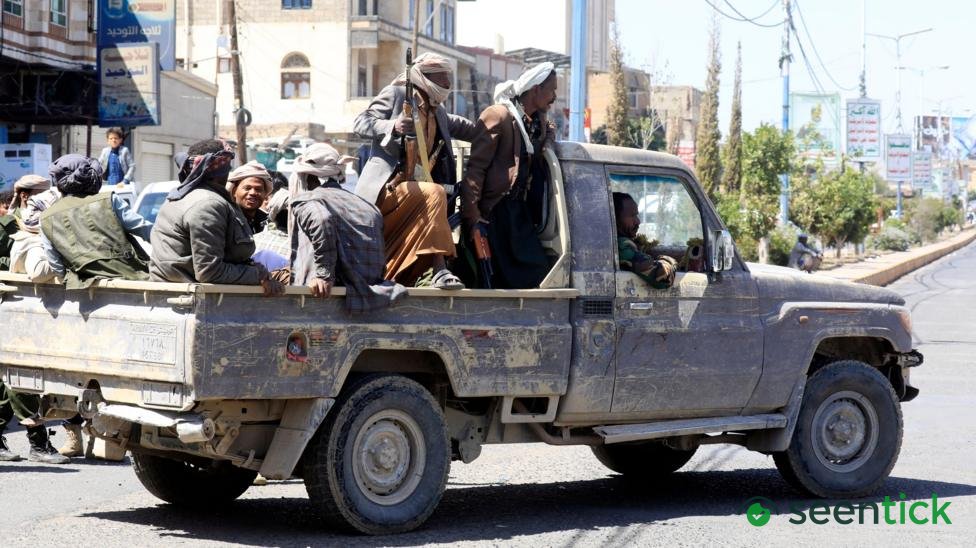
Houthi Militia Launches Deadly Airport Attacks on Saudi Arabia
Key Highlights
- Three people killed in attacks on Saudi Arabia airports.
- Abha International Airport and King Khalid International Airport targeted.
- Houthi militia claims responsibility for attacks.
- Escalation in Yemen conflict worsens.
Attacks on two airports in Saudi Arabia have resulted in the deaths of at least three people, with 28 others injured. According to the General Authority of Civil Aviation (Gaca).
The incidents, which have been claimed by the Houthi militia, mark a significant escalation in the ongoing conflict in Yemen.
The two airports, Abha International Airport and King Khalid International Airport, were targeted on October 6 and 7, respectively. Gaca did not specify the exact dates of the attacks. The victims include two women of Moroccan and Algerian nationalities.
Who were killed at Abha airport, and a male resident of Sudanese nationality, who was killed at King Khalid airport.
Read More: Lula and Bolsonaro Neck and Neck in Brazil's Tight Presidential Election
The Houthi military spokesperson, Yahya Saree, stated that the group's armed forces had launched ballistic missile and drone attacks on both airports. However, the Saudi government has not officially confirmed the responsibility for the attacks.

The civil war in Yemen has intensified in recent weeks. With the Houthis launching a rapid offensive to seize control of the Red Sea coast. The port of Mokha, located on the Bab al-Mandab Strait, was among the key targets.
The narrow strait is a critical chokepoint for global shipping, and its control has significant implications for regional and international security.
Yemeni pro-government forces, backed by Saudi Arabia, have claimed to have secured the Bab al-Mandab Strait at the southern end of the Red Sea. However, the situation remains volatile, with hundreds of people reportedly killed on both sides since the latest Houthi advance.
UN Secretary General Antonio Guterres has condemned the continued Houthi cross-border attacks on Saudi Arabia and expressed deep concern over the escalating fighting. The UN has also reported that more than 200,000 people have been displaced by the escalation.
Also Read: Flydubai Co-Pilot's Radical Views Under Pressure After Plane Attack

The UN has been monitoring the situation closely. And its efforts to broker a peace agreement have been hindered by the ongoing violence. The international community is increasingly concerned about the humanitarian implications of the conflict.
This has already resulted in significant human suffering and economic disruption.
The attacks on Saudi Arabia's airports have significant regional implications, particularly for the Gulf Cooperation Council (GCC) and the international community. The GCC has condemned the attacks and called for an immediate ceasefire. The international community is also urging restraint and a return to diplomatic efforts to resolve the conflict.
The escalation in Yemen has also had significant economic implications. With global shipping and trade affected by the control of the Bab al-Mandab Strait. The situation remains fluid, and the international community is closely monitoring the situation to prevent further escalation.
What's Your Reaction?
 Like
Like
 Dislike
 Love
Love
 Funny
Funny
 Wow
1
Wow
1
 Sad
4
Sad
4
 Angry
Angry

I write about the forces shaping business and the global economy, from startup growth and changing markets to international trade and policy. My work focuses on breaking down complex developments into clear, practical insights and understanding what they could mean for businesses, investors, and the wider economy.












Comments (0)