

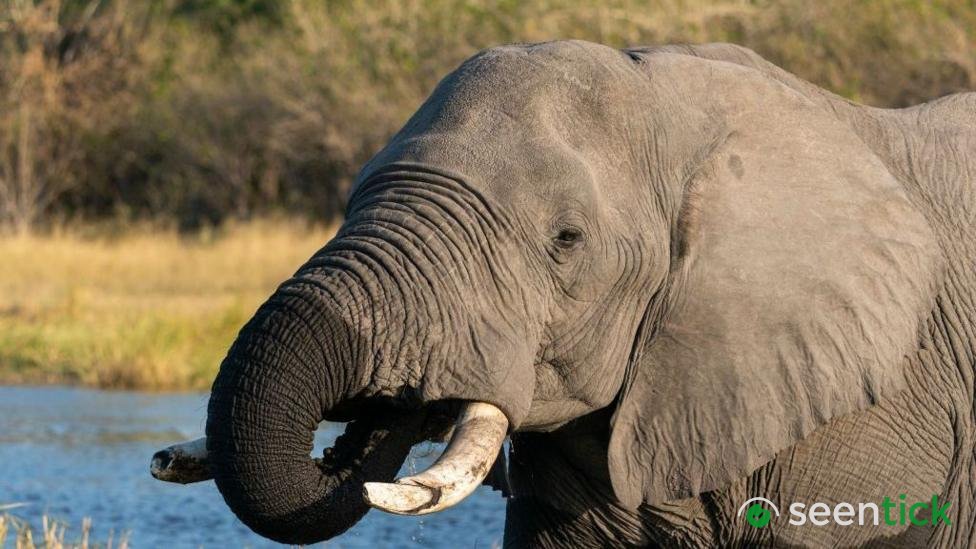
Botswana Authorises Killing of 23 Elephants for Independence Celebrations
Key Highlights
- Botswana authorises killing of 23 elephants for independence celebrations.
- Elephant Protection Society warns of social structures loss and public hygiene concerns.
- MP Simasiku Mapulanga calls for proper distribution and organisation of meat.
Botswana's decision to permit the slaughter of 23 elephants for its 60th independence celebrations has ignited a heated debate among animal welfare advocates and conservationists. As the southern African nation prepares to commemorate the milestone on Wednesday, the Ministry of Environment and Tourism has issued a licence that allows for the culling of elephants and other wildlife for "complimentary purposes".
The move has sparked concerns among local and international groups. Who argue that the country's elephant population, already threatened, should be protected rather than exploited for human consumption.
Concerns have been raised about the impact of this decision on the social structures of elephant populations. Which are increasingly being fragmented due to habitat disruption and human-wildlife conflict. The chairman of the Botswana-based Elephant Protection Society.
Oaitse Nawa, has warned that the loss of these social bonds can have severe consequences for the dignity and well-being of the animals. He has called on the government and hunting authorities to ensure that future distributions of game meat are properly organised to mitigate public hygiene concerns.
Botswana is home to over 130,000 elephants, a population that has been a subject of concern for local communities for many years. The government has long acknowledged the need to manage human-wildlife conflict. And regulated hunting has been seen as a way to achieve this goal while also generating income for communities.
The country banned trophy hunting in 2014, but lifted the restrictions five years later under the current president, Mokgweetsi Masisi.

Botswana's decision to permit the culling of 23 elephants in honor of its independence has reignited a contentious discussion about the country's elephant population management. Minister of Environment and Tourism Wynter Mmolotsi has posited that the special elephant quotas have yielded substantial revenue for conservation initiatives in areas where the species is present.
The game meat, slated for inclusion in traditional Independence Day feasts, is a contentious aspect of the celebrations.
The decision has sparked a heated debate about the role of hunting in conservation efforts in Botswana. While some argue that regulated hunting can help manage human-wildlife conflict and generate income for communities, others are concerned about the impact on elephant populations and the potential for social structures to be disrupted.
Also Read: Seoul Summons Ukraine Envoy Over North Korean POW Transfer
As the country prepares to celebrate its 60th independence, it remains to be seen how this decision will shape the future of conservation efforts in Botswana.
Local communities are also expected to benefit from the sale of game meat. With the government estimating that the 15.6m pula ($1.1m) generated from special elephant quotas in 2025 will be used to support conservation projects in areas where elephants are found.
However, concerns have been raised about the potential for public health risks associated with the sale of game meat, particularly in areas where sanitation and hygiene standards are not met.

The decision has also raised questions about the role of the government and hunting authorities in ensuring that the killing of elephants is carried out in a responsible and sustainable manner.
What's Your Reaction?
 Like
Like
 Dislike
 Love
Love
 Funny
Funny
 Wow
1
Wow
1
 Sad
2
Sad
2
 Angry
1
Angry
1

I write about the forces shaping business and the global economy, from startup growth and changing markets to international trade and policy. My work focuses on breaking down complex developments into clear, practical insights and understanding what they could mean for businesses, investors, and the wider economy.








Comments (0)