

Physicist Francis Halzen Wins Nobel Prize for Groundbreaking Neutrino Observatory
Key Highlights
- Francis Halzen wins Nobel Prize in Physics for major neutrino observatory.
- IceCube Observatory detects particles from space shedding light on distant universe.
- Halzen's work opens up new avenues for research into universe's most violent processes.
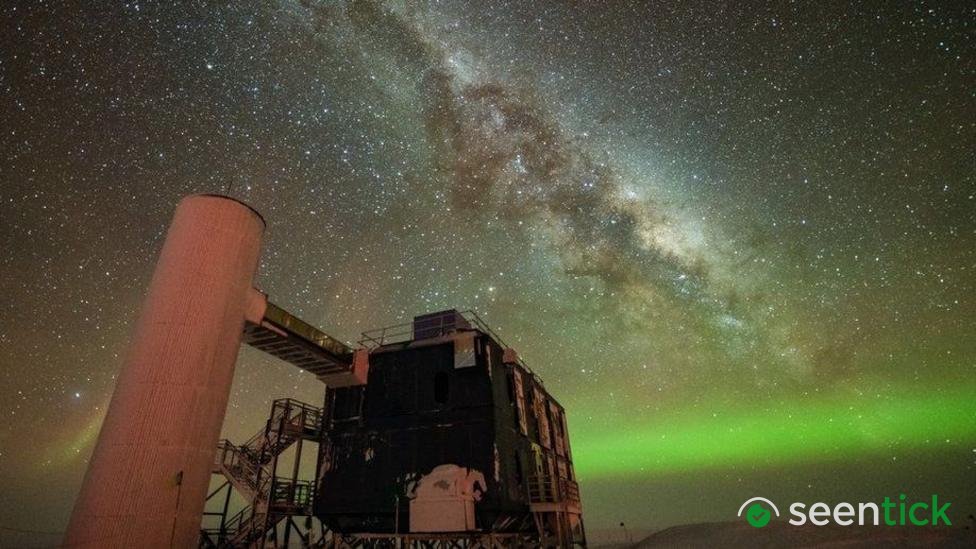
Francis Halzen, a Belgian physicist, has been recognized with the Nobel Prize in Physics for his major work on the IceCube observatory, a pioneering facility located in Antarctica that harnesses the natural reflectivity of a cubic kilometre of ice to detect faint particles emanating from the cosmos. The observatory's light-sensitive sensors are attuned to identify and analyze neutrinos, offering profound insights into the universe's most extreme and energetic phenomena.
Halzen's vision for detecting neutrinos at the South Pole was first presented in 1988. He notes that the project was initially met with skepticism, but his perseverance paid off. Halzen says in a statement.
The IceCube observatory is composed of thousands of sensors on long cables that are drilled and frozen into a 1km cubic block of ice. Neutrinos can be thought of as cosmic messengers that point to fundamental events in the universe. At the observatory, most neutrinos pass straight through the ice.
Read More: Samoa PM Apologizes for Nazi Salute at Family Gathering
However, occasionally they interact with it, producing particles that give off a telltale flash of light.

Halzen's leadership of an international team of researchers and engineers has resulted in a remarkable instrument that has greatly advanced our understanding of the universe. says Prof Mark Pearce, Chair of the Nobel Committee for Physics.
Halzen's work has opened up new avenues for research into the universe's most violent and energetic processes. His scientific leadership has been instrumental in paving the way for a new kind of astronomy.
Also Read: US "watching closely" after Russian lab technician dies from suspected plague
The Nobel Prize in Physics was awarded to Prof Francis Halzen for his major work on an observatory that detects particles from space. Shedding light on the distant universe and its most violent processes.
Halzen's achievement is a shows the power of human curiosity and perseverance. As the scientific community looks to the future, it is clear that his work will continue to inspire and guide research in this field for years to come.
The IceCube Neutrino Observatory has already made significant contributions to our understanding of the universe. And it is likely that future research will build upon these discoveries. As the field continues to evolve, it is essential to recognize the contributions of pioneers like Prof Francis Halzen who have paved the way for this exciting area of research.
What's Your Reaction?
 Like
2
Like
2
 Dislike
1
Dislike
1
 Love
Love
 Funny
Funny
 Wow
1
Wow
1
 Sad
Sad
 Angry
Angry

I write about the forces shaping business and the global economy, from startup growth and changing markets to international trade and policy. My work focuses on breaking down complex developments into clear, practical insights and understanding what they could mean for businesses, investors, and the wider economy.











Comments (0)