

No jurisdiction: India rejects international court's order on Indus Water Treaty
No jurisdiction: India rejects international court's order on Indus Water Treaty
Key Highlights
- India formally rejected a decision by the Permanent Court of Arbitration in The Hague regarding the Indus Waters Treaty.
- The Ministry of External Affairs maintained that the tribunal was constituted in violation of treaty dispute mechanisms.
- New Delhi reaffirmed its commitment to bilateral negotiations and the Neutral Expert process under the World Bank framework.
The Government of India has issued a firm and unequivocal rejection of the latest ruling delivered by the Permanent Court of Arbitration in The Hague concerning the Indus Waters Treaty (IWT). In a formal statement released by the Ministry of External Affairs (MEA), New Delhi reiterated that the Hague-based tribunal possesses zero legal jurisdiction to adjudicate disputes governed by the 1960 water-sharing pact.
Read More: Why Union Minister Chirag Paswan Demanded Urgent Security
Official spokespersons emphasized that India has consistently boycotted the arbitral proceedings, noting that the unilateral constitution of the court bypassed established dispute-resolution protocols.
The Dispute Over Kishanganga and Ratle Hydro Projects
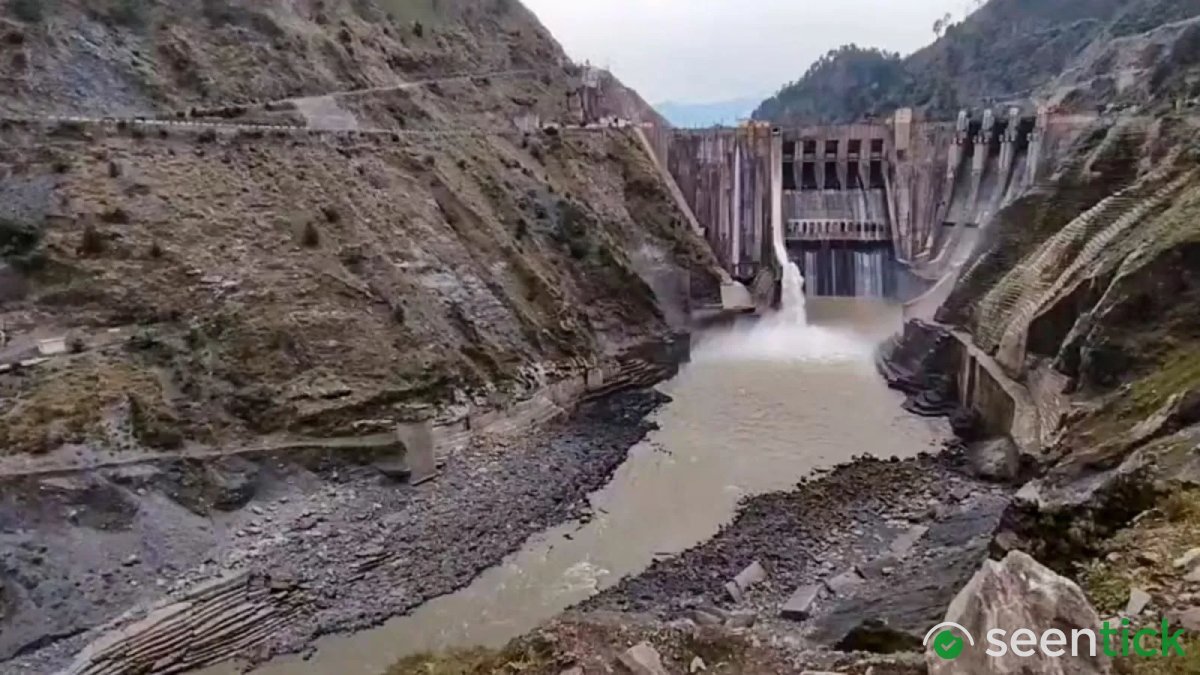
The diplomatic friction centers on India's construction of the Kishanganga and Ratle run-of-the-river hydroelectric power projects in Jammu and Kashmir. While Pakistan raised objections regarding water flow designs, India maintained that the technical specifications strictly comply with treaty parameters.
New Delhi argued that the World Bank's concurrent initiation of both a Neutral Expert proceeding and a Court of Arbitration created conflicting legal pathways that contradict the treaty's structured escalation hierarchy.
Commitment to Bilateral Treaty Reforms
India highlighted that fundamental changes in regional demographics, renewable energy requirements, and cross-border security necessitate a comprehensive review and modification of the 64-year-old treaty. Government officials reaffirmed that constructive bilateral engagement remains the only viable path forward.
What's Your Reaction?
 Like
Like
 Dislike
1
Dislike
1
 Love
Love
 Funny
Funny
 Wow
1
Wow
1
 Sad
Sad
 Angry
2
Angry
2

Tech journalist and AI enthusiast who enjoys keeping up with the latest in hardware, processors, emerging AI tools, and software. I like digging into new technology, understanding how things actually work, and following the developments that could shape the way we use technology in the future.










Comments (0)