

Namo Bharat: India's Fastest Rapid Rail Corridor to Soon Meet 60% of Commuter Travel
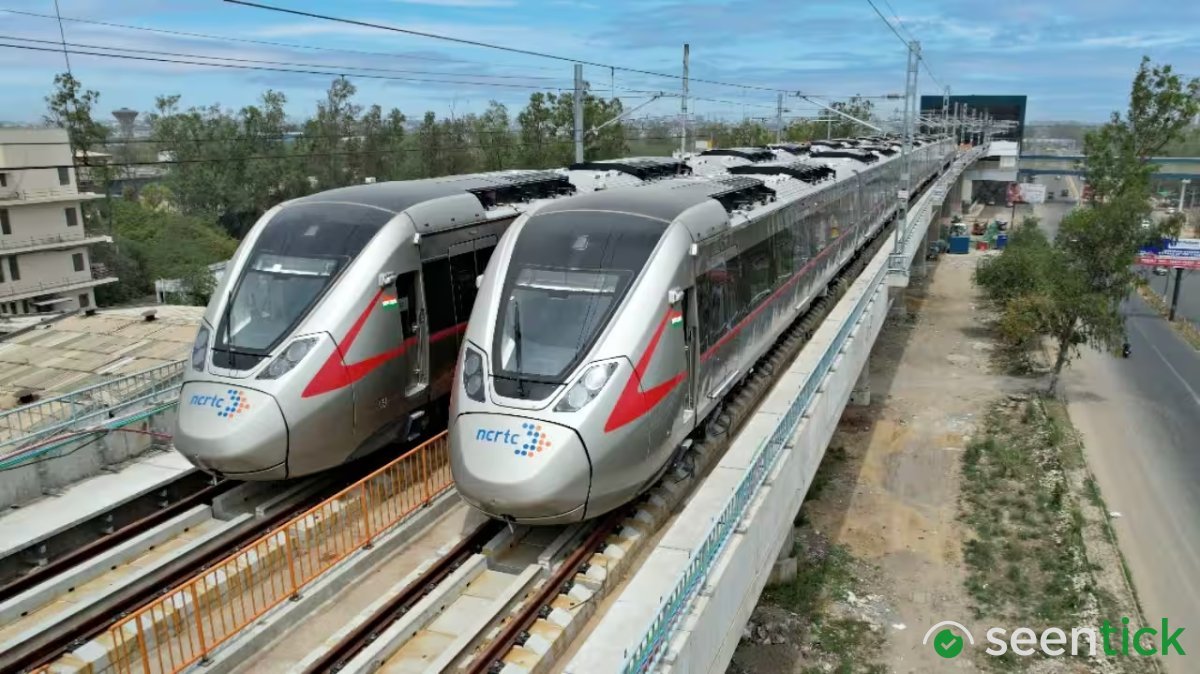
Namo Bharat: India's Fastest Rapid Rail Corridor to Soon Meet 60% of Commuter Travel
Key Highlights
- The Namo Bharat Rapid Rail network is expanding toward full commercial commissioning along the 82-km Delhi-Meerut corridor.
- Operating at design speeds of 180 km/h, the state-of-the-art trains will slash transit times from three hours to under 55 minutes.
- Transport planners project the corridor will absorb over 60% of regional inter-city commuter traffic upon full integration.
India's urban mobility revolution is achieving a historic engineering milestone as the Namo Bharat Regional Rapid Transit System (RRTS) prepares to commission major operational extensions across the National Capital Region. Designed to bridge dense satellite cities with high-speed, air-conditioned train services operating at 180 km/h, the system is fundamentally redefining inter-city transit between New Delhi, Ghaziabad, and Meerut.
Read More: How a 31-Year-Old Bengaluru Techie Built a Rs 7 Crore Net Worth Through Smart Investing
Urban transport authorities estimate that once fully operational, the 82-kilometer priority corridor will absorb more than 60 percent of daily vehicular commuter traffic, drastically reducing highway congestion and carbon emissions.
World-Class Passenger Comfort and Indigenous Engineering
Manufactured indigenously under the 'Make in India' initiative at Savli in Gujarat, Namo Bharat trainsets feature ergonomic seating, panoramic double-glazed windows, onboard Wi-Fi, dynamic digital route maps, and dedicated women's and premium coaches.
Equipped with advanced European Train Control System (ETCS) Level-2 signalling and automated platform screen doors, the transit corridor guarantees supreme operational safety and precision timetable reliability.
Transforming Regional Economic Corridors
Real estate economists and regional urban planners highlight that high-speed commuter rail connectivity is driving rapid commercial development, education hubs, and logistics parks along the suburban highway periphery. The government plans to extend similar RRTS networks to connect Delhi with Panipat, Alwar, and Rohtak.
What's Your Reaction?
 Like
1
Like
1
 Dislike
 Love
Love
 Funny
Funny
 Wow
3
Wow
3
 Sad
Sad
 Angry
Angry

I write about the forces shaping business and the global economy, from startup growth and changing markets to international trade and policy. My work focuses on breaking down complex developments into clear, practical insights and understanding what they could mean for businesses, investors, and the wider economy.










Comments (0)