

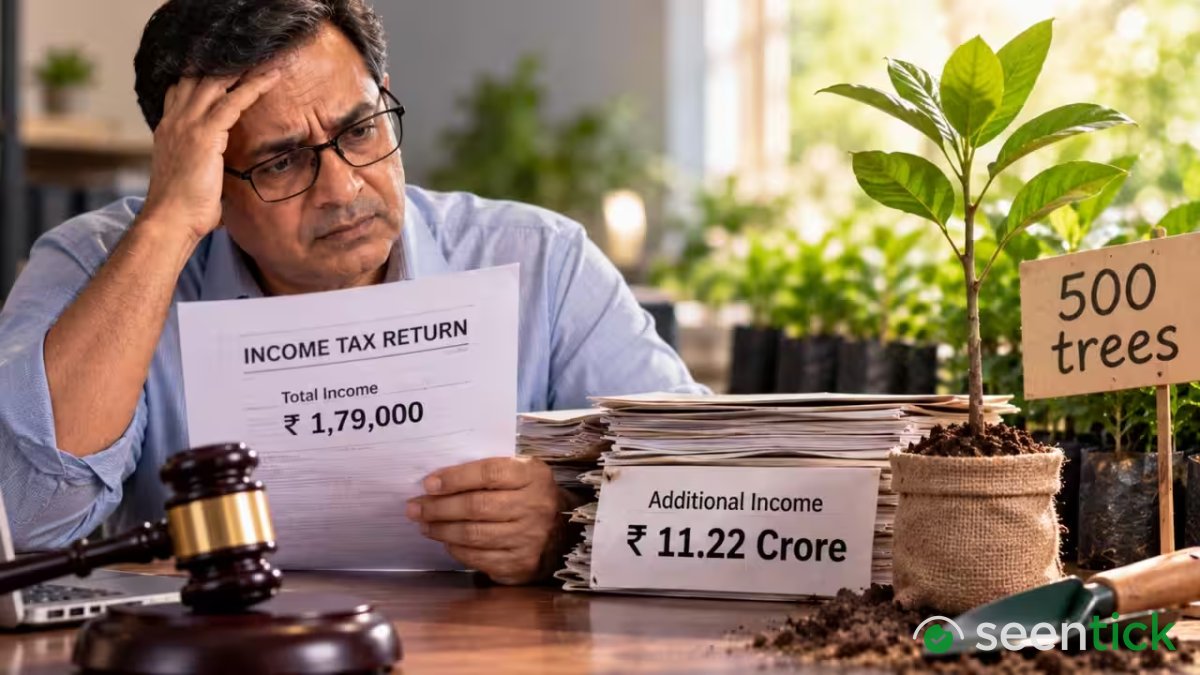
ITAT Gives Haryana Resident Rare Chance to Substantiate Case, Plant 500 Trees Amid Rs 11.22 Crore Tax Addition
Key Highlights
- Haryana resident reports income of Rs 1,79,160 in ITR for Assessment Year 2017-18.
- Taxpayer faces significant tax addition of Rs 11.22 crore due to unexplained cash deposits and unsecured loans.
- ITAT Chandigarh gives taxpayer rare opportunity to substantiate case and contest tax addition.
The Haryana resident's income tax return. This was selected for scrutiny, has sparked a rare opportunity for the taxpayer to substantiate his case and contest the Rs 11.22 crore addition.
The taxpayer, who reported an income of Rs 1,79,160 in his income tax return (ITR) for Assessment Year 2017-18, along with agricultural income of Rs 3 lakh, faced an income addition of Rs 11.22 crore after his return was scrutinized by the Income Tax Department.
The assessment order, which determined the taxpayer's total income at Rs 11,23,87,670 under Section 143(3) of the Income-tax Act, 1961, was the result of substantial cash deposits, unsecured loans, and agricultural income that were not backed by supporting evidence. The taxpayer's bank accounts showed cash deposits of Rs 85.93 lakh during the demonetisation period, which he was unable to explain.
Unsecured loans amounting to Rs 9,25,90,050 and sundry creditors of Rs 1,07,25,456 were also identified. However, the taxpayer did not provide confirmations or documentary evidence to support these amounts.
The Assessing Officer treated the amounts as unexplained credits or income. Which led to the addition of Rs 11.22 crore to the taxpayer's income. The taxpayer has now been given a chance to present his case before the ITAT.
Read More: Trump and Xi Jinping Meet Amid Rising Tensions Over Tariffs and AI
And as part of his appeal, he proposed planting trees. The Income Tax Department issued statutory notices during the assessment proceedings. However, the taxpayer did not provide the required information or supporting documents.
The taxpayer's willingness to plant 500 trees at the Yamuna Bank site has influenced the tribunal's decision. With three factors contributing to this outcome. The proposal to plant trees originated with the taxpayer, and the Income Tax Department did not strongly oppose it.
Additionally, the evidentiary basis of the additions made by the lower authorities was not strong enough to withstand scrutiny.
The Indian government has instructed the Assessing Officer to re-examine the taxpayer's case. This comes after a tribunal's ruling that requires the individual to plant 500 trees at the Yamuna Bank site by the end of the next month.
As part of the condition, the taxpayer is also expected to oversee the trees' ongoing care and upkeep.
The taxpayer's case is a rare example of how a taxpayer can use the tribunal's decision to their advantage. The taxpayer's financial transactions and the assessment order have been scrutinized. And the tribunal's ruling has given the taxpayer a final opportunity to fulfill the condition.
Also Read: LHB Bogies Corrode: Indian Railways Faces Safety Concerns
The taxpayer's willingness to plant trees has also highlighted the importance of environmental conservation and the need for sustainable practices.
The taxpayer's bank accounts showed substantial cash deposits, unsecured loans, and sundry creditors, which were not backed by supporting evidence.
The ITAT's decision has given the taxpayer a rare opportunity to substantiate his case and contest the tax addition. The taxpayer's willingness to plant trees has influenced the tribunal's decision.
The ITAT's decision is a rare win for the taxpayer. Who has been given a chance to present his case and contest the tax addition.
What's Your Reaction?
 Like
Like
 Dislike
1
Dislike
1
 Love
Love
 Funny
Funny
 Wow
2
Wow
2
 Sad
1
Sad
1
 Angry
2
Angry
2

I write about the forces shaping business and the global economy, from startup growth and changing markets to international trade and policy. My work focuses on breaking down complex developments into clear, practical insights and understanding what they could mean for businesses, investors, and the wider economy.












Comments (0)