

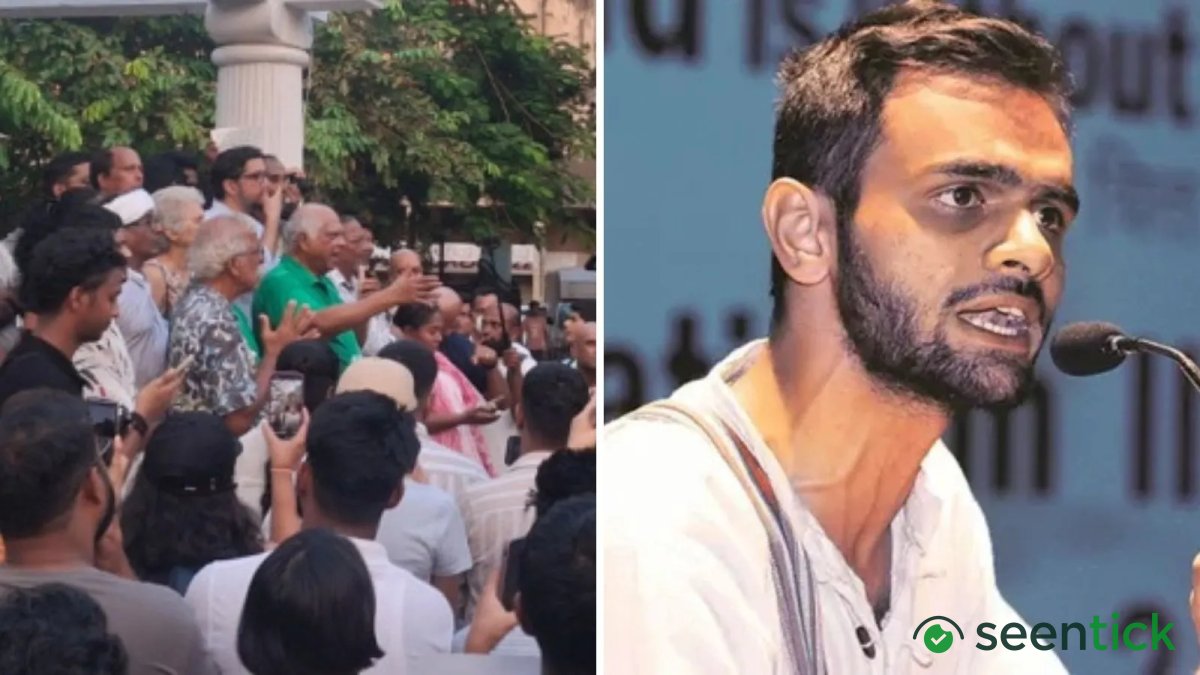
Goa Police Deny Protest Permission Citing Umar Khalid's Past Protests
Key Highlights
- Goa police deny protest permission citing Umar Khalid's past protests.
- 7 protesters detained by police.
- High Court directs police to release detained protesters.
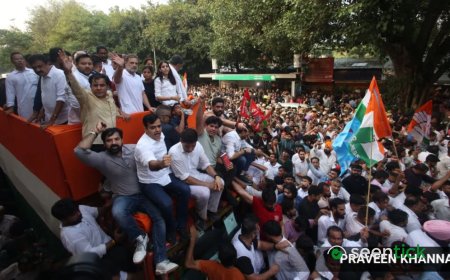
Seven protesters from the Cockroach Janata Party were detained by the Goa police on Sunday evening, after the police denied permission for a protest in Azad Maidan, citing a "past history of protesters violating conditions imposed by the authorities" and a specific instance of a protester "patronising Umar Khalid" during a NEET-related protest in July. The protest was organised by a CJP affiliate in Goa to demand the resignation of Chief Election Commissioner Gyanesh Kumar.
According to a police affidavit, the detention of the protesters is linked to a series of protests that took place in Northeast Delhi in 2020. There, Umar Khalid, an activist and former JNU student, was facing charges of criminal conspiracy under the Unlawful Activities (Prevention) Act. The affidavit details a key role in the protests on July 20, 2026.
At that time, a group of demonstrators gathered in an unlawful assembly, defying prior permission to hold a rally. The gathering was ostensibly to show solidarity with activist Sonam Wangchuk, who had been on hunger strike.
The affidavit states that the protest in Azad Maidan on October 11 was rejected based on the report of the Superintendent of Police North. Wherein the permission is not recommended for public assembly.
Read More: India's Siang Upper Dam Project Sparks Fresh Protests Amid China's Largest Dam Plans
The protester carrying a placard with "Umar Khalid, Sharjeel Imam, Bhima Koregaon 16" was brought to the police station for inquiry and failed to give a reason for participating in the morcha.
The High Court of Bombay at Goa on Sunday night directed the police to release all of the detained protesters, observing that "the detention may not have been authorised". The police have also registered an FIR for organising the protest without obtaining prior permission.
The detention of the protesters has raised concerns over the police's handling of protests and their ability to balance security with freedom of speech. The incident has also highlighted the controversy surrounding Umar Khalid's past protests, which have been linked to the 2020 Northeast Delhi riots.
The protest in Azad Maidan on October 11 was part of a larger trend of protests in Goa. There, activists and opposition parties have been demanding the resignation of Chief Election Commissioner Gyanesh Kumar.
The protests have been met with a heavy police presence, with several protesters detained and arrested in recent days.
Also Read: Gandhi Leads Massive Opposition March to Supreme Court, Demands CEC Gyanesh Kumar's Resignation
The incident has also raised questions over the role of the District Magistrate, North Goa, in denying permission for the protest. The District Magistrate's office had issued an order on October 9. Rejecting the permission sought for the public assembly at Azad Maidan on October 11.
The man was kept in preventive custody under section 126 of BNSS and released on July 26.
The detention of the protesters has significant consequences for the opposition parties and activists in Goa.
The incident has also raised concerns over the role of the police in enforcing laws and regulations. Particularly in the context of protests and public assemblies. The police's actions have been widely criticized, with many arguing that they are being used to suppress dissent and opposition.
What's Your Reaction?
 Like
Like
 Dislike
 Love
Love
 Funny
Funny
 Wow
2
Wow
2
 Sad
Sad
 Angry
2
Angry
2

Tech journalist and AI enthusiast who enjoys keeping up with the latest in hardware, processors, emerging AI tools, and software. I like digging into new technology, understanding how things actually work, and following the developments that could shape the way we use technology in the future.









Comments (0)