

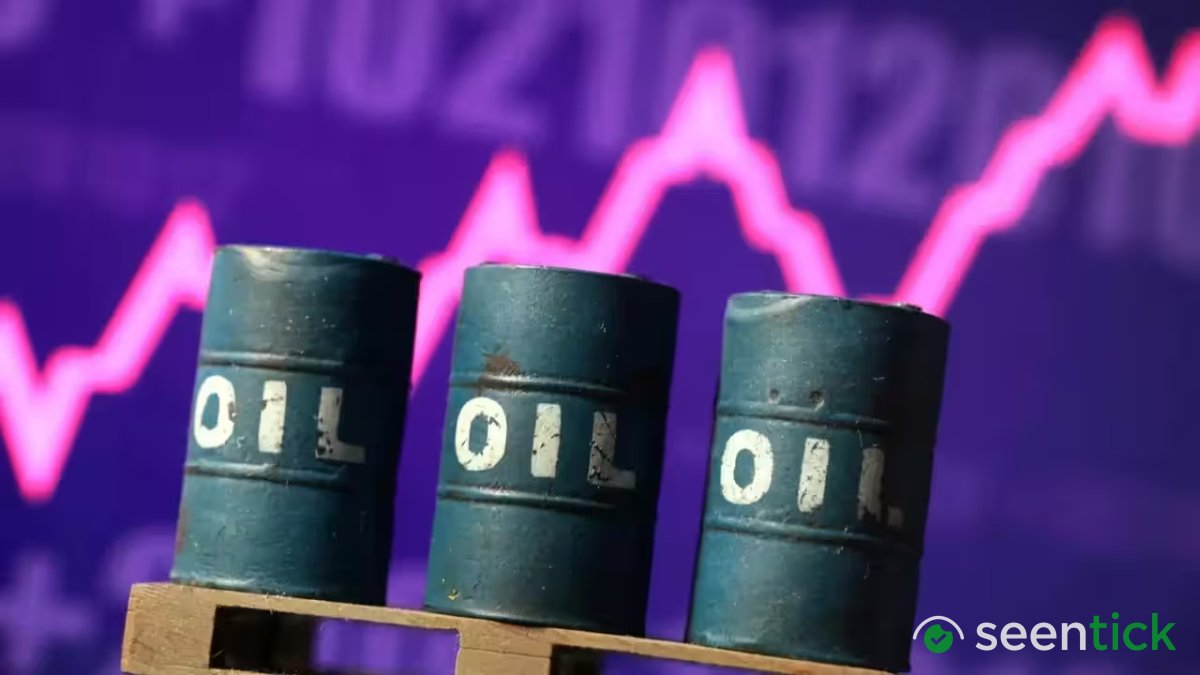
Saudi Arabia Intercepts Ballistic Missiles as Oil Prices Ease Amid US-Iran Truce Hopes
Key Highlights
- Saudi Arabia intercepts ballistic missiles from Yemen's Houthis.
- WTI crude falls 1.15% to $93.52 a barrel.
- Brent crude declines 0.73% to $105.80 a barrel.
Oil prices experienced a slight decrease on Friday, following a tumultuous week. As markets weighed the prospects of a potential US-Iran truce against the ongoing risks to Saudi Arabia's oil infrastructure, WTI crude fell 1.09 points, or 1.15%, to $93.52 a barrel.
Meanwhile, Brent crude declined 0.78 points, or 0.73%, to $105.80 a barrel, around 7:30 am IST.
Following a brief respite from losses, the energy market experienced a sharp reversal on Friday, with both Brent and WTI contracts plummeting. The previous day's gains, which had seen both contracts surge by as much as 5%, were swiftly erased as Brent settled 3.4% lower and WTI fell 2.7%.
The decline marked the end of a six-session losing streak for WTI, during which it had plummeted 13%. The drop also ended a six-session losing streak for Brent, which had not seen a close above September 15 since then. For the week, WTI's decline of 6.42% was dwarfed by Brent's 2.09% gain.
Saudi Arabia reported intercepting six ballistic missiles fired by Yemen's Iran-backed Houthis. Targeting the southern province of Taif and the Yanbu area on the Red Sea. The move is part of Saudi Arabia's efforts to bolster its oil infrastructure.
Read More: OMCs to See Petrol, Diesel Margins Jump in Q2FY27, But LPG Losses Limit Gains
With the country increasing crude pumping volumes through its East-West Pipeline to Yanbu, its Red Sea export hub. However, crude tanker loadings have not yet resumed, according to industry sources, satellite imagery, and shipping data.
Iranian President Masoud, Pezeshkian stated. on Thursday that the decision on ending the war rested with Washington, saying, "It's America that must choose whether it wants to end this or not." His comments, made in an interview aired on Thursday on Fox News, underscore the ongoing diplomatic tensions between Iran and the US.
Seven months into the conflict, the world is grappling with the far-reaching consequences of the oil trade's precarious state. The prolonged tensions have sent shockwaves through the global energy landscape, underscoring the imperative for a swift resolution.
As the war rages on, global oil and gas shipments have been severely curtailed, with nearly a fifth of the world's supply now suspended. The impact is evident in the sharp 50% surge in prices in March. A stark reminder of the delicate balance of the global energy market.
The Strait of Hormuz has remained central to concerns around energy supplies since the war began at the end of February. Negotiators are discussing a phased path that would see Tehran reopen the Strait of Hormuz and Washington lift its economic blockade of Iran. According to sources close to the talks.
The potential route towards ending the Middle East conflict is a significant development in the ongoing diplomatic efforts.
As the situation continues to unfold, markets will be closely watching developments in the region, with oil prices likely to remain volatile in the coming days. The impact of the conflict on global energy supplies will be closely monitored. With investors and policymakers alike seeking clarity on the situation.
Also Read: Saudi Pipeline Progress Sends Gold Prices Spiking
The global energy market is holding its breath, waiting for a resolution that will bring stability and predictability back to the region.
With the conflict now in its seventh month, the stakes are higher than ever. The global energy market is bracing for the potential consequences of the conflict. With oil prices playing a critical role in shaping market trends.
As the situation continues to evolve, one thing is certain: the world will be watching, and the impact of the conflict will be felt for months to come.
The ongoing tensions in the region have significant implications for the global economy. With the potential for increased production and lower prices if a peaceful resolution is reached. However, the risks of further escalation remain, and the global energy market will be closely monitoring the situation in the coming days.
The world is watching as the situation in the Middle East continues to unfold. With the potential for a peaceful resolution to the conflict hanging in the balance.
What's Your Reaction?
 Like
3
Like
3
 Dislike
1
Dislike
1
 Love
Love
 Funny
Funny
 Wow
1
Wow
1
 Sad
1
Sad
1
 Angry
Angry

I write about the forces shaping business and the global economy, from startup growth and changing markets to international trade and policy. My work focuses on breaking down complex developments into clear, practical insights and understanding what they could mean for businesses, investors, and the wider economy.












Comments (0)