

Sold Home Jointly Owned with Spouse? How to Legally Claim 100% Capital Gains Exemption
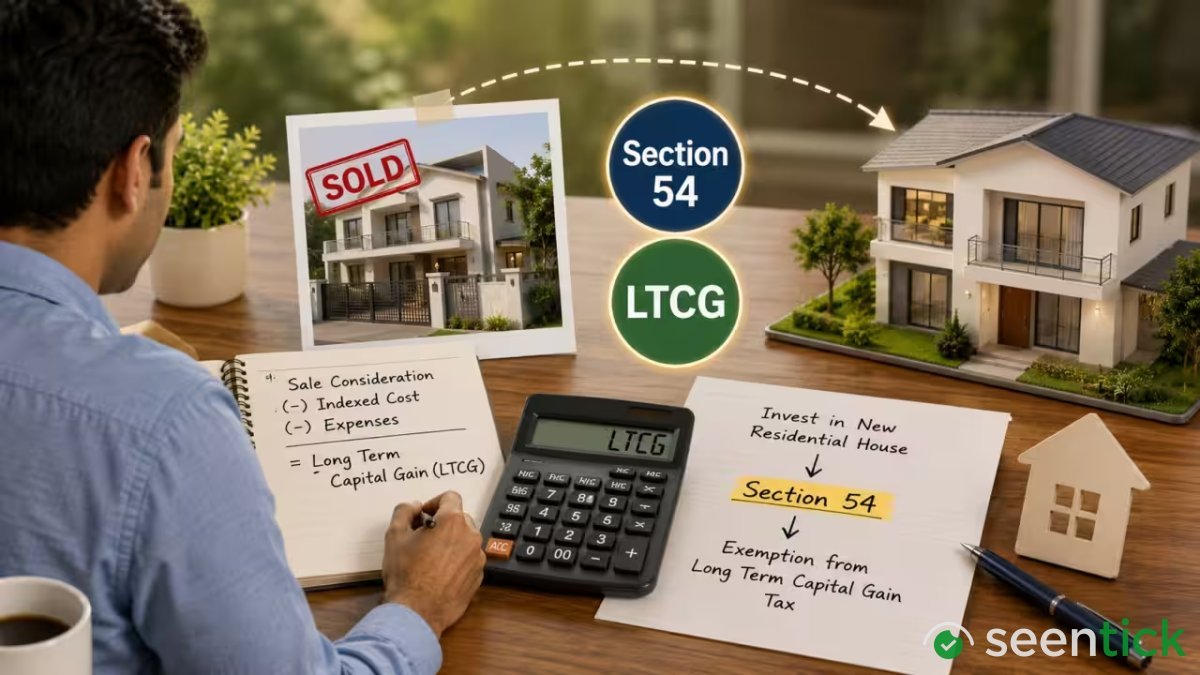
Sold Home Jointly Owned with Spouse? How to Legally Claim 100% Capital Gains Exemption
Key Highlights
- Income Tax Appellate Tribunal (ITAT) rulings clarify Section 54 long-term capital gains (LTCG) rules for jointly owned homes.
- If one spouse provided 100% of the purchase funds and home loan repayments, they can claim the full LTCG tax exemption upon sale.
- Adding a spouse's name for emotional or succession purposes does not automatically divide tax liability equally if unfinanced.
In a major relief for individual home sellers, key rulings delivered by the Income Tax Appellate Tribunal (ITAT) and High Courts have established clear guidelines regarding Section 54 Long-Term Capital Gains (LTCG) tax exemptions on jointly held residential properties. The judicial precedent clarifies that when a taxpayer finances the complete purchase of a house registered jointly with their spouse, they are legally entitled to claim 100 percent of the tax exemption upon selling.
Read More: Why Modern Heat Pumps Are the Future of Clean Home Heating and Cooling
The ruling resolves long-standing ambiguities where tax assessing officers routinely attempted to disallow half the exemption on the assumption of 50-50 co-ownership.
Source of Funds Dictates Real Ownership for Tax Purposes
Under Indian tax jurisprudence, economic ownership is determined by the actual source of funding rather than nominal registration names. Tax tribunals emphasized that adding a non-earning spouse's name as a joint owner is a standard societal practice for emotional security, estate succession, and loan co-signing.
If the primary earner demonstrates through bank statements that 100 percent of the down payment, registration charges, and EMI repayments were funded from their personal accounts, the entire capital gain accrues to them-allowing full Section 54 reinvestment benefits into a new residential home.
Essential Documentation and Reinvestment Timelines
Chartered accountants advise property sellers to maintain clear audit trails of original purchase transactions, bank account debit logs, and sale deed agreements. To fully utilize Section 54 exemptions, capital gains must be reinvested in a new residential property within two years or deposited into an authorized Capital Gains Account Scheme (CGAS) before the tax filing deadline.
What's Your Reaction?
 Like
Like
 Dislike
 Love
Love
 Funny
Funny
 Wow
2
Wow
2
 Sad
1
Sad
1
 Angry
2
Angry
2

I write about the forces shaping business and the global economy, from startup growth and changing markets to international trade and policy. My work focuses on breaking down complex developments into clear, practical insights and understanding what they could mean for businesses, investors, and the wider economy.











Comments (0)