

Sharpeville massacre survivors start legal fight for justice
Sharpeville massacre survivors start legal fight for justice
Key Highlights
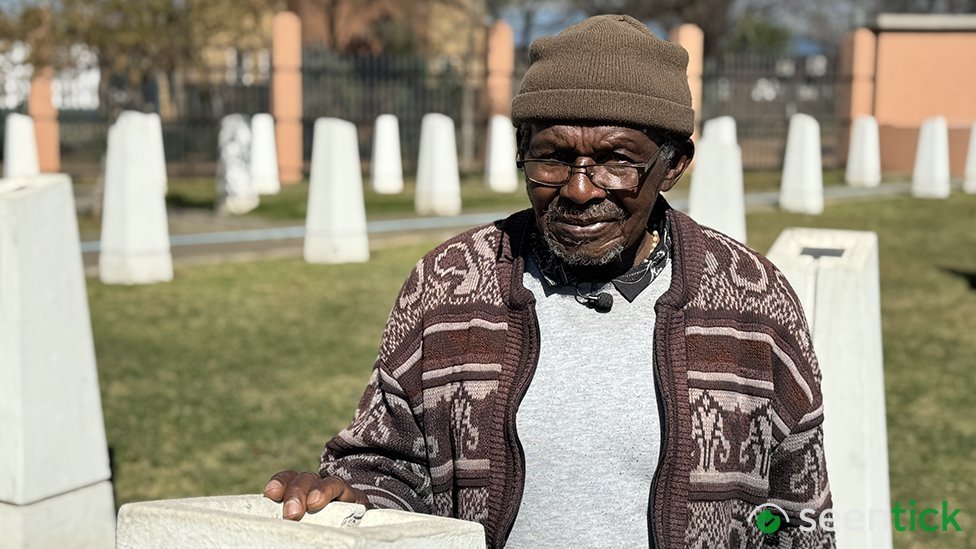
- Abraham Mofokeng was 20 when he joined a peaceful protest in Sharpeville Abraham Mofokeng still carries the wounds of the bloody suppression of a protest in South Africa 66 years ago.
- In what became known as the Sharpeville massacre, police infamously opened fire on thousands of peaceful demonstrators.
- A bullet is still lodged in Mofokeng's spine, and he has a gentle limp from a gunshot to the leg.
For 86-year-old Abraham Mofokeng, the scars of the Sharpeville massacre still linger. It was March 21, 1960, when he joined thousands of peaceful protesters in South Africa, demanding an end to the repressive laws of the white-minority government.
Mofokeng's decision to participate in the protest was motivated "We weren't seen as people," he recalls. "All you were good for was working. You couldn't question them, you were supposed to just do as you're told."
Massacre sharpeville exposed world brutality
The massacre at Sharpeville exposed the world to the brutality of the racist apartheid system, but an indemnity law passed a year after the killings ensured that none of the perpetrators would ever face prosecution.
Read More: Borneo Orangutans Face Critical Peril as Wildfires Rage Across Peatland Forests
At least 69 protesters were killed in the violence, and Mofokeng was among the more than 200 people injured. He still carries a bullet lodged in his spine and has a gentle limp from a gunshot wound to his leg.
The township of Sharpeville, where the massacre took place, is slowly crumbling. The once-tarred roads are returning to dirt, and many of the small brown-faced brick homes built under apartheid-era government remain unchanged.
Despite the country's transition to democracy in 1994 and the election of Nelson Mandela as president, the scars of apartheid remain. Many survivors feel that justice has not been served, and attempts at redress through the Truth and Reconciliation Commission have fallen short.
A new legal case, filed The case argues that the law is unconstitutional under the new constitution that came into effect in 1994.
Also Read: Trump Reaffirms US Neutrality on Falklands Sovereignty During Foreign Policy Address
Charne Tracey, one of the lawyers on the case, notes that the community is seeking reparations to enable their healing and closure. "Nothing has been done that assists with their healing and improvement of their quality of life," she says.
Prof Frans Viljoen believes that repealing the indemnity law would be an important step towards "cleaning up" the legislation and "closing a chapter on the past." He argues that the case can be brought against the current state, as the principle of continuity of statehood still applies.
The TRC, which was established to address apartheid-era violence, has been widely criticized for its failure to bring about justice for some victims. The government has acknowledged its support for apartheid victims but has not opposed survivors and families pursuing legal remedies.
What's Your Reaction?
 Like
Like
 Dislike
 Love
Love
 Funny
Funny
 Wow
Wow
 Sad
2
Sad
2
 Angry
Angry

I write about the forces shaping business and the global economy, from startup growth and changing markets to international trade and policy. My work focuses on breaking down complex developments into clear, practical insights and understanding what they could mean for businesses, investors, and the wider economy.









Comments (0)