
Madhya Pradesh Students Take to Streets Against Fare Hikes, School Shifts, and Merger Proposals
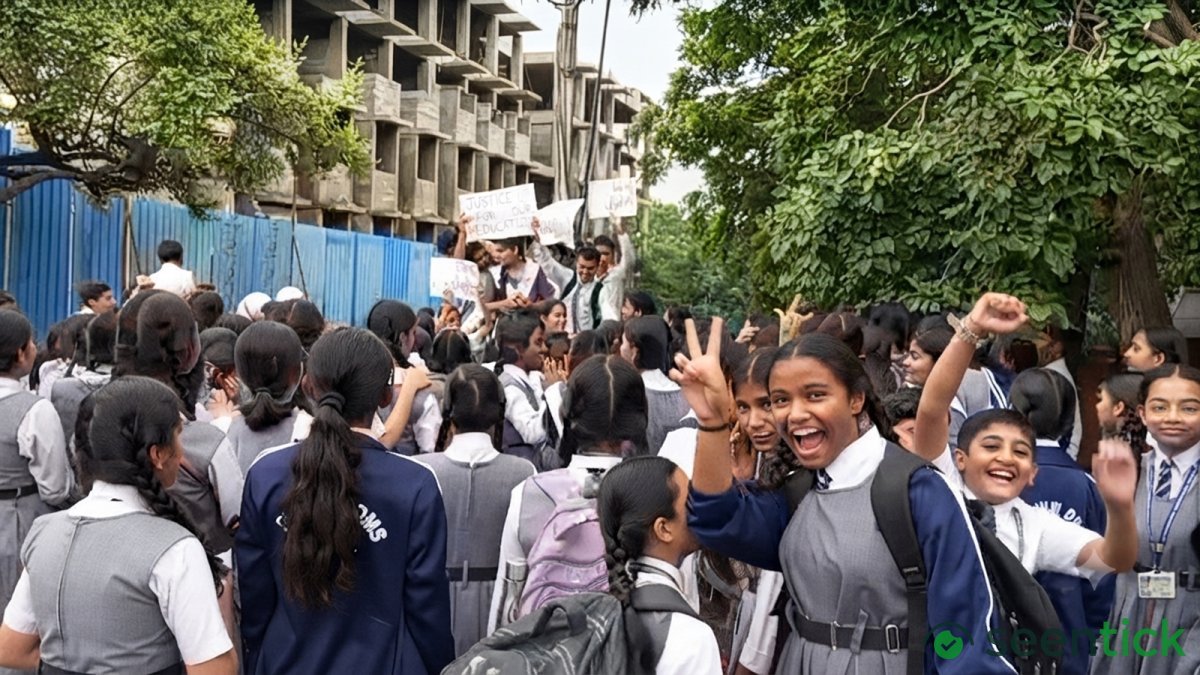
In a display of collective resistance, schoolchildren in Madhya Pradesh took to the streets this week to protest against fare hikes, plans to shift schools out of the city, and proposals to bring four institutions under the Kendriya Vidyalaya system. The protests, although unorganized, highlighted the concerns of students, parents, and teachers over the impact of these changes on their daily lives.
The first protest took place at the Sironj bus stand in Vidisha district, where students gathered to raise slogans against a fare hike that would affect their ability to attend school. The Sub-Divisional Magistrate (SDM) Om Narayan Badkul intervened, assuring the students that the administration would take up the matter with the operators, leading to an end to the protest.


Two days later, following a meeting between the SDM, tehsildar, police station in-charge, and bus operators, the administration announced that schoolgirls traveling to and from school would once again be charged the earlier fare. The decision was seen as a victory for students who had been protesting against the fare hike.
In Ujjain, the dispute centered around a state order to merge 11 schools in the district, including six urban schools, into the Sandipani Vidyalaya at Daudkhedi. Protesting students argued that more than 2,500 students would be affected, with many already traveling long distances to reach school. The Madhya Pradesh government later announced that students at Rani Lakshmibai Government Sarafa Higher Secondary School in Ujjain would continue attending classes at the existing Sarafa campus until a suitable alternative arrangement is made.
In Bhopal, close to 400 students of the Demonstration Multi-Purpose School protested against a proposal to merge their institution into the Kendriya Vidyalaya Sangathan network. The school, one of four established in December 1965 under NCERT, has been at the forefront of innovative teaching methods that have since been adopted more widely in Indian classrooms. Students voiced concerns over what would happen to current students, teachers, and vocational courses if the merger proceeds.
The protests highlight the growing assertiveness of schoolchildren in Madhya Pradesh, who are increasingly taking matters into their own hands to address issues affecting their education. The government's response to these protests will be crucial in determining the future of education in the state. As one student in Ujjain said, “We don’t want to go to Daudkhedi. Our current school is on the main road, and many of us come from far-away villages.”
Read More: Gold Rate Today, August 19: Check 18, 22 and 24 carat gold prices
The government's decision to reconsider the fare hike and school merger proposals demonstrates a willingness to listen to students' concerns. However, more needs to be done to address the underlying issues affecting education in Madhya Pradesh. As one student leader said, “We want justice for our schools and our future.” The protests will continue to monitor the situation and push for meaningful changes that benefit students and teachers alike.
As the government navigates these complex issues, it is essential to recognize the role of education in shaping the lives of young people. Education is not just a right, but also a responsibility that requires careful consideration and planning.
The protests also highlight the importance of community engagement in shaping education policy. Parents, teachers, and local leaders played a crucial role in mobilizing students and advocating for their rights. This collective effort demonstrates the power of grassroots activism in driving change and promoting positive social outcomes.
As Madhya Pradesh moves forward, it is essential to prioritize the needs and concerns of students and teachers. The protests may have been unorganized, but they have brought attention to critical issues affecting education in Madhya Pradesh.
In conclusion, the protests in Madhya Pradesh serve as a reminder of the importance of listening to students' concerns and engaging with them to shape education policy.
What's Your Reaction?
 Like
0
Like
0
 Dislike
0
Dislike
0
 Love
0
Love
0
 Funny
0
Funny
0
 Wow
0
Wow
0
 Sad
0
Sad
0
 Angry
0
Angry
0

SeenTick is a digital news platform bringing you the latest and most important stories from India and around the world. Explore news and updates across politics, business, technology, AI, gaming, health, sports, entertainment, science and more.










Comments (0)