

Climate Change: UN Report Warns of Inevitable 1.5 Degree
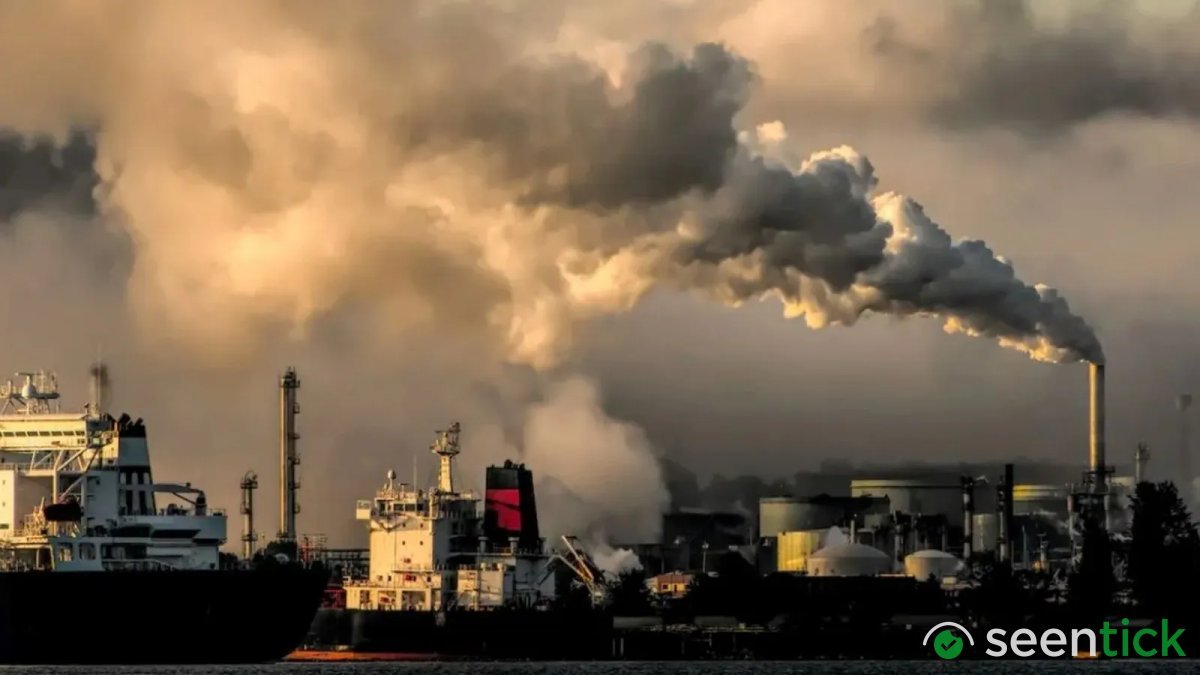
Climate Change: UN Report Warns of Inevitable 1.5 Degree
Key Highlights
- A new UN report has acknowledged what has been clearly evident for some years - that there is no way for the world now to contain the global rise in temperatures to within 1.5 degree Celsius from pre-industrial times.
- The report 5 degree Celsius, and enables a return to the 1.5 degree Celsius warming range after some time.
- But even in the best case scenarios the temperature rise is expected to go up to at least 1.8 degree Celsius before declining.
A groundbreaking and sobering new United Nations report has formally acknowledged a harsh reality that has been increasingly evident to scientists and observers for several years: there is simply no longer any viable way for the world to contain the global rise in temperatures to within 1.5 degrees Celsius of pre-industrial times on a permanent, uninterrupted basis. While the report outlines theoretical scenarios involving an "overshoot"—a temporary period where temperatures exceed the critical target before potentially implementing massive carbon removal technologies to enable a return to the 1.5-degree Celsius warming range after some time-the outlook remains exceptionally bleak.
Even in the absolute best-case scenarios modeled 8 degrees Celsius before ever beginning a long-term decline. Furthermore, most other comprehensive pathways project that peak temperatures will actually exceed 2 degrees Celsius over pre-industrial times.
Delivering a stark assessment of our current planetary trajectory, the report states definitively: "We are at a point where there are no plausible scientific pathways left that keep temperatures below 1.5 degree Celsius." This profound admission marks a historic watershed moment in international climate reporting, representing the first time that an authoritative global report has openly acknowledged that a permanent breach of the 1.5-degree Celsius threshold is now entirely inevitable, separating itself from most other previous reports and analyses that maintained cautious optimism.
To contextualize this alarming forecast, it is essential to understand both the history and the science governing these metrics. The famous 1.5-degree mark is, strictly speaking, an arbitrarily decided threshold; in terms of fundamental climate change impacts, there is nothing chemically or physically new that suddenly becomes possible the exact moment this numerical boundary is crossed.
Read More: PM Modi Shares Inspiring GDP Growth Video from Kyrgyzstan Bilateral Summit
However, earth science clearly warns that the severe climate impacts already unfolding across the globe-including catastrophic extreme weather events, unprecedented flooding, devastating droughts, prolonged heatwaves, and other natural disasters-are expected to become exponentially more severe and frequent as global warming continues to increase. The main foundational goal of global climate action, as proudly embedded in the landmark 2015 Paris Agreement, is to keep the rise in global temperatures to well below 2 degrees Celsius compared to the pre-industrial average, while simultaneously striving to limit it as close as possible to 1.5 degrees Celsius.
In reality, the 1.5-degree Celsius threshold for annual averages has already been breached once in practice, occurring in 2024, which officially stands as the warmest year ever recorded in human history. During that turbulent year, the average global temperature happened to be 1.55 degrees Celsius above pre-industrial times.
Moreover, monthly averages have topped the 1.5-degree limit several times, particularly during the persistent stretch between July 2023 and December 2024, when every single month, with the exception of just one, was at least 1.5 degrees Celsius warmer than the corresponding monthly average of pre-industrial times. However, when climate scientists talk about 1.5 or 2-degree Celsius temperature thresholds, they are specifically referring to long-term multi-decadal temperature trends, rather than individual year aberrations that can be caused The record-shattering temperature observed in 2024, for example, was significantly influenced 45 degrees Celsius.
Despite these annual fluctuations, the UNEP report issues a dire warning that the world is now formally entering a dangerous new era where annual average temperatures will be consistently and permanently higher than 1.5 degrees Celsius.
Highlighting rapidly closing window global
Highlighting the rapidly closing window for global action, the report draws a frightening comparison regarding our remaining carbon budget. Pointing to the shifting timelines, the report notes, "The IPCC said we may cross 1.5 around 2035, however this year’s Indicators of Global Climate Change report estimates only around three years before the 1.5c carbon budget is used up if emissions continue at current levels." This dramatic acceleration means that humanity is burning through its ecological safety margins far faster than previously anticipated Furthermore, the report cautions that even if monumental, earnest global efforts are made and a return to below 1.5 degrees Celsius is somehow miraculously secured down the road, the transitional damage will be catastrophic.
Also Read: SIR Draft Rolls See Over 1.3 Crore Deletions Across States, Election Commission Reports
"Even if a return to below 1.5 degree Celsius is secured, many nations and communities will face irreversible losses and permanently changed conditions," the report explicitly warns. These losses underscore the reality that avoiding future warming cannot undo the profound ecological and societal damage already locked into the Earth system
The human and societal toll of this ongoing climate destabilization was vividly emphasized Mathur pointed out that the recent, catastrophic disaster in Nepal served as yet another grim, heartbreaking reminder of the types of severe risks that are exponentially more likely to get enhanced if global temperatures are allowed to continue their upward trajectory. The devastating Nepal flash floods, which caused immense destruction, stood as a testament to the vulnerability of mountainous and downstream regions alike.
Elaborating on the broader implications of these unfolding tragedies, "The disaster in Nepal reminds us with horrific clarity that an 'overshoot in temperature' carries a human cost measured in lives lost and communities shattered," Mathur said. He further excoriated global leadership, adding, "As the UNEP report highlights, delayed ambition is no longer just a failure of policy - it is an active contributor to ecological destabilization." Yet, even amidst this cascade of grim news, Mathur and the UN framework point to the tangible value of past diplomacy, noting that the historic Paris Agreement successfully managed to bend the global emissions curve away from a terrifying pre-Treaty path of nearly 4 degrees Celsius down to roughly 2.8 degrees Celsius under current levels of climate action, proving that multilateral processes retain the capacity to alter our trajectory even when ultimate targets are breached.
What's Your Reaction?
 Like
1
Like
1
 Dislike
 Love
Love
 Funny
Funny
 Wow
2
Wow
2
 Sad
Sad
 Angry
Angry

Tech journalist and AI enthusiast who enjoys keeping up with the latest in hardware, processors, emerging AI tools, and software. I like digging into new technology, understanding how things actually work, and following the developments that could shape the way we use technology in the future.











Comments (0)