


Kenya Cracks Down on Foreign Traders, Leaving Migrants in Limbo
Key Highlights
- Kenya orders foreign traders to leave or face prosecution.
- Burundian migrants in Kenya face uncertainty over their future.
- Government gives undocumented foreigners a 90-day window to register and comply.
For Ndaikech Ali, who has been traversing the streets of the Kenyan capital eking out a living as a tuk-tuk driver for the past nine years, Nairobi's traffic-not xenophobia-has been his biggest concern. During his time in the East African nation, the Burundian says he has always found Kenyans to be friendly and welcoming; that is, until last week, when President William Ruto ordered a crackdown on foreigners working as traders or operating small-scale businesses.
"Now they have turned against us," he told the BBC at the Burundian embassy in Nairobi, where many have been queuing this week for documents to allow them to travel back home. "The threats are many… even from children," he said, adding: "It's like a dog has been set loose upon us. We have been bitten."
President Ruto Made His Remarks
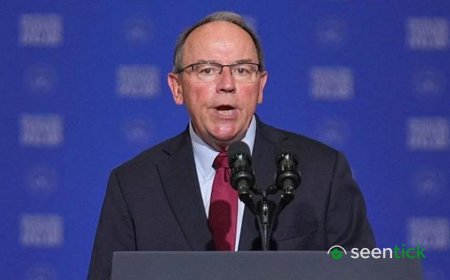
President Ruto made his remarks while addressing Kenyan traders at State House, referring to pending legislation that seeks to exclude foreign nationals from petty trade and mandate the local sourcing of materials. He declared that foreign nationals operating small businesses had until 7 September to pack up, asserting that such low-level jobs should be reserved for Kenyans.
For Ali, the consequences are immediate and dire: "We face harassment and can't work. If our work is halted, we lose the income that enables us to pay rent and buy food.
When those jobs are taken away, the only option left is to return home." As panic spreads, some foreign nationals have rushed to border crossings, with reports suggesting many have become stranded. The social fabric of these communities is fraying as families face forced separation.
A Burundian man who identified himself only as Prosper, and who has a child with a Kenyan woman, lamented the directive: "I have been here from 2019. When I heard the announcement, it was very painful because when I go, I'm forced to leave my family...
and I love my family." Similarly, in the low-income neighbourhood of Majengo, Grace Wamaitha is struggling to feed her five children after her Burundian husband fled the day after the 3 September directive. She has taken on extra work washing clothes, asking, "Now he's gone, who will help me pay school fees? I don't know what to do.
Let them come back."
The migration landscape in Kenya is complex, with migrants from across the region-including those from the eight-member East African Community (EAC)—working in barber shops, salons, construction, and street vending, or selling clothes, food, and household goods. While some have fled conflicts or economic hardship, others sought better opportunities in a country that, under EAC protocols, allows for relative free movement, though employment and long-term residence still require permits.
Even refugees are recognized under Kenyan law as having the right to work and operate businesses, provided they obtain appropriate documentation. Filmon Eyob, a co-ordinator within Nairobi's Eritrean community, believes the crackdown order is being used as a pretext for harassment, noting that some Eritreans and Ethiopians have shuttered their businesses and stayed indoors as a precaution.
The tension even extended to a diplomatic row, with the Burundian foreign affairs minister warning that "hate speech against Burundi" could have repercussions for Kenyans abroad. This forced Kenyan foreign affairs official Korir Sing'Oei to visit the Burundian embassy to offer an official apology and assurances of protection from violence.

Academic Hesbon Owilla Told Bbc
Academic Hesbon Owilla told the BBC that the president's comments were bound to be misinterpreted. While he suggests the underlying policy regarding global migration protocols may be sound, the communication was deeply undiplomatic.
"For those not in the audience," Owilla noted, people interpreted the president's words as a mandate: "We are kicking these guys out." The crackdown also extended beyond small traders to larger corporate interests; the president ordered India's Tata Chemicals to leave the country, citing a failure to provide sufficient benefits to the local Maasai community in Kajiado county. Tata has been mining soda ash in Lake Magadi since 1911 under a British colonial arrangement that remains contentious.
Analysts argue that such moves, particularly in the lead-up to next year's re-election, risk stoking xenophobia. Political analyst Ramogi observed that the president’s focus seems to extend beyond merely protecting local jobs. He points out the economic irony: Kenya earned $56m (£41m) in exports to Burundi last year.
"Now, if you got $56m out of a country, why are you worried about a hawker who's just trying to make, say, $200 in a month? It absolutely makes no sense," Ramogi stated.
For Lima Kabura, whose husband is Tanzanian, the government's approach was far too hasty, suggesting they should have first identified those actually in the country illegally before creating a climate of fear: "When they are forced out, I'm left with no work, no business and no husband."
In response to the widespread backlash and potential damage to Kenya’s image as a safe haven, the government has attempted to walk back the immediate intensity of the directive. A series of official statements have sought to clarify the order, with authorities now providing a 90-day window for undocumented foreign nationals running small businesses to register and comply with local laws.
Also Read: One Dead, 102 Rescued as Indonesian Ferry Goes Missing in Java Sea
During this grace period, those undergoing registration are to be presumed as residing in Kenya legally. Furthermore, the administration has issued statements emphasizing that "Kenya will remain an open, secure and welcoming country, protecting opportunities for its citizens, safeguarding the rights of all persons lawfully within its borders," and reaffirming that "Kenya's commitment to the East African Community of the African continent remains firm." Despite these assurances, the human impact remains visible at the embassy, where the queue of families seeking travel documents persists.
The broader implications of these events highlight the challenges of balancing nationalistic economic policies with regional integration and humanitarian obligations. Observers argue that the current instability could have been mitigated through clearer, more nuanced communication that distinguished between illegal activity and the legitimate livelihoods of neighbors.
As the government attempts to normalize the situation through the 90-day compliance period, the trust between the migrant community and the Kenyan public remains strained. The incident serves as a poignant reminder of how rhetoric from the highest levels of government can rapidly transform a welcoming host environment into one of fear and uncertainty.
As the nation grapples with these tensions, the focus now shifts to whether the 90-day window will be sufficient to transition foreign workers into compliance or if the structural damage to these livelihoods and families will persist as a long-term scar on Kenya's regional standing. The government now faces the task of upholding its sovereignty and domestic economic interests while ensuring it does not alienate its closest regional partners or undermine the foundational principles of the East African Community, which rests on the movement and integration of its people.

Frequently Asked Questions
What's Your Reaction?
 Like
3
Like
3
 Dislike
 Love
Love
 Funny
Funny
 Wow
1
Wow
1
 Sad
Sad
 Angry
Angry

I write about the forces shaping business and the global economy, from startup growth and changing markets to international trade and policy. My work focuses on breaking down complex developments into clear, practical insights and understanding what they could mean for businesses, investors, and the wider economy.








Comments (0)