

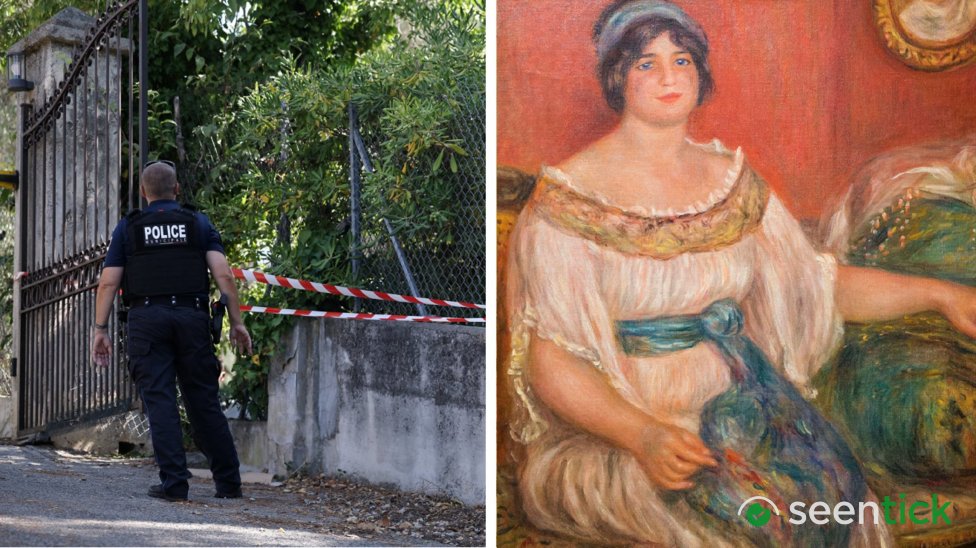
Thieves Stole €88m Worth of Art, Leaving France's Cultural Heritage Vulnerable
Key Highlights
- Four paintings stolen from Renoir museum.
- Theft worth €88m (£75m).
- Museums vulnerable to thefts.
The recent theft of four paintings from the Renoir museum in Cagnes-sur-Mer, France, serves as the latest incident in a wave of increasingly bold burglaries targeting cultural institutions. This event follows a specific pattern of criminal activity that has prompted Europol to issue warnings regarding a surge in museum thefts across Europe over the past two years.
Internationally renowned art detective Arthur Brand had accurately predicted this rise just days before the Renoir heist, citing the significant influence of the high-profile robbery at the Louvre in Paris last October. That audacious incident, which resulted in the theft of jewelry valued at €88m (£75m) that remains unrecovered nearly a year later, appears to have emboldened criminal elements.
As Brand noted, "If you are able to hit the Louvre, thieves all around the world are watching that, thinking, 'Wow' - and then they think, 'Don't we have a local museum with gold and silver?'" This sentiment is echoed The urgency is palpable; as Brand describes, "Every museum in the world is stressing now," leading to widespread security reassessments involving police and security officers globally.
Recurring Success These Heists Highlights
The recurring success of these heists highlights a fundamental tension between historical preservation and modern security. Unlike banks or high-end jewelry stores, museums are inherently designed as public spaces, making strict access control difficult to achieve without compromising their accessibility.
Read More: Five Killed, 67 Injured in Russian Drone Strike on Ukrainian Shopping Centre
Experts point out that museum directors often struggle to balance limited budgets between exhibition funding and necessary security upgrades, particularly when institutions are housed in antique structures like the 18th-century mansions containing the Denis Diderot Maison des Lumières. As Langres mayor Théo Caviezel explains, the challenge lies in reconciling modern protective requirements with rigid heritage regulations.
Furthermore, the nature of these crimes has shifted from deceptive artifice to overt violence. Europol's recent reports emphasize that offenders are increasingly utilizing heavy tools-including sledgehammers, axes, crowbars, and even explosives-to force their way inside.
In the Louvre case, thieves employed a mechanical lift and power tools to These tactics prioritize speed and raw force, creating immediate safety risks for staff and visitors alike, as noted
The shift in what is being targeted reflects a pragmatic evolution in criminal strategy. While valuable paintings are traditionally difficult to sell due to their notoriety, thieves have increasingly pivoted toward precious metals and gemstones, which can be melted down or removed from settings to eliminate any identifiable trace.
This makes the recovery of stolen goods exceptionally difficult; Art Recovery International's Christopher A. Marinello estimates that only 5-10% of stolen art is ever recovered. To combat this, security professionals like Ibrahim Bulut argue that the goal is not total prevention, but rather "buying time" through physical barriers, seismic detection systems that sense drilling vibrations, and increased surveillance.
Recommendations currently being implemented across Europe include the installation of heavy ground-anchored doors, thickened glass display cases, and integrated systems that can trigger total facility lockdowns. Yet, as Kumar Sokka of Acre Security notes, the ultimate challenge remains preserving the atmosphere of the institution.
Also Read: Mayor Mamdani Defies Calls to Skip 25th Anniversary 9/11 Ceremony
"A museum cannot be a fortress," Lilli Hollein asserts, emphasizing that while new standards are required to protect invaluable historical treasures from being lost to illicit markets or melted into anonymous bullion, museums must fundamentally remain open, welcoming institutions for the public to enjoy the cultural heritage they safeguard.
Frequently Asked Questions
What's Your Reaction?
 Like
1
Like
1
 Dislike
1
Dislike
1
 Love
Love
 Funny
Funny
 Wow
Wow
 Sad
Sad
 Angry
2
Angry
2

I write about the forces shaping business and the global economy, from startup growth and changing markets to international trade and policy. My work focuses on breaking down complex developments into clear, practical insights and understanding what they could mean for businesses, investors, and the wider economy.









Comments (0)