

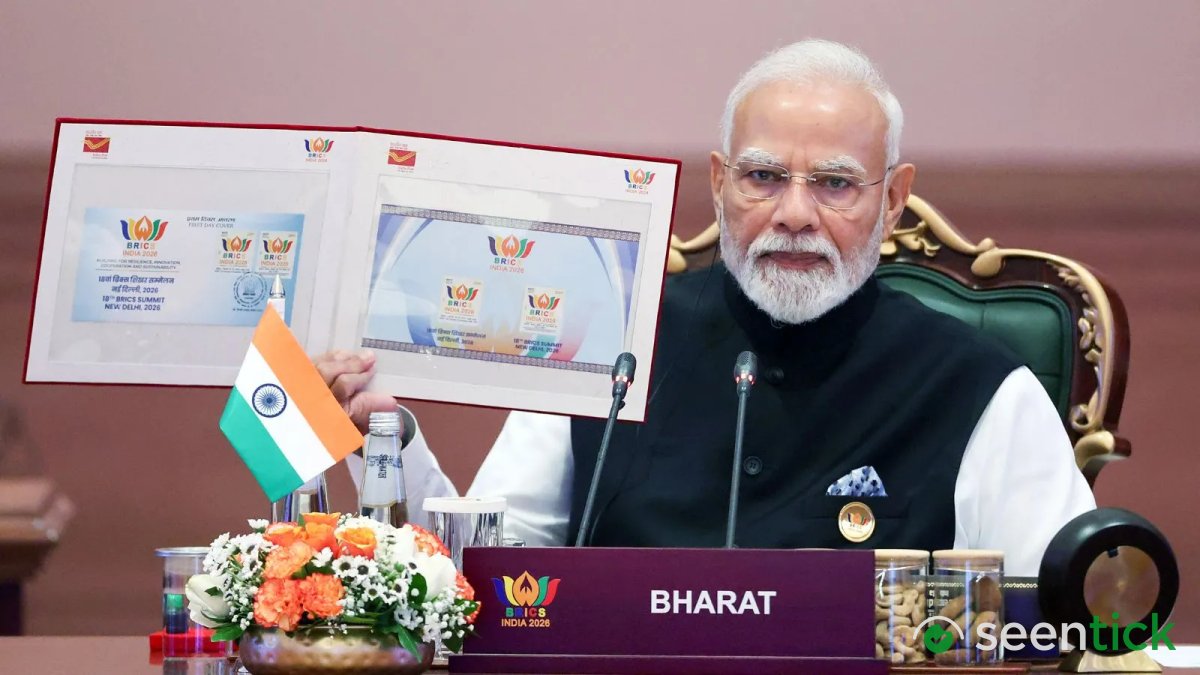
BRICS Countries Reiterate Support for India and Brazil to Play Greater Role in UN Security Council
Key Highlights
- China and Russia back India and Brazil’s push for greater role in UN Security Council.
- The current global decision-making architecture is likened to a pyramid, with powerful nations at the top and those affected at the bottom.
- Prime Minister Narendra Modi calls for a more democratic, representative, effective and efficient UN Security Council.
BRICS Leaders Unite to Reform UN Security Council
China and Russia have reiterated their support for India and Brazil to play a greater role in the United Nations, including its Security Council, in the New Delhi Declaration of the BRICS summit. According to the Declaration, the leaders of BRICS countries reiterated their support for a “comprehensive reform of the UN, including its Security Council”.
The Declaration pressed for the need to make the UN body “more democratic, representative, effective and efficient, and to increase the representation of developing countries in the Council's membership so that it can adequately respond to prevailing global challenges and support the legitimate aspirations of emerging and developing countries from Africa, Asia and Latin America, including BRICS countries, to play a greater role in international affairs, in particular in the UN, including its Security Council”. This call for reform is not new, as major emerging nations have been advocating for an expansion of the UN Security Council for several years.
India has been at the forefront of this demand, with Prime Minister Narendra Modi pushing for a greater role for developing countries in global decision-making.
Over the past several years, major emerging nations have called for an expansion of the UN Security Council. India has been at the forefront of this demand.
Read More: Guterres Urges UN Security Council Reform to Reflect Multipolar World
In fact, Prime Minister Narendra Modi on Saturday pitched for a greater role for developing countries in global decision-making. He shared the Global South should move from being a “rule-taker” to “rule-shaper”.
Addressing the opening session of BRICS, the Prime Minister shared the current global decision-making architecture looks like a “pyramid” – the powerful at the top are making the decisions, and those at the bottom are the ones affected and have no powers and leverage. Prime Minister Modi shared that the “pyramid of privilege” should be transformed into a “platform of partnership”.
This vision is shared
UN Security Council Reform: A Global Challenge
The UN Security Council has five permanent members – China, France, Russia, the UK and the US. Each permanent member holds veto power over resolutions, which has remained unchanged since the Council’s inception in 1945. The current composition of the Security Council has been criticized for being undemocratic and unrepresentative of the global community.
The BRICS Declaration calls for a comprehensive reform of the UN, including its Security Council, to make it more democratic, representative, effective and efficient. This reform is aimed at increasing the representation of developing countries in the Council's membership, so that it can adequately respond to prevailing global challenges and support the legitimate aspirations of emerging and developing countries from Africa, Asia and Latin America, including BRICS countries.
Also Read: Mizoram's Bairabi-Sairang Rail Line Completes First Year
This number has remained unchanged since the Council’s inception in 1945. “We stress that the UN Security Council reform is to lead to the amplified voice of the Global South.
Recalling the 2022 Beijing and 2023 Johannesburg-II Leaders' Declarations, China and Russia, as permanent members of the UN Security Council, reiterate their support to the aspirations of Brazil and India to play a greater role in the UN, including its Security Council,” the Declaration stated.
A New Era for Global Decision-Making
The BRICS Declaration presents an opportunity for major emerging nations to shape the future of global decision-making. The call for reform of the UN Security Council is a step towards creating a more democratic and representative global governance system.
Prime Minister Modi's vision of transforming the current pyramid of privilege into a platform of partnership is shared This new era of global decision-making will require cooperation, dialogue and collective action among nations to address the complex challenges facing the world today. The BRICS Declaration is a significant step towards achieving this goal, and it remains to be seen how it will shape the future of global governance.
Frequently Asked Questions
What's Your Reaction?
 Like
1
Like
1
 Dislike
 Love
1
Love
1
 Funny
Funny
 Wow
2
Wow
2
 Sad
Sad
 Angry
Angry
Tech journalist and AI enthusiast who enjoys keeping up with the latest in hardware, processors, emerging AI tools, and software. I like digging into new technology, understanding how things actually work, and following the developments that could shape the way we use technology in the future.








Comments (0)