

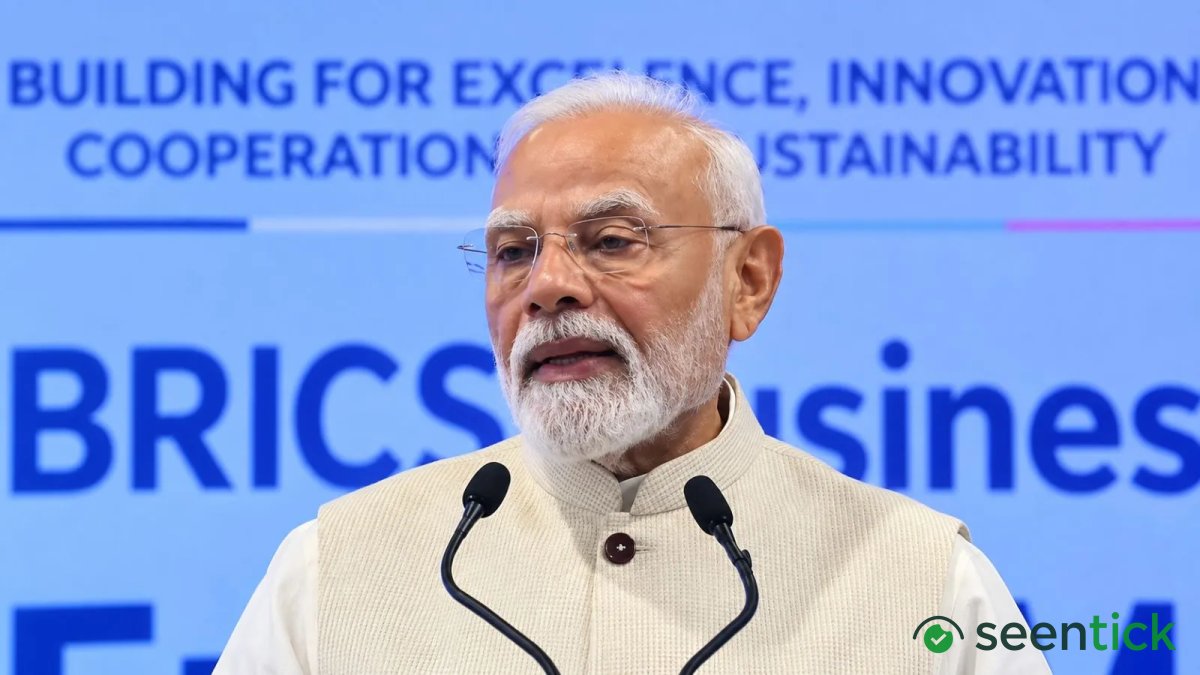
PM Modi Champions Global Seafarers Emergency Network at BRICS Summit
Key Highlights
- Prime Minister Narendra Modi proposes establishing a 'Seafarers' Emergency Support Network'.
- The network will provide distress alerts, medical aid, family communication, and evacuation support for seafarers.
- India has been advocating for the safety of seafarers due to its significant share in global maritime workforce.
At the recent BRICS Leaders' Summit, Prime Minister Narendra Modi introduced a strategic initiative aimed at fortifying the safety of maritime personnel, proposing the creation of a 'Seafarers' Emergency Support Network.' Addressing fellow leaders, Modi underscored that the stability of global trade is fundamentally tethered to the security of sea lanes and the physical safety of those working aboard commercial vessels. His proposal seeks to bridge the gap between maritime authorities and national missions, ensuring that distress alerts, urgent medical aid, and evacuation procedures are synchronized effectively on an international scale.
A Strategic Mandate for Human-Centric Security
India’s advocacy for this network is deeply rooted in its significant role as a primary supplier of maritime labor. With over 12% of the global trained seafaring workforce hailing from India, the country has a profound interest in safeguarding its citizens who form the backbone of international commerce.
Read More: BRICS Nations Unveil New Delhi Declaration on Early Childhood Care and Education
This initiative reflects a broader shift in New Delhi’s diplomatic priorities, moving toward a 'people-centric and humanity-first' approach as India steers the grouping toward delivering practical outcomes for its member states. The network is envisioned not merely as a communication tool but as a lifeline for crew members caught in the crossfire of geopolitical volatility.
Navigating Conflict Zones and Operational Risks
The urgency of Modi's proposal is underscored Recent conflicts in West Asia and the Black Sea have exacted a heavy toll, with 15 Indian seafarers reported dead and two still missing. Recognizing these grave threats, the Directorate General of Shipping has taken assertive steps, advising ship managers and owners to avoid routing Indian crews through the perilous Strait of Hormuz.
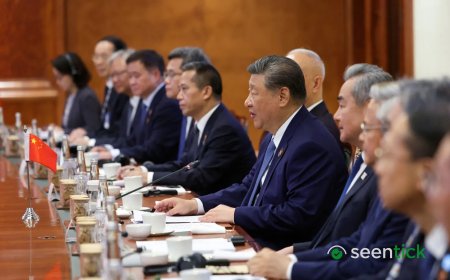
Currently, at least 173 Indian personnel are operating within the Persian Gulf, a region where tensions remain volatile. This specific security concern was a focal point of discussions between Prime Minister Modi and Iranian President Masoud Pezeshkian just prior to the summit, highlighting the direct link between diplomatic dialogue and the physical safety of seafarers.
Broader Implications for Global Trade Stability
Beyond the immediate human impact, the proposed network aims to address the systemic vulnerabilities in global supply chains. As the world navigates the combined pressures of localized conflicts, regional maritime tensions, and long-standing supply chain instability, the welfare of the workforce has often been treated as a secondary concern.
The success of this endeavor now hinges on the ability of participating nations to move past consensus-building and into the tangible implementation of shared maritime protocols that prioritize lives over profit margins in volatile waters.
Conclusion: A Call for Collective Responsibility
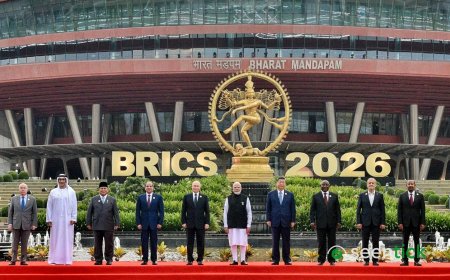
As the BRICS alliance marks two decades of existence, the proposed Seafarers' Emergency Support Network stands as a testament to the bloc’s potential for practical, real-world impact. If implemented effectively, this initiative will not only serve as a template for international cooperation but also affirm India’s commitment to protecting its global workforce amidst a rapidly shifting and often hostile geopolitical landscape.
Frequently Asked Questions
What's Your Reaction?
 Like
2
Like
2
 Dislike
 Love
Love
 Funny
Funny
 Wow
2
Wow
2
 Sad
Sad
 Angry
Angry

Tech journalist and AI enthusiast who enjoys keeping up with the latest in hardware, processors, emerging AI tools, and software. I like digging into new technology, understanding how things actually work, and following the developments that could shape the way we use technology in the future.







Comments (0)