

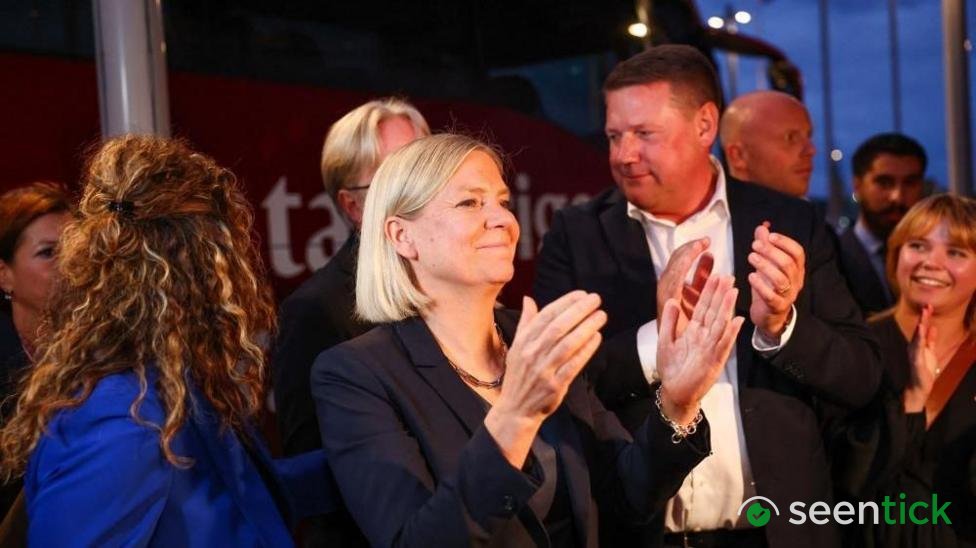
Sweden's Election Too Close to Call, Kristersson's Bloc Leads
Key Highlights
- Partial results suggest Kristersson's right-wing bloc is gaining ground.
- Kristersson promises cabinet jobs for SD if he stays in charge.
- Election campaign focused on national security and welfare spending.
- Andersson lays out choice facing Swedish public.
Swedish Prime Minister Magdalena Andersson is seeking to return to office, but the general election results are too close to call. With 50% of the votes counted, exit polls suggest that the two main blocs were separated, leaving the future of Sweden's government uncertain.
Social Democrats Led However Partial
The Social Democrats, led However, partial results suggest that Kristersson's right-wing bloc is gaining ground, with the Sweden Democrats (SD) party losing support for the first time since 2010 when it entered parliament.
Read More: Turkish police detain dozens in raids on gay bars and homes of LGBTQ+ activists
According to exit polls, the Sweden Democrats were losing support, which could impact Kristersson's ability to form a government. Kristersson has promised cabinet jobs for the SD if he stays in charge. However, partial results suggest that this promise may not be enough to secure their support.
Election Campaign Focused National Security
The election campaign focused on national security, gang crime, and welfare spending. National security was a key issue, with both blocs promising to address the country's security concerns.
"Should we have a government entirely dominated Kristersson," said Andersson after casting her ballot in her home municipality of Strangnas. reports suggest there is a genuine enthusiasm for us being able to continue our important work.
Also Read: US Deports Afghan Woman in First Alien Terrorist Removal Court Case
Andersson's party, the Social Democrats, have been a major force in Swedish politics since the end of World War Two. The Sweden Democrats (SD) were founded in 2005 and have been gaining popularity in recent years.
Sweden has two major political blocs featuring four parties on the right and four on the left. Meaning coalition and minority governments are relatively common. The election results will determine whether Kristersson's bloc can form a government.
Frequently Asked Questions
What's Your Reaction?
 Like
Like
 Dislike
 Love
Love
 Funny
Funny
 Wow
2
Wow
2
 Sad
Sad
 Angry
2
Angry
2

I write about the forces shaping business and the global economy, from startup growth and changing markets to international trade and policy. My work focuses on breaking down complex developments into clear, practical insights and understanding what they could mean for businesses, investors, and the wider economy.










Comments (0)