

Adobe Brings Creative Tools Directly into Slack
Adobe Brings Creative Tools Directly into Slack
Key Highlights
- Adobe has integrated over 70 tools, including Photoshop and Firefly, into Slack via the Adobe for Slack MCP app.
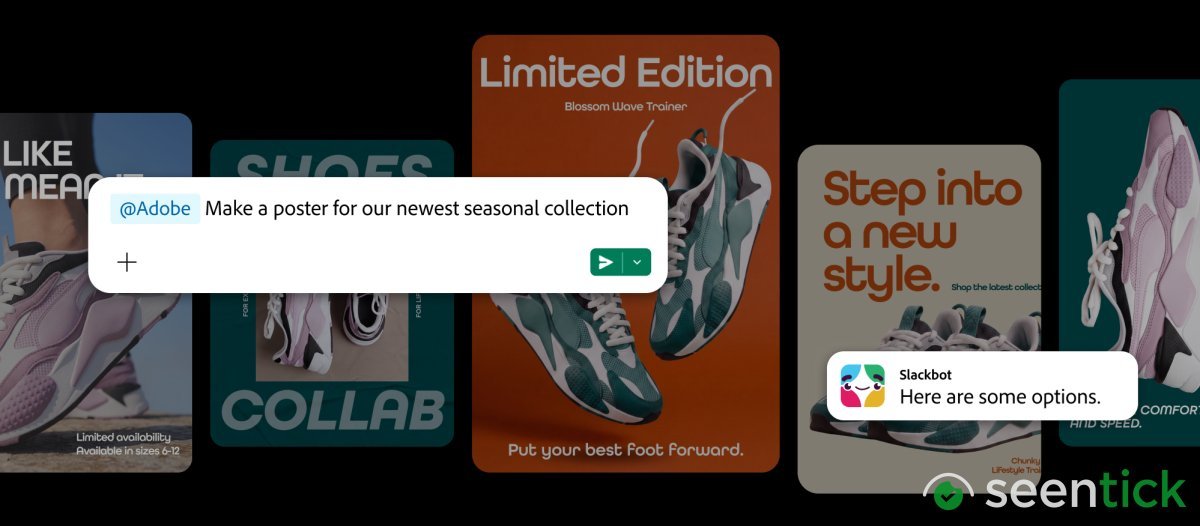
- The integration uses Slackbot to handle requests and context, allowing users to create assets without leaving their chat workspace.
- This feature is currently exclusive to users on Slack Business+ and Enterprise+ subscription tiers.
- Adobe is prioritizing 'outcome-based' workflows to save time for creative professionals working in conversational environments.
Adobe has officially announced that its extensive suite of creative tools is now available directly within Slack. This new integration allows users to utilize powerful software such as Firefly, Adobe Express, Photoshop, Premiere, Acrobat, InDesign, Illustrator, Stock, and Lightroom without having to exit their messaging platform.
The integration is centered around the use of Slack's AI chatbot, Slackbot. Users can simply describe the specific task they need to perform, and the bot will intelligently select and call the appropriate Adobe tool to complete that action. Beyond just executing tasks, Slackbot is designed to understand the context of the current conversation.
This allows users to easily turn information from chat threads or digital canvases into finished products like PDFs, images, or videos.
Furthermore, team members can import
Furthermore, team members can import assets from their existing Creative Cloud asset library or pull in files from previous projects directly into a chat window for quick editing. At this current stage, the functionality is being rolled out specifically for teams using Slack Business+ and Enterprise+ plans.
The move comes as many creative and productivity-focused companies prioritize embedding AI capabilities directly into the communication hubs where employees spend most of their workday.
Most professional work today takes place within conversational boxes, a trend that is pushing service providers to make their features available inside platforms like ChatGPT, Claude, and Slack. Adobe has clearly embraced this shift in behavior.
Only last month, the company introduced a similar integration for ChatGPT, and it has already announced plans to launch a comparable integration for Gemini in the near future.
Read More: Adobe Acquires Indian Marketing Intelligence Startup Rilo
Deepti Pradeep, the senior director for Agentic AI at Adobe, explained that many customers are already using these tools in third-party environments to handle repeatable tasks. According to Pradeep, users are finding significant value in being able to perform batch-editing of images or resizing creative files without needing to leave their main work application.
This convenience is becoming a hallmark of modern enterprise software design.
Reflecting on the internal feedback from focus groups, Pradeep shared, "In focus groups, people talked about the value they get from this experience very clearly: saving time, getting to the outcome they want faster without having to micromanage every step, being able to access Adobe wherever they’re already working." She noted that this feedback has been vital for Adobe’s strategic planning as they move forward with development.
The company is intentionally shifting its focus toward broader goals rather than just individual software tweaks. Pradeep added, "That’s been interesting for us because it’s pushed us to think less about individual edits and more about the larger outcome someone is trying to get to."
This competitive landscape is heating up, as other creative platforms like Canva and Figma are also making their core capabilities available in popular chatbots. Meanwhile, companies like Anthropic are actively building deeper, more rigid integrations within Slack.
This trend exists because so much critical team context is captured during daily internal conversations, making the chat interface an essential location for AI tool deployment.
Pradeep remains optimistic about the range of options available to modern consumers. She stated that while having a variety of choices is beneficial for users, Adobe maintains a unique competitive advantage. The company stands out
The broader tech landscape remains quite active with other significant developments as well. For example, reports have surfaced regarding the startup community gathering to discuss how to build sustainable businesses in the current AI era.
Also Read: Apple Follows Google in Renaming Lake Ontario to Lake America
Simultaneously, Apple is sharing evidence against a former employee accused of stealing company data for OpenAI, while Microsoft is currently testing a fix for recent long-lasting Outlook outages.
Other notable market news includes the success of the MapQuest app, which has surged to the top spot in the navigation category after choosing not to rename Lake Ontario. Meanwhile, discussions around energy infrastructure continue, as Musk’s pursuit of a faster path to installing gas turbines has raised concerns regarding potential pollution.
These varied industry events highlight the fast-paced nature of the current global tech ecosystem.
The financial world is also seeing massive movement in the AI space. A viral AI startup named Instinct has recently raised $350 million, achieving an impressive $2.5 billion valuation. Additionally, Hugging Face is selling a "Microduck" robot for $399, and Nvidia is reportedly moving closer to acquiring the AI platform.
These shifts, paired with Adobe’s new Slack integration, show that the tech industry is aggressively pursuing new ways to integrate AI into every aspect of professional and creative life.
Frequently Asked Questions
What's Your Reaction?
 Like
1
Like
1
 Dislike
 Love
Love
 Funny
Funny
 Wow
1
Wow
1
 Sad
Sad
 Angry
Angry

Tech journalist and AI enthusiast who enjoys keeping up with the latest in hardware, processors, emerging AI tools, and software. I like digging into new technology, understanding how things actually work, and following the developments that could shape the way we use technology in the future.








Comments (0)