

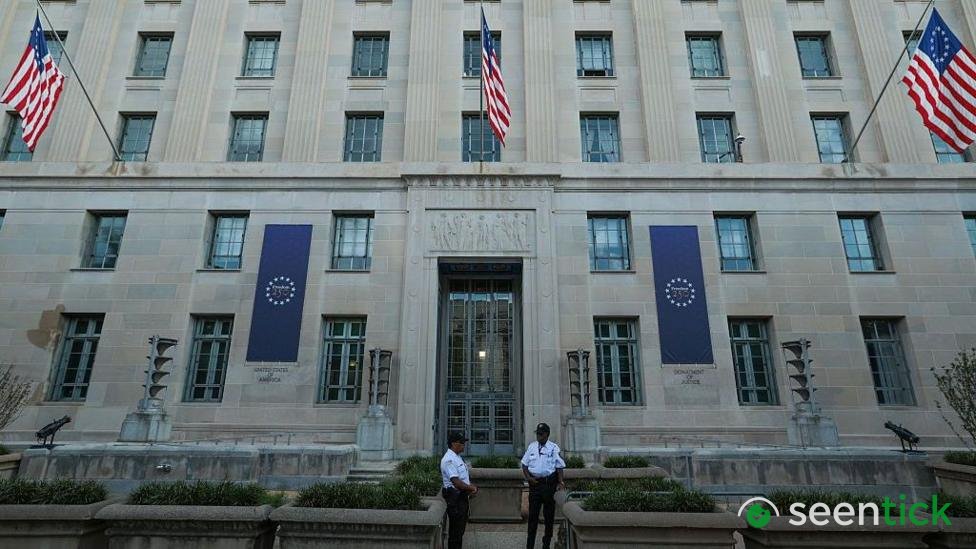
US Deports Afghan Woman in First Alien Terrorist Removal Court Case
Key Highlights
- Nazira Haji Zada, a 47-year-old Afghan woman living in Texas with legal permanent residency, has been deported from the US.
- The removal order was based on evidence related to her son and son-in-law's terror offenses, which she was accused of supporting.
- US Attorney General Todd Blanche described the case as a win for national security and the rule of law.
In a historic and highly controversial legal development, 47-year-old Nazira Haji Zada, an Afghan national and legal United States permanent resident formerly residing in Fort Worth, Texas, has been deported from the country. This removal marks the inaugural use of the Alien Terrorist Removal Court (ATRC), a judicial body originally established The ATRC is specifically designed to adjudicate cases involving non-US citizens facing terrorism-related allegations where the government asserts that the underlying evidence is classified and pertains directly to national security interests.
While Ms. Haji Zada was never formally charged with a criminal offense, her removal follows the successful federal prosecution and subsequent conviction of her son, Abdullah Haji Zada, and her son-in-law, Nasir Ahmad Tawhed. Both men were found guilty of orchestrating a violent plot to execute a mass shooting on Election Day in 2024.
According to officials, the DOJ utilized the secretive court mechanism to address security concerns surrounding Ms. Haji Zada's status, ultimately leading to her departure from the United States rather than a continued, prolonged legal battle before a tribunal that operates behind a veil of confidentiality.
Read More: Police Make Arrest in Death of Tasia Fortune in Mississippi
Department Justice Has Hailed Outcome
The Department of Justice has hailed the outcome of this case as a vital success for American security and the integrity of the nation's immigration laws. In a formal statement released on Friday, the DOJ announced that Ms.
Haji Zada officially conceded her status as an "alien terrorist," there US Attorney General Todd Blanche championed the utilization of the long-unused court, describing the event as a landmark victory that reinforces the federal government's commitment to upholding the rule of law. "This landmark case, resulting in the prompt removal of this alien terrorist to her country of origin, is a win for national security and the rule of law," Blanche stated.
He further emphasized the administration's broader policy toward those deemed to pose a security risk, noting that, "Those who support and condone terrorism should not be living in the United States, and this first-ever case before the ATRC shows how the Department will use every tool at its disposal to protect our country." This rhetoric underscores the government’s intent to leverage specialized courts to circumvent traditional transparency requirements when handling individuals perceived as threats to the national interest.
Also Read: Norway Mourns Princess Astrid Following Death at 94
The proceedings against Ms. Haji Zada have ignited a firestorm regarding the limits of executive power and the erosion of constitutional protections for legal residents. Court-appointed public defenders Matthew Farley and Mary Manning Petras vigorously opposed the government’s tactics, contending that the proceedings constituted a fundamental violation of their client's right to due process under the US Constitution.
Throughout the case, counsel for the defense maintained that they were systematically denied access to the classified evidence being used to justify the removal order. In a pointed statement provided to The Washington Post, Farley and Manning Petras clarified that their client’s decision to accept removal was a tactical move to avoid further interaction with the court, not a validation of the tribunal's authority.
"Our client's choice to consent to removal should not be seen as an endorsement of this court's legitimacy," they asserted. "Dragging lawful permanent residents into court but refusing to show them or their attorneys the evidence that will be used against them is a plain violation of due process." The defense team concluded with a stern warning about the future of the ATRC, expressing strong confidence that "the Alien Terrorist Removal Court will be struck down as unconstitutional as soon as a judge is asked to address the issue," setting the stage for potential future litigation regarding the constitutionality of this secretive judicial apparatus.
Frequently Asked Questions
What's Your Reaction?
 Like
1
Like
1
 Dislike
1
Dislike
1
 Love
Love
 Funny
Funny
 Wow
Wow
 Sad
Sad
 Angry
2
Angry
2

I write about the forces shaping business and the global economy, from startup growth and changing markets to international trade and policy. My work focuses on breaking down complex developments into clear, practical insights and understanding what they could mean for businesses, investors, and the wider economy.













Comments (0)