

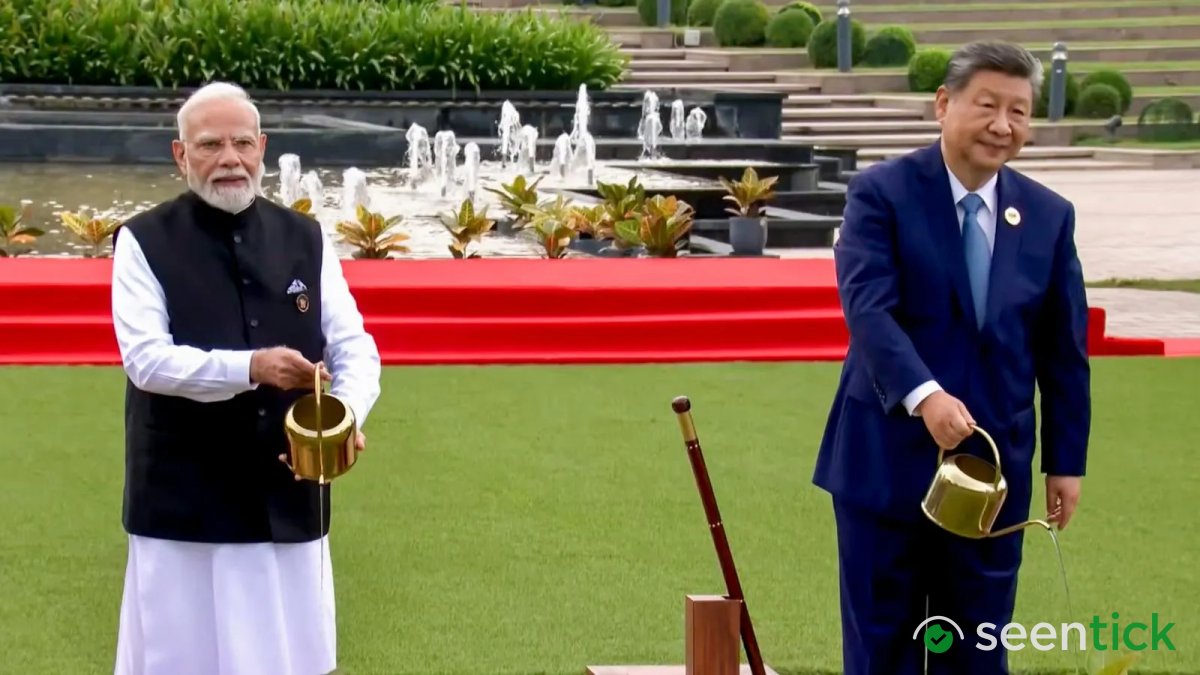
Modi and Xi Push for Renewed Stability Amid BRICS Border Talks
Key Highlights
- Prime Minister Narendra Modi and Chinese President Xi Jinping discussed India-China border disputes during BRICS Summit talks.
- The two leaders agreed on a fair, reasonable, and mutually acceptable resolution of the boundary question.
- They also emphasized the need for both sides to observe existing agreements and understandings on border-related issues.
In a significant diplomatic engagement, Prime Minister Narendra Modi and Chinese President Xi Jinping held high-level bilateral talks on the sidelines of the BRICS Summit in New Delhi. This encounter marks a pivotal moment in international relations, occurring seven years after the Chinese leader’s last visit to India.
Both heads of state reaffirmed a shared commitment to ensuring that long-standing border differences do not escalate into broader disputes, advocating for a fair, reasonable, and mutually acceptable resolution concerning their contested boundaries.
Read More: Mizoram's Bairabi-Sairang Rail Line Completes First Year
The Strategic Pivot to Border Management
The summit discussion built upon the foundational progress achieved in Russia’s Kazan two years ago, which initiated the disengagement of military forces along the Line of Actual Control (LAC) in eastern Ladakh. Prime Minister Modi underscored that peace and tranquility remain the essential bedrock for developing future bilateral ties. This diplomatic push follows intense preparatory work led
Economic Integration and Long-Term Cooperation
Beyond border security, the dialogue addressed the urgent need for economic stabilization. The leaders identified structural trade imbalances and supply chain challenges as critical hurdles that require collaborative resolution.
President Xi expressed a desire to view the India-China relationship through a strategic, long-term lens, emphasizing that as major members of the Global South, both nations should leverage each other’s strengths to foster a multipolar global order. Discussions also covered the acceleration of people-to-people connections, with a specific focus on easing visa restrictions, reviving the Kailash Mansarovar pilgrimage, and promoting business mobility to rebuild trust that had frayed following the incursions of six years ago.
Balancing Historical Strains and Future Prospects
The meeting carries immense symbolic weight, especially given that President Xi opted to skip the G20 summit in New Delhi three years ago. This visit suggests a recalibration of China’s approach to its southern neighbor, moving away from recent confrontations toward a more pragmatic cooperation.
Also Read: Why Chinese President Xi Jinping skipped PM Modi’s BRICS gala dinner in New Delhi
However, the path to normalization remains layered with challenges, including the lingering effects of the 2025 regional hostilities and persistent concerns over the sharing of trans-boundary river data. Despite these friction points, the New Delhi summit provided a necessary impetus for both countries to move past the standoff that began in 2020.
As China prepares to host the next BRICS summit, the focus for both New Delhi and Beijing will be to maintain the momentum of these diplomatic efforts while navigating the complex geopolitical realities of the Asian continent.
Frequently Asked Questions
What's Your Reaction?
 Like
3
Like
3
 Dislike
1
Dislike
1
 Love
Love
 Funny
Funny
 Wow
Wow
 Sad
Sad
 Angry
Angry

Tech journalist and AI enthusiast who enjoys keeping up with the latest in hardware, processors, emerging AI tools, and software. I like digging into new technology, understanding how things actually work, and following the developments that could shape the way we use technology in the future.











Comments (0)