

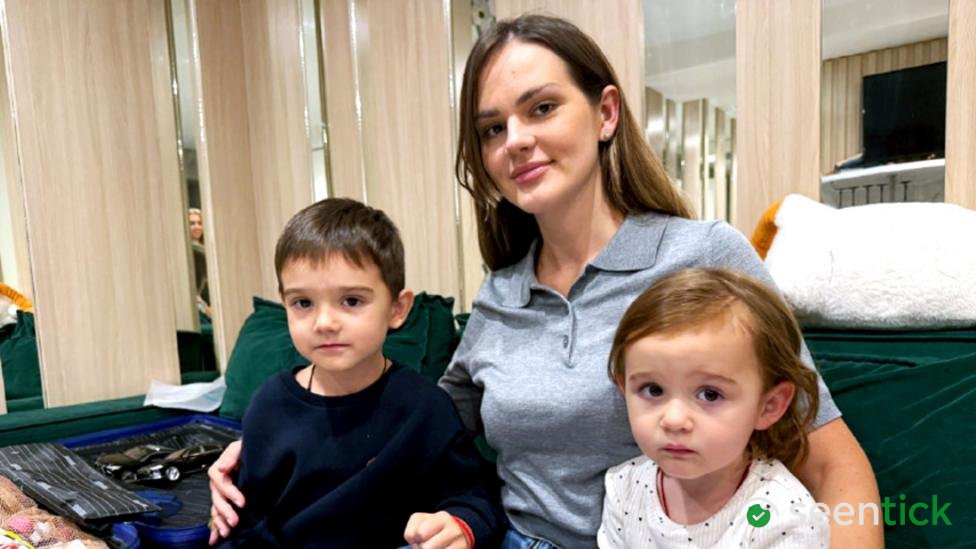
Mariia Shostak: I don't feel safe in Ukraine in any way
Key Highlights
- Mariia Shostak: 'I don't feel safe in Ukraine in any way'.
- 40% of Ukrainians consider relocating due to living conditions.
- Russia's attacks on Kyiv's bridges, petrol stations, and schools.
- Ukrainians seek safer alternatives.
Mariia Shostak, a mother of two, is among those fleeing Kyiv as Russia's attacks on the city intensify. The prolonged periods of sub-zero temperatures and frequent power cuts last winter were particularly challenging. Making it difficult for her to envision a future in the city.
Shostak's decision to leave is not driven by a desire to escape the winter. However, rather by the increasing frequency and intensity of Russia's attacks.
Shostak's children, Artur and Kira, were both born after Russia's full-scale invasion in 2022. The prospect of subjecting them to another miserable and dangerous winter is unbearable, prompting Shostak to seek a safer alternative. They plan to spend the winter in Hurghada, on Egypt's Red Sea coast.
There, the cost of living is significantly lower and the climate is warmer.
Read More: UK MPs Demand FCA Probe After Whistleblower Simon Andriesz Dies
A recent survey by the Gradus research company found that 40% of Ukrainians are considering relocating due to living conditions. The reasons for this decision are complex, with stress factors including not just electricity and blackouts. However, also the targeting of big logistics centres. This has led to concerns about food security during the winter.

Russia's recent attacks on Kyiv's bridges, petrol stations, and schools have increased the sense of danger and foreboding. For families with young children, the situation feels particularly urgent. Iryna, a mother of a three-year-old daughter, describes the challenges of coping with frequent power cuts and extreme temperatures, which made it difficult to care for her child.
Olena Konoplia, who spent weeks searching for a suitable location, has settled on a cottage in a rural community two hours outside the capital. She prioritises avoiding areas with factories, warehouses, and railway stations, which are potential targets for Russian attacks.
Konoplia's elderly mother will soon be joining her, and the prospect of a safer and more peaceful environment is a welcome respite.
As the city teeters on the brink of crisis, authorities are mobilizing a last-ditch effort to safeguard its most vulnerable populations. In a bid to alleviate overcrowding, converted sanatoriums and rehabilitation centers on the forested outskirts are being rapidly repurposed to accommodate the elderly and families with young children.
Also Read: Four Dead in US as Hurricane Isaias Brings 105mph Winds
Meanwhile, a sprawling network of 15 smaller power plants, constructed over the past 18 months, is helping to bolster Kyiv's struggling energy infrastructure.

Meanwhile, a growing number of Ukrainians are seeking safer alternatives. Many are turning to rural communities and countryside areas, where the risk of attack is lower. As the situation continues to evolve, it remains to be seen how these efforts will impact the lives of those affected by the conflict.
The government's efforts to mitigate the impact of the conflict are ongoing. However, the situation on the ground remains complex and challenging. As the winter months approach, it is essential to continue monitoring the situation and providing support to those in need.
What's Your Reaction?
 Like
2
Like
2
 Dislike
 Love
Love
 Funny
Funny
 Wow
2
Wow
2
 Sad
Sad
 Angry
Angry
I write about the forces shaping business and the global economy, from startup growth and changing markets to international trade and policy. My work focuses on breaking down complex developments into clear, practical insights and understanding what they could mean for businesses, investors, and the wider economy.









Comments (0)