

India Auto Sector Faces Import Challenge on High Tech Parts
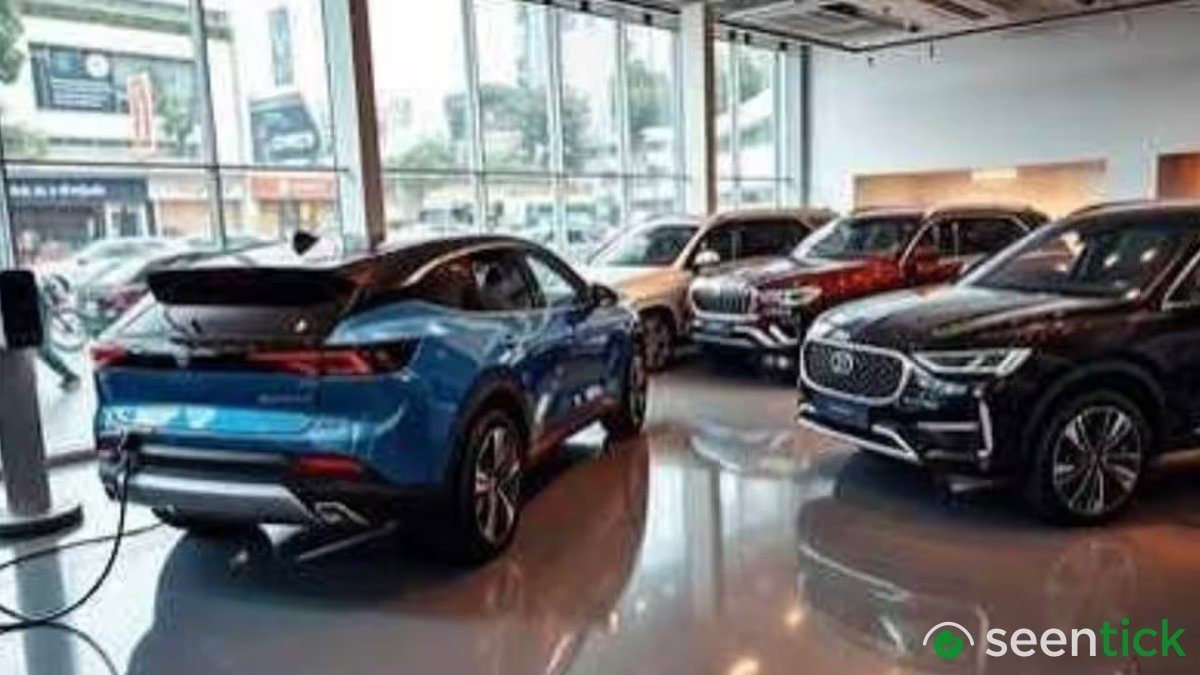
India Auto Sector Faces Import Challenge on High Tech Parts
Key Highlights
- India recorded auto component exports of $24 billion against imports of $25.4 billion in 2025-26, creating a $1.4 billion trade deficit.
- Hyundai Motor India MD and CEO Tarun Garg stressed that technology ownership is vital for strategic independence.
- Maruti Suzuki MD and CEO Hisashi Takeuchi noted that deep localisation helps insulate the industry from global supply chain disruptions.
- Industry leaders called for domestic manufacturing capabilities in semiconductors, battery cells, rare-earth magnets, and power electronics.
India’s vital automotive sector is raising serious concerns that its upcoming vulnerability might not stem from basic vehicle manufacturing, but rather from a heavy reliance on imported high-tech components. Industry leaders from major manufacturers like Hyundai Motor India and Maruti Suzuki are actively urging the domestic market to establish deeper manufacturing roots across crucial areas such as semiconductors, battery cells, and power electronics.
During the annual session hosted He pointed out that India exported approximately $24 billion worth of auto parts during the 2025-26 period, while importing around $25.4 billion, which generated a trade deficit of $1.4 billion.
Hyundai chief executive explained that
The Hyundai chief executive explained that the core issue goes well beyond the simple trade deficit figures. He noted that the nation's outgoing shipments remain heavily restricted to relatively mature technologies, whereas incoming shipments are driven
Read More: NCLT Stays Subhash Chandra's Repayment Order, Restrains Asset
To fix this imbalance, Garg emphasized that the domestic market must urgently develop homegrown capabilities in semiconductor microchips, rare-earth magnets, power electronics, and advanced battery cells. At the same time, companies need to increase spending on research and development alongside intellectual property generation.
“Technology ownership is essential for strategic independence,” Garg stated, highlighting that India must transition from merely shipping standard components abroad to mastering advanced technologies and high-end engineering capabilities.
Echoing these commercial and strategic concerns, Hisashi Takeuchi, managing director and chief executive officer of Maruti Suzuki India, stressed that deep localisation is vital to protect the domestic ecosystem from unpredictable global supply chain shocks.
“Deep localisation is about reducing our exposure to external disruptions,” Takeuchi said, noting that shifting international trade routes, government backing, and India's growing manufacturing scale are making local production much more viable now than before.
Also Read: India's GDP Grows Stellar 7.8% in Q1, Cementing Position as Fastest-Growing Major Economy
Takeuchi added that rising local vehicle demand and new export openings now completely justify heavy financial outlays, “including advanced technologies that were previously considered difficult to manufacture competitively in India.”
Both auto industry heads also highlighted that this localisation push cannot stop with large original equipment manufacturers and Tier-1 suppliers. Takeuchi stressed that building stronger technical, engineering, and quality standards among Tier-2 and Tier-3 vendors will be equally critical for long-term success.
To achieve this broader industrial transformation, Garg called for the widespread adoption of digital tools, artificial intelligence, and shared learning across the entire supply chain network to ensure sustainable growth and robust self-reliance.
Frequently Asked Questions
What's Your Reaction?
 Like
Like
 Dislike
 Love
Love
 Funny
Funny
 Wow
1
Wow
1
 Sad
Sad
 Angry
Angry

I write about the forces shaping business and the global economy, from startup growth and changing markets to international trade and policy. My work focuses on breaking down complex developments into clear, practical insights and understanding what they could mean for businesses, investors, and the wider economy.










Comments (0)