

Dick’s Sporting: Goods 30% Stock Plunge A Warning For Sportswear
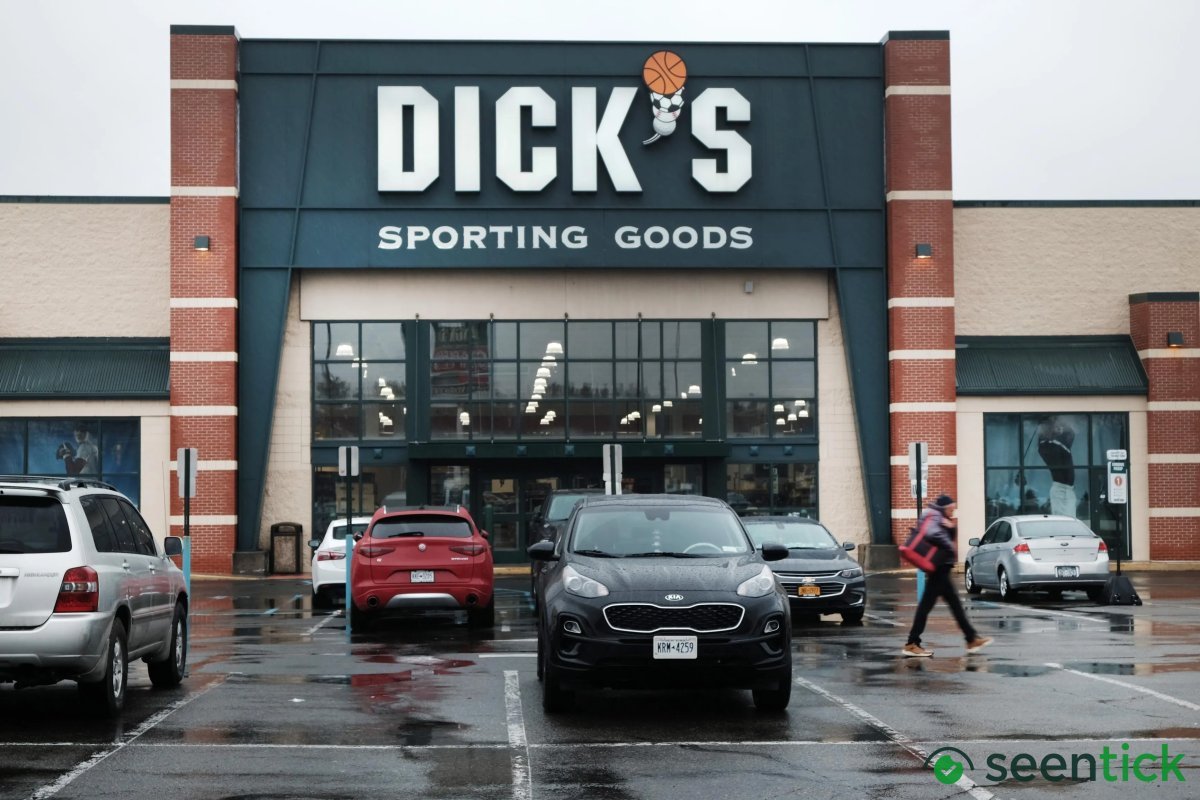
Dick’s Sporting: Goods 30% Stock Plunge A Warning For Sportswear
- Dick’s Sporting Goods shares suffered their worst one-day decline on record Tuesday, plunging 30.7% to $124.31 after the retailer cut i
- Investors had been expecting Dick’s to demonstrate that its $2.4 billion acquisition of Foot Locker was beginning to deliver but instea
- Comparable sales at the core Dick’s operation rose 4.9%, with growth across footwear, apparel and hardlines. Average ticket increased 3
Dick’s Sporting Goods shares suffered their worst one-day decline on record Tuesday, plunging 30.7% to $124.31 after the retailer cut its full-year outlook and cautioned a promotional athletic footwear market was hitting sales and margins. And a minor recovery since has failed to disguise the scale of the sell off reflected more than a quarterly earnings miss.
Investors had been expecting Dick’s to demonstrate that its $2.4 billion acquisition of Foot Locker was beginning to deliver but instead, the results demonstrated that the turnaround is taking longer amid a challenging underlying footwear market. And Foot Locker is exposing the company to the part of the market currently under the most pressure.


Dick’s reported second-quarter sales of $5.59 billion, up 53.2% year over year, largely because the results now include Foot Locker, but revenue still came in below the roughly $5.64 billion expected Adjusted earnings per share were $3.53, down from $4.38 a year earlier and below the approximately $3.76 the Street had expected, while net income fell to $315 million from $381 million. For related coverage, explore our detailed analysis on Technology and Digital Systems.
Comparable Sales Core Dick’S Updates
Comparable sales at the core Dick’s operation rose 4.9%, with growth across footwear, apparel and hardlines. Average ticket increased 3.6% and transactions rose 1.3%. CEO Lauren Hobart shared the business was growing nearly 200 basis points faster than the broader industry.
But at Foot Locker pro forma comparable sales fell 3.6%, including a 3.3% decline in its international business and the Foot Locker segment also recorded a $31.9 million operating loss in the quarter. The issue was not simply that shoppers had paused buying sportswear, it was that they were becoming much more selective about what they bought and Dick’s Executive Chairman Ed Stack shared on the analyst call that brands had become increasingly promotional online and those discounts had spread into the broader retail market.
“What changed is a number of brands got very promotional on their sites, and those promotions spilled into the broader marketplace,” Stack said as he added that Dick’s expected the promotional environment to continue through the end of the year as he chose to be unusually direct about what is happening. “The industry is carrying too much inventory,” he told analysts, while saying consumers had become “even more cautious than expected due to the geopolitical environment.” Stack said those older silhouettes had “slowed relatively quickly,” while new launches in the second quarter also underperformed expectations.
Read More: Travers Stakes: Golden Tempo Favored to Win $2.5 Million Race
Because Athletic Footwear Sold Updates
And because athletic footwear is sold through multiple channels, discounts and promotions quickly become a problem for the whole industry, leading JPMorgan analyst Christopher Horvers to say the industry was experiencing a “hangover right now”. His argument, however, was not that consumers had lost interest in footwear permanently but rather, the market is between product cycles.
New products from Nike, Adidas, On and Hoka are generating interest, but older lifestyle products are struggling. Dick’s response was to reduce its expectations for the year. The company now expects full-year sales of $21.9 billion to $22.2 billion, operating income of $1.45 billion to $1.55 billion and adjusted EPS of $11 to $12.
Foot Locker comparable sales are now expected to range from a 2% decline to flat, compared with previous guidance for 1.5% to 3% growth. “We are not leading this margin erosion.
We are participating in it where we have to,” Stack acknowledged to analysts as he conceded that Dick’s is not leading the current price war, but is participating where necessary to protect market share.
The read-across to sportswear brands has been immediate and Nike, Adidas, Puma and On Holding, Under Armour, Deckers and Crocs have all seen stock price dips, while Nike was hit again when Truist downgraded the stock to Hold from Buy, cutting its price target to $42 from $47, as the firm shared Dick’s update created “incremental murkiness” around Nike’s turnaround.
Dick’s believes one important part of a rebound can be fixed through innovation anf Stack pointed to Nike running products, Adidas women’s products and emerging brands such as Gymshark as examples of merchandise still performing strongly. Certainly, Dick’s core business is still strong and Foot Locker is far from a failed acquisition but the Street has become less forgiving of stale product, excess inventory and discount-led growth.
Frequently Asked Questions
What's Your Reaction?
 Like
1
Like
1
 Dislike
0
Dislike
0
 Love
0
Love
0
 Funny
0
Funny
0
 Wow
1
Wow
1
 Sad
0
Sad
0
 Angry
0
Angry
0

I write about the forces shaping business and the global economy, from startup growth and changing markets to international trade and policy. My work focuses on breaking down complex developments into clear, practical insights and understanding what they could mean for businesses, investors, and the wider economy.














Comments (0)