

What we know about deadly Nepal-Tibet floods
What we know about deadly Nepal-Tibet floods
- This video can not be played Video shows scale of flash flood hitting Nepal-Tibet border Massive landslides and flash floods on the Nep
- "Additional analysis of near Earlier Nepali authorities had also told the BBC that a massive chunk of ice may have fainted from a mount
- Simon Cook, senior lecturer in energy environment and security at the University of Dundee who specialises in glaciology, shared "clima
This video can not be played Video shows scale of flash flood hitting Nepal-Tibet border Massive landslides and flash floods on the Nepal-Tibet border have caused widespread damage and left hundreds dead or missing. Here is what we know so far.
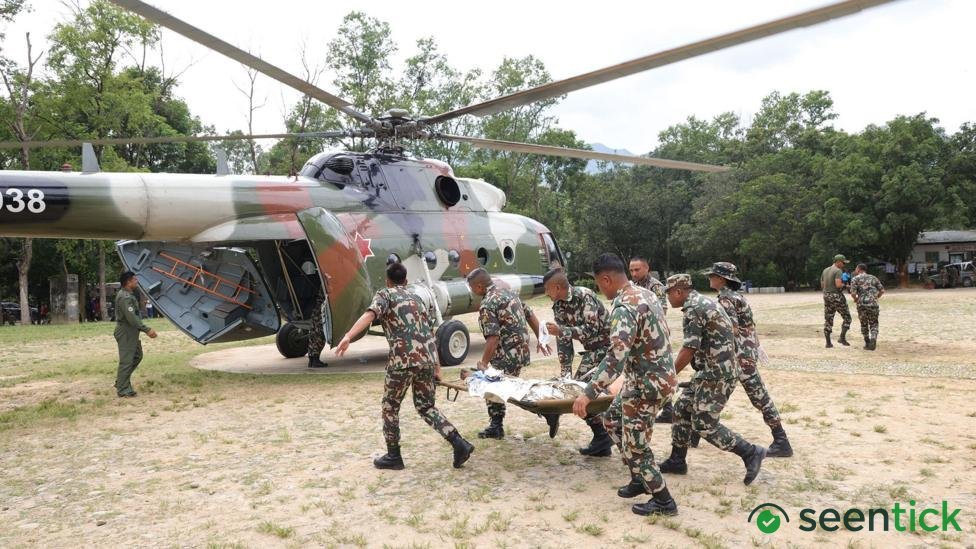
Military teams were brought in to help with rescue and evacuation following the flooding on Wednesday The United States Geological Survey (USGS) had first reported the event as a magnitude 4.4 earthquake on Wednesday, but later confirmed the incident "was instead a glacial collapse and debris flow" that "caused subsequent catastrophic impacts downstream".


"Additional analysis of near Earlier Nepali authorities had also told the BBC that a massive chunk of ice may have fainted from a mountain, pulling down rocks and other sediments with it. Climate change is known to be driving faster glacier melt in the Hindu Kush Himalaya region and, as rescue efforts continue, scientists are trying to piece together the exact order of events.
For related coverage, explore our detailed analysis on Technology and Digital Systems.
Simon Cook Senior Lecturer Updates
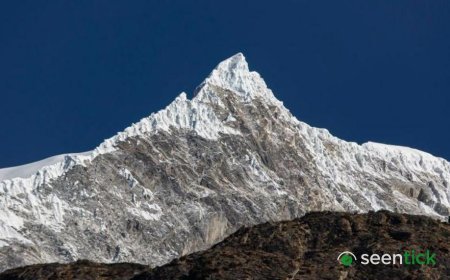
Simon Cook, senior lecturer in energy environment and security at the University of Dundee who specialises in glaciology, shared "climate change could have an impact". Cook shared his team had detected that the lower part of a glacier in Nepal near the Langtang Lirung peak - which is approximately 15km (9 miles) west of the site of the floods - had fainted.
He estimated that the glacier fainted in a northwesterly direction and then travelled westwards downstream. He told the BBC "permafrost is partially holding some mountainsides together, this permafrost is warming and thawing and degrading so you are going to get more landslides".
Mike Searle, professor of Earth sciences at Oxford University, shared the glacier could have fainted "hours or days" before the flooding hit Nepal and Tibet.
He told the BBC: "I think the sheer wave of debris suggests there was a landslide first, the water built up, (which) dammed the river, and then it burst in one huge great flood." One possibility is that water from rainfall or melting ice may have destabilised the ground or ice, triggering a chain reaction.
Scientist Will Looking Satellite Updates
Scientist will be looking at satellite images of exactly where the landslide happened, whether any glacial lakes suddenly drained, and where the river might have become blocked, as well as data on recent rainfall. A deluge of material careered towards northern Nepalese towns, including areas popular with mountaineering tourists and pilgrims.
The border is around 40 miles (64.4km) north of Nepal's capital city Kathmandu.
Footage demonstrated a wall of mud and rock sweeping away buildings, roads and vehicles, as people fled the fast-moving wave of material in the Nuwakot region. In one video, a towering wall of water and mud was seen rushing down a gorge along the Trishuli River and enveloping the Rasuvagadhi Border check point, a multi-storey building.
Read More: Key moments: from Lindsay Clancy's five-week trial over children's killings
Severe flooding has been reported along the Bhote Koshi, Trishuli and Narayani rivers. Deaths have also been reported in villages on the Tibetan side of the border. The International Centre for Integrated Mountain Development (ICIDMOD) has cautioned secondary flooding could occur in the coming days as a result of the debris that washed into the river systems.
In a report, the ICIDMOD shared they are in the process of assessing whether the Trishuli River has been temporarily blocked in narrow sections. If it has been blocked, it is at risk of forming a landslide dam - and a second flooding event. Authorities and scientists are continuing to evaluate the size, location and stability of any potential blockages.
This video can not be played Watch: BBC Nepali's Shreejana Shrestha is at a medical facility in Kathmandu, where some survivors are being flown in The number of people killed or missing is still becoming clear Nepali law enforcement personnel officers officers say at least 270 people have passed away. Among those killed, 64 were found in downstream areas in the Chitwan district while another 26 were found in Nawalparasi East.
Meanwhile, China's state broadcaster CCTV shared on Thursday that the number of people missing in the mudslide disaster in Tibet's Gyirong county had risen to 558. The Nepal Tourism Board shared on Thursday that 644 tourists are still missing, 33 of which are UK nationals.
It is not clear if any of the missing in the Nepali and Chinese figures have been counted twice.
The border at Gyirong is the main crossing point for tourists and traffic between China and Nepal. Nepal's prime minister shared "the entire nation has been left shocked and deeply distressed" and that authorities would coordinate with China on the response.
China's President Xi Jinping urged an "all-out" search effort, and promised stronger monitoring and early warning systems to prevent secondary impacts.
In neighbouring India, Prime Minister Narendra Modi shared his government was "prepared to provide Nepal with all possible types of humanitarian assistance". UN Secretary General António Guterres says he is "saddened The US has promised $500,000 (£367,982) in aid which will be used to cover emergency shelter, water, sanitation and other relief items for communities affected Prime Minister Andy Burnham shared the UK has offered £5m to help the Nepalese government and will do "everything we can" to support British nationals in Nepal.
This video can not be played Aerial footage shows flash flood on Nepal-Tibet border India - the Nepal Tourism board shared 288 nationals from neighbouring India were missing US - the latest update from Nepal's tourist board is that 65 US tourists are known to be among the missing Malaysia - 51 Malaysians travelling with Fishtail Tours and Travels are missing in the floods, the board shared.
An official at the Malaysian embassy in Nepal shared more than 50 Malaysians were currently unreachable Australia - Prime Minister Anthony Albanese has confirmed at least 34 Australian citizens are among the missing UK - Nepal law enforcement personnel officers officers have confirmed that 33 British nationals are missing Canada - a tourism board spokesman in Nepal shared that 24 Canadians have been reported missing Smaller numbers of travellers from South Korea, South Africa, Portugal, the Netherlands and New Zealand are also among the missing.
'The flood took everything': Nepal survivors describe horror of loved ones being swept away Fainted glacier likely caused devastating Nepal-Tibet floods, scientists say
Frequently Asked Questions
What's Your Reaction?
 Like
0
Like
0
 Dislike
0
Dislike
0
 Love
0
Love
0
 Funny
0
Funny
0
 Wow
0
Wow
0
 Sad
2
Sad
2
 Angry
1
Angry
1

I write about the forces shaping business and the global economy, from startup growth and changing markets to international trade and policy. My work focuses on breaking down complex developments into clear, practical insights and understanding what they could mean for businesses, investors, and the wider economy.














Comments (0)