
Meta’s $18B: child-safety deal hinges on age verification tech that doesn’t work well
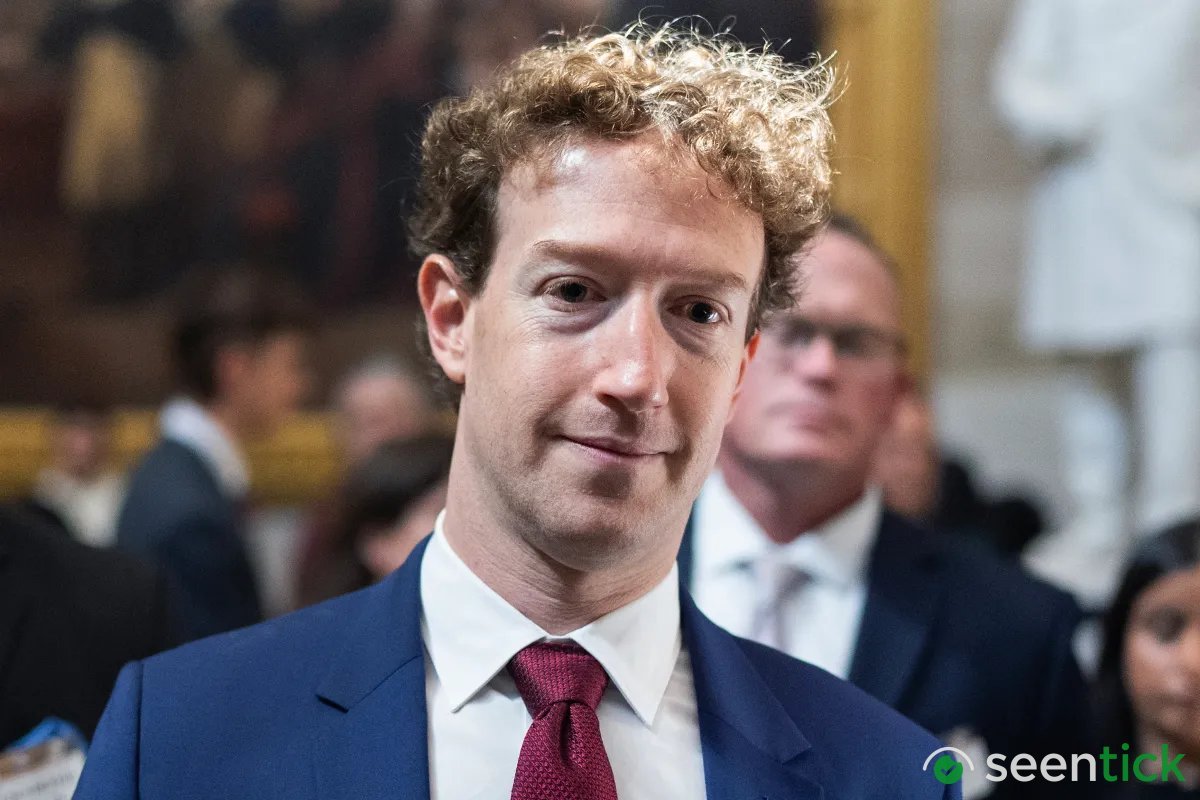
- Meta reached an $18 billion settlement on Wednesday over a legal case brought S. states concerning children’s safety. The settlement is
- The settlement “gives the AGs what they want, which is the political story that they’ve extracted a huge amount of benefit for the publ
- But the bigger story here isn’t the dollar amount. It’s what Meta now has to build: the most detailed child-safety rules any major plat
Meta reached an $18 billion settlement on Wednesday over a legal case brought S. states concerning children’s safety. The settlement is historic in scale as Meta agrees with a group of 52 attorneys general to implement sweeping changes to how minors use Instagram and Facebook.
The settlement “gives the AGs what they want, which is the political story that they’ve extracted a huge amount of benefit for the public from this settlement, including the platform changes,” Jessica Nall, a technology litigator at Withers, told TechCrunch. But Nall noted the settlement’s real-dollar impact is softer than the headline number suggests.


“The fact that it’s being paid over 10 years really does blunt the financial impact of the large number, especially compared to Meta’s annual revenue… We’re talking about one of these tech companies where their annual revenue is larger than the GDP of most European countries.” Indeed, Meta reported more than $200 billion in total revenue in 2025, which puts the $18 billion price tag in perspective. For related coverage, explore our detailed analysis on Technology and Digital Systems.
Bigger Story Here Isn’T Updates
But the bigger story here isn’t the dollar amount. It’s what Meta now has to build: the most detailed child-safety rules any major platform has concurred to, resting on age-verification technology that still doesn’t work particularly well.
Meta hasn’t admitted wrongdoing, even as it settles allegations that it intentionally designed its platforms to keep children hooked — a common tactic for companies looking to avoid a jury trial, where the risk of a worse outcome is higher.
A judicial determination against Meta could also have jeopardized the legal protections that allow social platforms to escape liability for what users post. “I think it’s wise of them to try to get out of it, especially without a legal finding against them on any of the First Amendment issues and the Section 230 issues, which are still alive,” Nall said.
“That could be existential, potentially, not just for Meta but for every tech company that has a product that engages with users, which is almost all of them.” Meta’s settlement also reignites ongoing concern over age verification measures that are intended to protect children online but can, in practice, create new privacy risks for both kids and adults.
“This Classic Debate Around Updates
“This is a classic debate around prioritizing safety over privacy,” Dr. Alexis Ingber, a professor of communications at Syracuse University, informed TechCrunch.
“The perspective is, if we want to keep children safe on Meta platforms, here are all the design things we’re gonna have to do, but we’re gonna have to also do this age verification thing that’s gonna take away from people’s data privacy and will introduce these new data privacy concerns.” Under the settlement’s terms, Meta has proposed a list of design changes, including a default two-hour daily screen-time limit for app use, plus prompts that appear every 15 minutes to “encourage intentional use.” Accounts that Meta identifies as belonging to minors will also default to being blocked from Meta apps overnight (between midnight and 6 a.m.) and will have notifications muted during school hours (8 a.m.
to 3 p.m.). “The design changes that were proposed in the settlement seem great on paper, but they are all reliant upon successful, effective, and unbiased age verification technology,” Dr. Ingber said.
“You need to be able to identify that that’s a child versus an adult, and the way that we do that right now is not really effective… I’m very curious to see how Meta is going to move forward with trying to do that, given that ” Age-verification technology has evolved well beyond clicking “Yes, I am 21” on a liquor website.
Companies now typically verify age through biometric scans (like a selfie), government ID checks, or analysis of behavioral patterns, and each comes with its own flaws. Behavioral analysis can misjudge adults as minors or vice versa, while ID and biometric checks require kids, and adults, to hand sensitive documents over to a third party just to use an app.
Read More: Bluesky now lets you upload 10-minute long videos
Some users also don’t trust platforms to roll out age-verification responsibly. Discord learned this firsthand when it tried to implement global age verification earlier this year and had to delay the rollout after significant user backlash. Not everyone shares that pessimism, though.
“I think the technology has evolved quite a bit in the last few years since these concerns started coming up, and I do think there are ways that [companies] can provide or implement age assurance technologies,” Philip Yannella, co-chair of the privacy and data security group at law firm Blank Rome, told TechCrunch. “I’m not going to say they won’t have potential privacy issues, but they could greatly lessen the privacy issues.” Yannella added that companies don’t need to store users’ personal information to verify their age.
“There are ways you can verify someone’s age, create a token that would signal that this particular IP is associated with someone who’s below the age of 13, below the age of 16, whatever it is, but discard the personal information,” he said. Still, Ingber and other experts caution that even if companies don’t retain this data, simply transmitting sensitive identity information online carries its own privacy risk.
A breach of ID scans or facial biometric data tied to minors creates the risk of identity theft, and unlike a password, a leaked face or fingerprint can’t be changed. Meanwhile, as Meta and the 52 state attorneys general finalize these guidelines — which Meta must follow for the next 10 years — the company is framing the settlement not as a concession, but as proof that it’s a leader in children’s online safety.
Meta is now running full-page newspaper ads calling on TikTok and YouTube to adopt similar design changes, without mentioning that its own adoption came as part of a legal settlement. Under the agreement, roughly 30% of Meta’s settlement payment depends on whether TikTok and YouTube also comply with these guidelines.
While Ingber worries that Meta and other companies won’t be able to meet these commitments without relying on potentially insecure verification mechanisms, she sees the settlement as evidence of a bigger cultural shift.
“Meta has extraordinary power to create norms through its platform design,” she said. “If you change the way that the platform is designed, you can set new norms. You can make things better.” When you purchase through links in our articles, we may earn a small commission.
This doesn’t affect our editorial independence. Amanda Silberling is a senior writer at TechCrunch covering the intersection of technology and culture. She has also written for publications like Polygon, MTV, the Kenyon Review, NPR, and Business Insider.
She is the co-host of Wow If True, a podcast about internet culture, with science fiction author Isabel J. Prior to joining TechCrunch, she worked as a grassroots organizer, museum educator, and film festival coordinator. She holds a B.A.
in English from the University of Pennsylvania and served as a Princeton in Asia Fellow in Laos. You can contact or verify outreach from Amanda com or via encrypted message at @amanda.100 on Signal. Don’t miss out.
The startup community will gather to answer a pivotal question: How do you build sustainably in the AI era? Fitbit founders launch Luffu Link, an LTE health and safety band Two years after launch, Walmart’s Flipkart is closing in on India’s quick-commerce leaders Inherent, founded Michael Polansky is training an AI model on skin that’s still alive How AI accounting startup Rillet raised $100M and became a unicorn in 48 hours Tesla’s solar roof is dead — here’s what went wrong Oura faces legal case accusing it of misleading consumers about sleep-tracking accuracy
Frequently Asked Questions
What's Your Reaction?
 Like
0
Like
0
 Dislike
0
Dislike
0
 Love
0
Love
0
 Funny
0
Funny
0
 Wow
2
Wow
2
 Sad
0
Sad
0
 Angry
0
Angry
0

Tech journalist and AI enthusiast who enjoys keeping up with the latest in hardware, processors, emerging AI tools, and software. I like digging into new technology, understanding how things actually work, and following the developments that could shape the way we use technology in the future.












Comments (0)