

Uttarakhand to Cultivate Rudraksh to Stem Migration of Hill-Dwellers
Key Highlights
- Uttarakhand government directs Horticulture Department to draw up formal cultivation policy for Rudraksh.
- Report estimates that a single mature Rudraksh tree can produce 1,000 to 2,000 beads a year.
- Government sets target of 10,000 hectares under Rudraksh cultivation by 2047.
The Indian Express has learned that the Uttarakhand government has directed its Horticulture Department to draw up a formal cultivation policy for Rudraksh. As part of an effort to create new income sources in the hill districts. The instruction came in a notification on August 31.
Signed by Under Secretary Sandeep Sharma of the state's Agriculture and Farmers Welfare department, and addressed to the Director of Horticulture and Food Processing, the letter instructed the officials to study a proposal “on cultivation methods, farm management, post-harvest processing, marketing and soil suitability”. It asked the department to “submit a clear proposal to the government as soon as possible.”.
Uttarakhand's hill districts have long been losing residents to Dehradun. Delhi and other cities – a trend the state's own migration commission has tracked and attributed. In part, to a lack of viable income from agriculture, crop damage from wildlife, and fragmented landholdings.
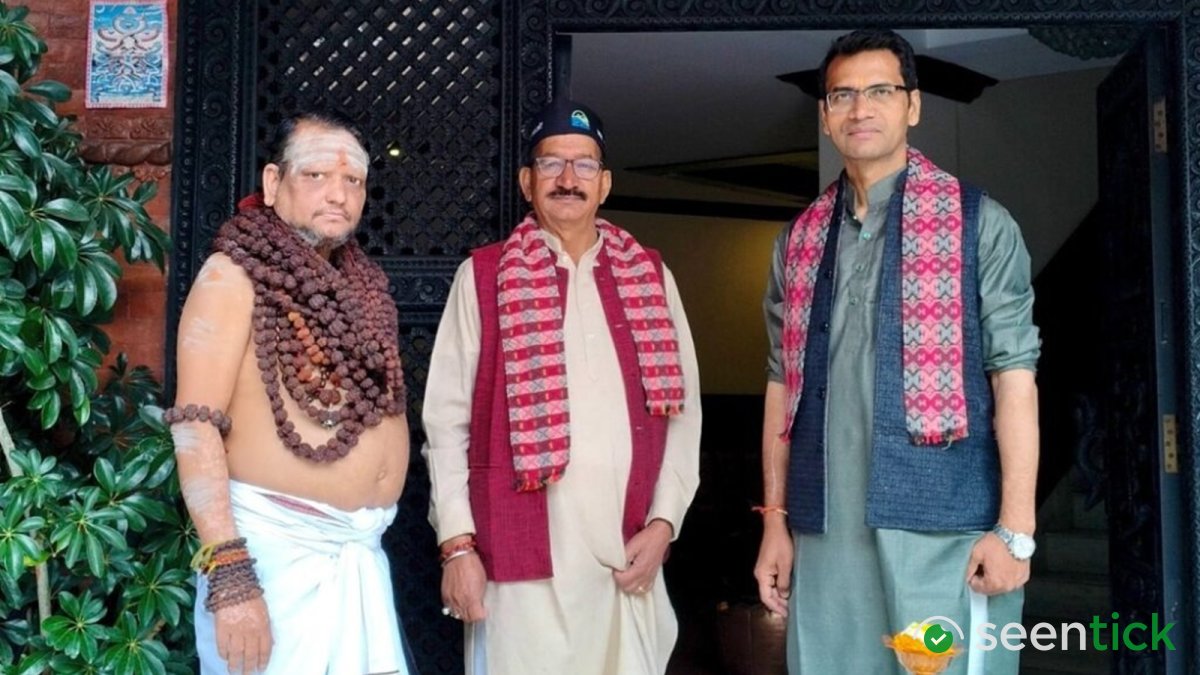
Speaking to The Indian Express, Prince Agrawal, Rudraksh expert and member of the four-member government delegation that visited Nepal in March, said: “Our villages in Uttarakhand have become ghost villages. It's happening because there is simply nothing there. The land is just lying empty.”.
Read More: Rajasthan Election Irregularities: RLP Candidate Omprakash Bawri Alleges Voting Scam
The presentation notes that large-scale commercial production of Rudraksh is currently dominated by Nepal and Indonesia. And points out that Uttarakhand, which shares similar soil and climate conditions with Nepal's growing regions, has not yet captured any share of that trade.
“China is buying a lot of Rudraksh because it has both religious and medicinal uses there. There are different rituals and traditions in which Rudraksh is used, and people also wear it as a necklace, considering it sacred. They have their own traditions and monasteries where it is believed in and used,” said scientist Pal.
The team visited Bhetedhar and Dingla in Nepal's Bhojpur district from March 23 to 29 and collected soil samples for comparison against sites in Tehri Garhwal. Rishikesh, Haridwar's Chilla forest range, and the Mansa Devi and Manokamna temple areas of Uttarakhand.
According to the presentation, Nepal's Rudraksh belt sits between 600 and 2,000 metres in altitude, with average temperatures of 25-30°C and annual rainfall of 1,500-2,500mm. Uttarakhand's proposed growing zone — 500 to 1,800 metres high with 22–35°C average temperature. And 1,000–2,200mm of rainfall — falls within a comparable range.
Based on those findings, the presentation listed Pauri, Tehri, Rudraprayag, Chamoli, Almora and Bageshwar as “high potential” districts for plantation, and Nainital, Champawat, Pithoragarh and the hill areas of Dehradun as that of “moderate potential.”.
Also Read: Keralite Vlogger's Arrest Claim in Afghanistan Raises Questions About Women's Travel Rights
The report estimates that a single mature Rudraksh tree can produce 1,000 to 2,000 beads a year. Which, at a conservative wholesale price of Rs 10-20 per bead for the common five-faced variety, would generate Rs10,000 to Rs 40,000 annually per tree.
A family managing 20 mature trees could earn Rs 2 lakh to Rs 8 lakh a year, according to the report. The plan proposes using the Centre's rural employment guarantee scheme to fund labour for digging pits. Planting and fencing for the first three years.
The government has set a target of 10,000 hectares under Rudraksh cultivation by 2047. With 10 million trees planted, 50,000 to 70,000 farmers involved, and up to 150,000 rural jobs created.
What's Your Reaction?
 Like
2
Like
2
 Dislike
 Love
Love
 Funny
Funny
 Wow
2
Wow
2
 Sad
Sad
 Angry
Angry

Tech journalist and AI enthusiast who enjoys keeping up with the latest in hardware, processors, emerging AI tools, and software. I like digging into new technology, understanding how things actually work, and following the developments that could shape the way we use technology in the future.












Comments (0)