

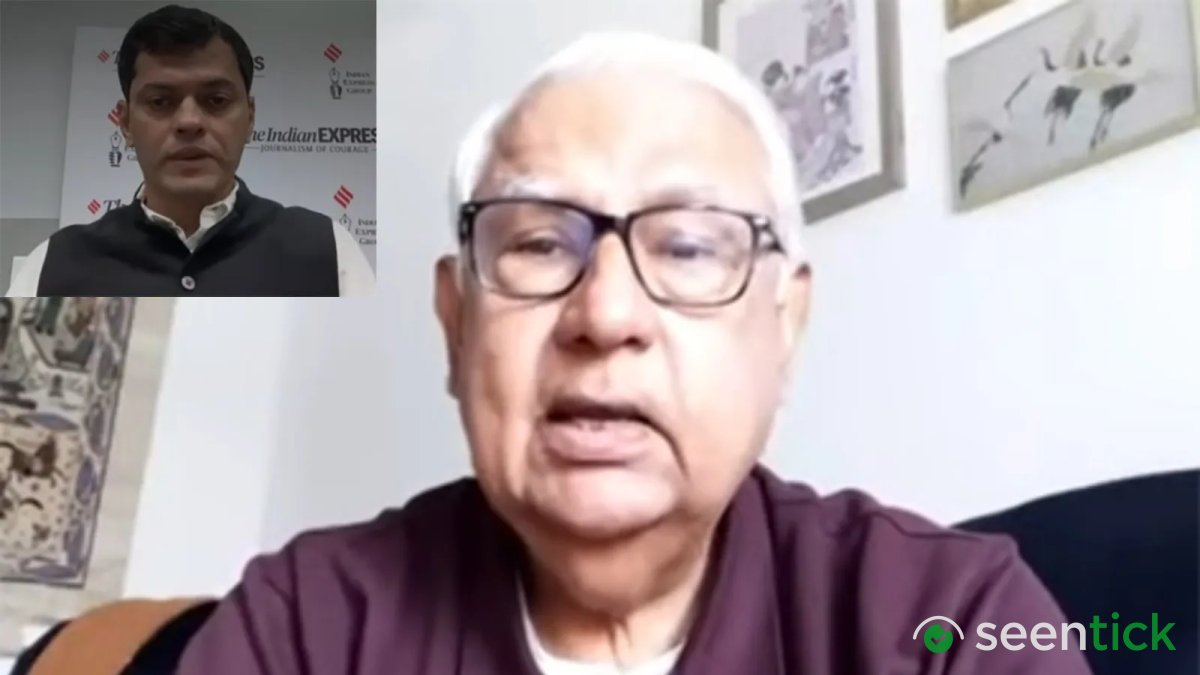
Former Indian High Commissioner to Bangladesh
Key Highlights
- Edited excerpts: Give us some context on this new BNP government led by Tarique Rahman.
- Bangladesh is a very important country for us, with almost 180 million people.
- We share a 4,096 km border.
India's diplomatic efforts towards Bangladesh have been ongoing for several years. With former Indian High Commissioner to Bangladesh Pinak Ranjan Chakravarty sharing his insights on the current state of India-Bangladesh ties. Edited excerpts from an interview with Shubhajit Roy.
Diplomatic Editor at The Indian Express, provide a glimpse into the complexities of this critical relationship.
Chakravarty's comments come as Bangladesh is facing significant political and economic challenges, including a recent change in government led by Tarique Rahman. With almost 180 million people and a shared 4,096 km border, India sees Bangladesh as a vital partner in regional affairs.
The history between India and Bangladesh is marked by periods of turmoil, starting from the assassination of Sheikh Mujibur Rahman in 1975. The two years that followed under Muhammad Yunus were particularly disastrous, with criminals and terrorists being released and minority communities facing persecution.
Read More: Modi and Xi Reiterate Sensitivity to Core Concerns
Chakravarty believes that the current Bangladesh Nationalist Party government is different from the Khaleda Zia regime in several ways. While both governments have faced criticism for their handling of economic issues, Chakravarty notes that the BNP's composition includes business lobbies and pro-Pakistan groups.
Chakravarty also highlights the role of Sheikh Hasina, who has been living in exile in India, in shaping bilateral ties. He suggests that her presence has prevented anti-Indian lobbies from gaining ground in Dhaka.
The Teesta agreement, which was not signed due to West Bengal's objections, is currently the focus of negotiations between India and Bangladesh. Chakravarty notes that hard bargaining will be necessary to reach a new agreement, particularly regarding guaranteed flows of water.
Bangladesh has joined the Belt and Road Initiative (BRI), which aims to create strategic influence in the region. Chakravarty warns that this could lead to Bangladesh becoming increasingly dependent on China, potentially straining relations with India.
The United States is also keenly interested in preventing Bangladesh from joining forces with Pakistan. This has a one-point foreign policy aimed at harming India. Chakravarty believes that Bangladesh will likely resist this pressure and maintain its ties with India.
Also Read: Backpacker Detained in Afghanistan Over Solo Female Travel
Chakravarty concludes that while India has made sufficient overtures to Bangladesh, the relationship can only be strengthened if both countries work together. He notes that economic cooperation is vital, particularly in addressing Bangladesh's current economic challenges.
In summary, Chakravarty emphasizes that India's policy towards Bangladesh has always been to maintain a relationship with whichever government is in power. While challenges remain, he believes that the two countries can work together to strengthen their ties and address regional issues.
The current state of India-Bangladesh relations is complex, with both countries facing significant challenges. However, Chakravarty believes that the relationship can be strengthened if both sides work together.
However, he also highlights Sheikh Hasina's role in preventing anti-Indian lobbies from gaining ground in Dhaka.
What's Your Reaction?
 Like
2
Like
2
 Dislike
 Love
Love
 Funny
Funny
 Wow
Wow
 Sad
1
Sad
1
 Angry
2
Angry
2

Tech journalist and AI enthusiast who enjoys keeping up with the latest in hardware, processors, emerging AI tools, and software. I like digging into new technology, understanding how things actually work, and following the developments that could shape the way we use technology in the future.








Comments (0)