

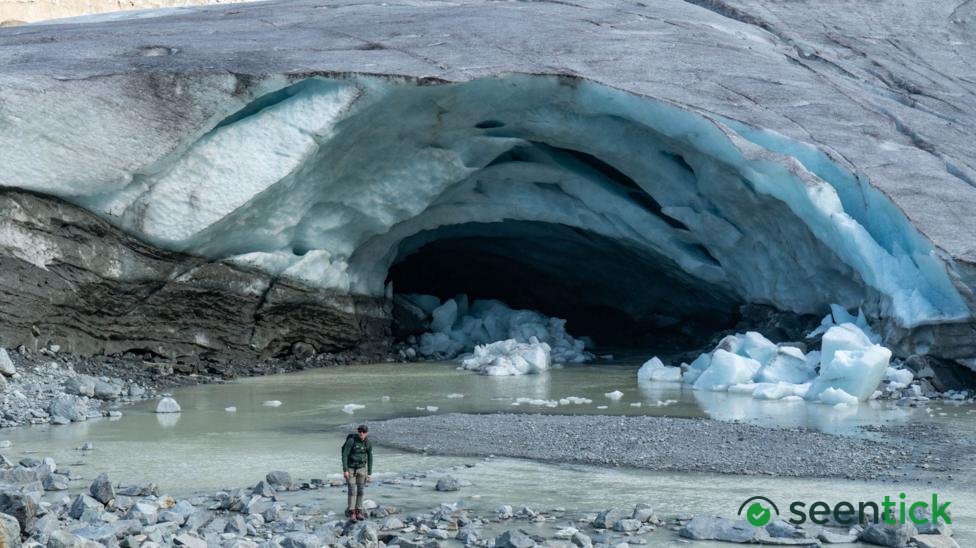
threatening water supplies as Swiss glaciers suffer 'disastrous' year of ice loss
Key Highlights
- More than 5% of Swiss glacier ice disappeared in the last 12 months.
- Scientists estimate 2.2 trillion litres of meltwater released from glaciers.
- Glacier loss could pose long-term challenges for water supplies.
Swiss glaciers have experienced a significant decline in ice mass over the past year. With more than 5% of the country's remaining glacier ice disappearing in the last 12 months. This rapid melting is a stark reminder of the impact of climate change on these vital natural resources.
According to a report by Glacier Monitoring Switzerland, the rapid warming of the climate has left Swiss glaciers in a precarious state. The initial snow cover was already below average due to a mild winter. And the subsequent heatwaves in May and June further accelerated the melting process.
The loss of glacier ice has significant implications for water supplies, particularly for farming, hydropower, and transport. The meltwater released from glaciers can help alleviate water shortages, but it is also unsustainable in the long term. Dr.
Read More: Ontario Woman Charged with $5,000 Fraud and Theft from 5 Healthcare Facilities
Matthias Huss, director of Glacier Monitoring Switzerland, warned that the loss of ice could pose long-term challenges for water supplies.

"Every drop of water that runs off during these heatwaves is kind of old water that's been stocked in the glacier ice centuries or decades ago," Huss explained. "It's helping us [now] but it's unsustainable, so we won't have it at [our] disposal in the next heatwave."
Record-breaking droughts along the River Rhine this summer have sent shockwaves through the shipping industry. Forcing navigators to reroute and incurring substantial increases in transportation costs. Meanwhile, scientists at high-altitude research stations have reported a stark decline in snow cover, with even the highest measurement sites – above 10,934 feet – now devoid of snow.
Glaciers are complex systems that require careful consideration of the physics involved. Dr. Fabien Maussion, a glaciologist at the University of Bristol, noted that the situation is "like taking an ice cube out of the fridge and it's just melting in front of our eyes."
Also Read: South Africa Hit by Two Mass Shootings, Leaving 27 Dead
Alpine glaciers, once a staple of the region's majestic landscapes, are facing an existential threat as the climate continues to warm at an alarming rate. The Plattalva glacier in eastern Switzerland has already succumbed to the heat, a stark reminder of the devastating consequences of climate change.
Yet, researchers remain optimistic that drastic reductions in carbon emissions can still prevent the loss of much of the world's glacier ice, thereby mitigating the catastrophic rise in global sea levels that could imperil the lives of billions of people living along coastlines.
The long-term consequences of glacier loss are far-reaching and could have significant impacts on the environment, economy, and human populations. As the climate continues to warm, it is essential to take action to reduce greenhouse gas emissions and protect the world's glacier ice.
What's Your Reaction?
 Like
Like
 Dislike
1
Dislike
1
 Love
1
Love
1
 Funny
Funny
 Wow
Wow
 Sad
2
Sad
2
 Angry
1
Angry
1

I write about the forces shaping business and the global economy, from startup growth and changing markets to international trade and policy. My work focuses on breaking down complex developments into clear, practical insights and understanding what they could mean for businesses, investors, and the wider economy.












Comments (0)