
Semicon push: Regulatory norms for high-tech industries to be eased, says Goyal
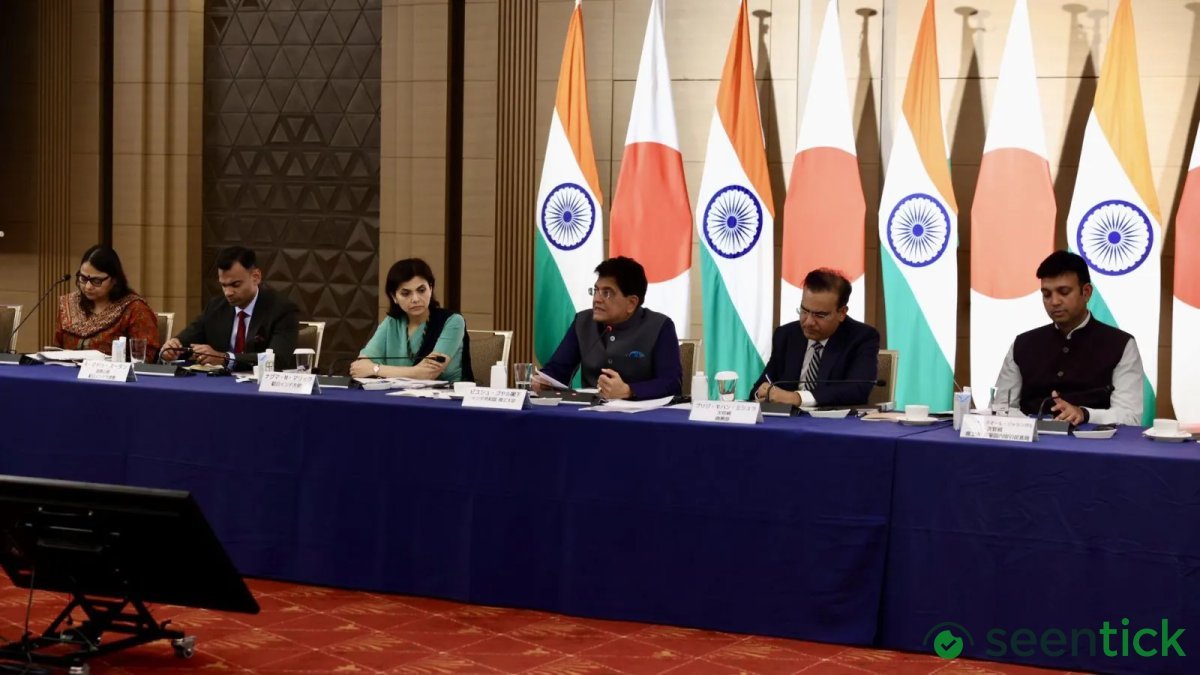
- Seeking to deepen Japan’s role in India’s semiconductor and electronics manufacturing ambitions, the Commerce and Industry Minister Piy
- Create a framework of exemption from BIS certification required for all the equipment and components that they need to bring to India,”
- On social infrastructure for Japanese expats and their families, the minister stated the government is working to create the same aroun
Seeking to deepen Japan’s role in India’s semiconductor and electronics manufacturing ambitions, the Commerce and Industry Minister Piyush Goyal assured Japanese companies of easing regulatory hurdles, certification requirements and building a Japan-friendly social infrastructure at key hubs, including Dholera. Speaking at the Semiconductor and AI roundtable where representatives of around 25 leading Japanese companies were present, Goyal shared the concerns raised around BIS certification have already been taken up “We have already instructed BIS and the Ministry of Commerce and Industry to work on a framework to support high-tech industries coming in to promote the Make in India program.
Create a framework of exemption from BIS certification required for all the equipment and components that they need to bring to India,” he shared. While such a framework would provide a company-level or industry-level exemption, Goyal added that the government will also find a solution for bulk exemption, or product or project-based exemption.


Addressing concerns around regulatory complexity raised ” Must Read | Cabinet approves Semiconductor Mission 2.0 with Rs 1.27 lakh crore outlay On the issue of SEZ notifications, Goyal shared the government will take timely action so that companies can take benefits of the incentives offered through the SEZ framework, or EOU framework (Export Oriented Units) or the MOOWR (Manufacture and Other Operations in Warehouse) framework. For related coverage
Key Analysis and Detailed Timeline
On social infrastructure for Japanese expats and their families, the minister stated the government is working to create the same around Dholera. “Between Dholera and Sanand, we can create social infrastructure like schooling, lodging, hospital, restaurants, hotels, and possibly a golf course also, so that we can make you feel at home.” He further assured Japanese firms of reliable electricity, ultra-pure water, clean room infrastructure, waste treatment, and high-quality logistics, along with social infrastructure at all places where Japanese firms set up operations.
Electronics manufacturing hub, government incentives Stating that India’s semiconductor demand was expected to rise to about $150 billion He shared India’s large electronics market and pool of design and engineering talent could complement Japan’s strengths in semiconductor equipment, materials, speciality chemicals, precision manufacturing and process technology. Goyal shared that incentives of about $10 billion have helped seed investments of around $19 billion under the first phase of the government’s semiconductor programme.
He shared the government has committed another $15 billion in the second phase, which can be increased further if needed. “The government expects the second phase to help seed around $50 billion in investments, Goyal shared, adding that state governments would also provide incentives to semiconductor companies.
Read More: India Faces Rain Deficit in Southwest Monsoon's Final Leg
The minister stated that India’s electronics production has grown fivefold in the last 10 years, while exports touched nearly $45-50 billion dollars in recent years.
Semicon push: Regulatory norms for high-tech industries to be eased, says Goyal update
Broader Impact and Sector Outlook
Stating that he sees a Japanese footprint in India's transformation and progress towards the semiconductor industry, he said the CG Power facility in Sanand — one of the first plants to commence commercial production — is backed "I think the momentum is sharp, and I do believe that the intention on both sides is very strong," he said, adding that the government is looking to expand this engagement across six pillars — design, machines and materials, fab units, ATMP and OSAT industry, R&D and talent development.
The correspondent is in Tokyo at the invitation of FICCI.
Frequently Asked Questions
What's Your Reaction?
 Like
0
Like
0
 Dislike
0
Dislike
0
 Love
0
Love
0
 Funny
0
Funny
0
 Wow
0
Wow
0
 Sad
0
Sad
0
 Angry
0
Angry
0

Tech journalist and AI enthusiast who enjoys keeping up with the latest in hardware, processors, emerging AI tools, and software. I like digging into new technology, understanding how things actually work, and following the developments that could shape the way we use technology in the future.













Comments (0)