
European rights court orders Turkey to free imprisoned businessman
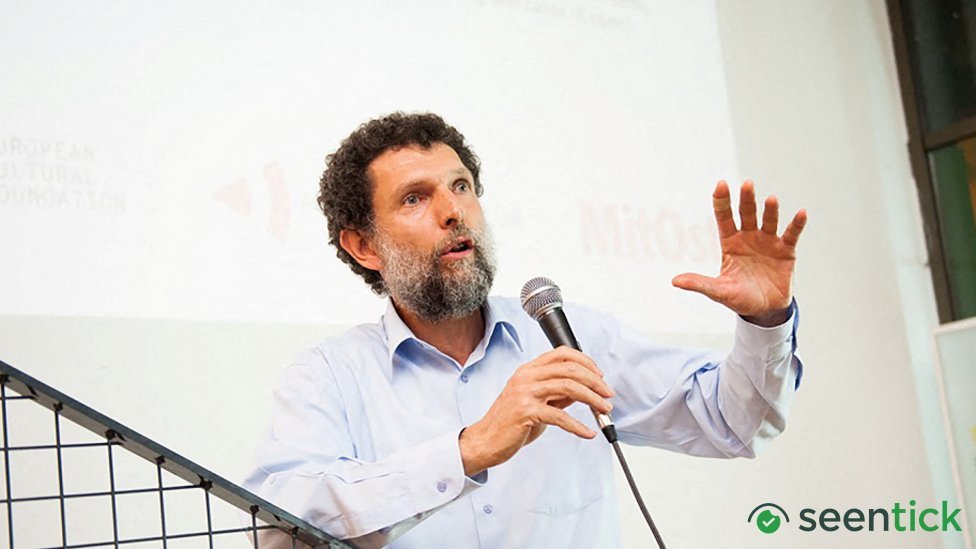
- The court shared Kavala's case had exposed a "systemic problem" in Turkey The European Court of Human Rights (ECHR) has ordered Turkey
- Since his initial arrest and detention in 2017, rights groups and Kavala himself have maintained that the charges against him are polit
- had been predominantly motivated The court also found that Kavala's aggravated life sentence amounted to "inhuman and degrading treatme
The court shared Kavala's case had exposed a "systemic problem" in Turkey The European Court of Human Rights (ECHR) has ordered Turkey to immediately release Osman Kavala, an activist and philanthropist who has been detained in prison for almost a decade. Kavala was sentenced to life behind bars in 2022 for charges related to nationwide protests in 2013 and a failed coup attempt three years later.
Since his initial arrest and detention in 2017, rights groups and Kavala himself have maintained that the charges against him are politically motivated. The ECHR on Tuesday ruled that his continued detention was unlawful and that his rights to a fair trial, freedom of expression and association had been violated. "The measures taken against the applicant...


For related coverage, explore our detailed analysis on Technology and Digital Systems.
Core Findings and Detailed Timeline
had been predominantly motivated The court also found that Kavala's aggravated life sentence amounted to "inhuman and degrading treatment". Rights advocates and opposition groups say President Recep Tayyip Erdogan's government has increasingly weaponised the judiciary to target critics and rivals.
The court shared Kavala's case had exposed a "systemic problem" in Turkey of the "detention and prosecution of political opponents, human rights defenders and journalists", adding that there were "structural shortcomings which affected the guarantees of independence and impartiality of the judiciary".
The Turkish government has insisted the country's courts are independent. Turkish activist sentenced to life in prison The case that set Turkey on collision course with the West Kavala, 68, became a symbol of a government crackdown on civil society in Turkey following his arrest in October 2017.
He and others were accused of orchestrating and financing anti-government protests in 2013, which started in Istanbul's Gezi park before spreading across Turkey.
The demonstrations posed the first serious challenge to the rule of Erdogan, who was Turkey's dominant prime minister at the time and became its directly elected president the following year. Human rights group Amnesty International says prosecutors falsely alleged that the Gezi park protests were an attempt to overthrow the government.
Read More: Tornadoes Wreak Havoc in Southern France, Leaving Over 40
In 2019, the ECHR demanded Kavala's immediate release, describing his detention as arbitrary and politically motivated.
Broader Implications and Future Outlook
Turkey did not implement the court decision. He was initially acquitted in February 2020 but within hours was rearrested on new charges of being part of a failed military coup in 2016.
His acquittal over the Gezi Park protests was overturned in January 2021, and he was sentenced to life in prison in April 2022 - a conviction now declared "null and void" Reacting to the latest ECHR court decision, Amnesty International's Eve Geddie shared: "This obstruction of justice must end.
Turkey's authorities, including judicial and prosecutorial, must act to free Osman Kavala immediately and unconditionally." Kavala was born in Paris and educated in the UK. Before being thrust to prominence, he ran a cultural centre. Erdogan has previously accused Kavala of being an agent of the Hungarian-born US billionaire George Soros.
Turkey has refused to comply with the two previous ECHR court orders on Kavala's case, and it is not clear whether Ankara will implement the court's third binding court decision. The case remains one of the most serious recent flashpoints between Ankara and Strasbourg. The Council of Europe oversees how its 46 member states execute ECHR court orders.
It has the power to freeze a country's membership or suspend its voting rights if it is found to have seriously violated the rule of law. Even though Turkey has failed to comply with several key ECHR decisions, it remains a founding member, engages with the system and has not broken ties.
A meeting of the Committee of Ministers in mid-September is likely to prioritise the Kavala case, but it remains to be seen whether it will debate harsh punitive measures.
Frequently Asked Questions
What's Your Reaction?
 Like
0
Like
0
 Dislike
0
Dislike
0
 Love
0
Love
0
 Funny
0
Funny
0
 Wow
0
Wow
0
 Sad
0
Sad
0
 Angry
0
Angry
0

I write about the forces shaping business and the global economy, from startup growth and changing markets to international trade and policy. My work focuses on breaking down complex developments into clear, practical insights and understanding what they could mean for businesses, investors, and the wider economy.












Comments (0)